
Freelance Journalist Nida Khan
Last week marked the official 10-year anniversary of the start of the Iraq War. Leading up to the commemoration of this bloody and costly engagement, major networks, newspapers and online outlets acknowledged the decade milestone with extensive coverage. They parsed the many ways in which the Bush administration misled everyone and orchestrated a brazen attack on a sovereign nation. And they criticized the media’s own fallacy in helping to sell the war to the American people. But out of all of the supposed lessons learned and promises to rectify our ways going forward, it’s amazing just how little we have changed. In some sort of twisted irony, many of the most vocal opponents of the Iraq war are virtually silent at this very moment when we are actively entrenched and engaged in more areas of the world than possibly ever before. An estimated 6 million people demonstrated against the war in Iraq (according to Al Jazeera). Viewing old footage of these protests, one thing became vividly evident: 10 years later, any semblance of an anti-war movement has been all but crushed.
 “As Americans, now whenever we’re told anything, somebody comes on and says there’s reports that maybe this and maybe that, we have to have the most skeptical, critical eye and ear to what we’re being told,” said filmmaker Michael Moore last Tuesday on ‘Piers Morgan Tonight’. Responding to reports of alleged chemical weapons use in Syria, and Ahmadinejad’s potential nuclear capabilities in Iran, Moore emphatically stated that our government – ‘the real government’ as he put it (Wall St., banks, the military) – hasn’t earned a right to be trusted. He went so far as to say that unless Ahmadinejad walks in the room with a bomb in his hand and shows it to him, he won’t believe anything he’s told about Iran. Watching Moore call out our rush to judgment (and subsequent action) around the world, it became blatantly obvious how rare his dissent actually is. In all the hoopla of ‘how could we let this happen’ in regards to Iraq 10 years ago, hardly anyone had the backbone to say that we’re still falling for the same playbook today save for one Michael Moore and a few others that have just been pushed to the margins.
Regardless of what your own personal views may be on Qaddafi (Gaddafi), Ahmadinejad, Abbas or the latest ‘bad guy’ on our list, the fact remains that we are still projecting them through a specific lens that gets drummed up in our mass media without appropriate context or complete information from all angles. And what follows is our involvement in yet another foreign independent country without adequate debate back home. Just because we may now align ourselves with a few other allies when doing so, does that make our actions really any less different than what happened with Iraq? And let’s put aside the notion of dictators that
need to be toppled for a moment and examine the use of weaponry in a host of other nations. Actively utilizing the predator drone program in Somalia, Yemen,
Mali, Afghanistan, Pakistan and numerous other countries, we are still dropping bombs that undoubtedly kill innocent civilians in the process. And yet, where’s the
objection from those that demonstrated against Iraq?

Whenever the concept of drones is addressed in our common discourse, a majority almost instantaneously defend its use because it requires less forces on the ground, and less loss of American lives. Pressing buttons, dropping bombs and watching explosions on a screen as if it were some sort of video game, the individuals operating drones in Nevada or elsewhere are not only further desensitized to the notion of taking lives, but so are the rest of us. No longer do we have to protest the lack of images of coffins with dead U.S. soldiers – we don’t even consider the use of drones an act of war. Under the same open-ended guise of ‘fighting terrorism’, the drone program is fundamentally unchecked from independent entities, and functions pretty much without accountability because it remains a covert process (though there’s talk to move it from CIA control, but we have yet to see). It wasn’t until Congressman Rand Paul’s recent filibuster of Brennan’s confirmation that many Americans likely heard about drones for the first time – and many probably still haven’t. The silence, from all sides, has been quite deafening.
Rallies and marches against the war in Vietnam played an intricate role in the larger struggle for civil rights in this country. While we may be losing less troops today of course (which is a plus), modern warfare still results in the murder of innocents. Every time a supposed target is hit by a drone, civilians – often times women and children – are killed simultaneously and many others permanently wounded. And that goes for every bomb dropped, every time, in every town, in every village, in every city, in every country. But when was the last time we saw 6 million protest that? Or even a million? For that matter, when was the last time we saw any sort of massive anti-war protest anywhere? Have we become such a complacent society that out of sight really has translated into out of mind? Or have we become neutralized because the dynamics of warfare have changed? Any which way you look at it, it’s pretty shocking.
With the exception of a few journalists like Glenn Greenwald and Jeremy Scahill that have been discussing drones at length for some time now, the vast majority of our press has been silent (minus recent Rand Paul coverage). Instead, we have media that continues to tell us that the drone program is effective in defeating terrorism and getting the bad guys. Rather than questioning a policy as journalists should do, they have been selling it for years – much in the same fashion that the Iraq war was sold to us 10 years ago. In all the focus on the anniversary of the invasion, never once did pundits and journos from either side of the aisle highlight the fact that we are repeating the same mishaps again, right now, in the present. And in discussions of the media’s complacency in selling the war, how often did we hear an acknowledgment of its current complacency in selling any of our present conflicts?
Guess people will wait to talk about today’s failures another 10 years from now.
written by Nida Khan follow her on twitter at
http://www.youtube.com/watch?v=hPqpV9olIlw
 In recent days a lot has happened that has kept the issue of rape and rape culture in the forefront.. It ranges from two female social commentators/ bloggers


 Nowadays it’s hard to turn on the radio and not hear music from one of Chicago’s many music superstars. Kanye West, Lupe Fiasco, Common, Rhymefest, Twista, Da Brat, Shawnna, Doe or Die and Crucial Conflict seem to have firmly positioned themselves over the years as household names within the mainstream..In recent days many have come to know Chicago rappers via the exploits of Chief Keef.
 The battle to establish ‘Tha Chi’ within Hip Hop was about as brutal as its political landscape. Unsung heroes like Dr Groove, Lord Cashus D, DA Smart, Black Allies, Sugar Ray Dinky, George Daniels, World wide Posse, God Squad, The Chi Rock Nation, Ill State Assassins, and the late DJ Pink House all played crucial roles in organizing, pushing the envelop and seeing to it that the Windy City get its respect. They used to roll up on nightclubs, radio stations and even label executives demanding to be recognized. Many will forget that back in the late 80s there was a movement called the New World Order which brought many of Chicago’s Hip Hop community together as they fought for change and respect.
 During the recently held National Hip Hop Political Convention (2006) we sat down with one of Chicago’s premier pioneering emcees, Jitu the Juggernaut of the group Ten Tray. For those who are unfamiliar ten Tray was the first group to be signed to major label. Back in 91, Jitu the lead rapper was and to this day remains an activist who saw the power of Hip Hop and decided to use his talents to spark political thought and hopefully change.
 Jitu details the influence Chicago’s highly organized, legendary street gangs have had the scene. He also talks about how other groups like the Nation of Islam and the legacy of the Black Panthers which had its largest and most organized chapter in the Chi have also had influence on folks as they were coming up and into Hip Hop.
 Jitu is an African name, given to him in 1995 meaning “A giant among men.” Jitu is a youth program coordinator and community organizer on the south side of Chicago. He swarmed the game in 2002, entering battles and open mics. Leaving crowds in a state of disbelief, Jitu has humbled emcees all over the country, blending a once in a lifetime voice with an expansive vocabulary and ferocious delivery. On the underground, many call him the best they have ever heard! A short look at his accomplishments: • 1986-Winner of “Battle of Chicago Rappers” at El Rukn Fort
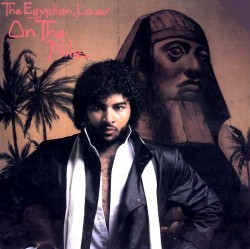 A lot of the music in LA’s early Hip Hop days was classified as electrofunk and is often associated with the sound Afrika Bambaataa established with his song Planet Rock. However, when speaking with the early DJs from LA, they say they were already into that sound way before hearing Planet Rock.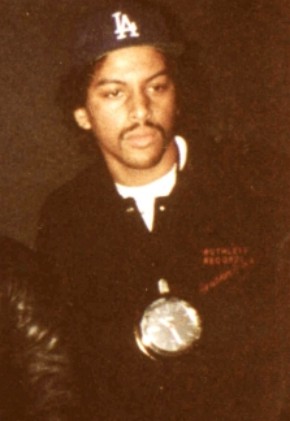
 This is an important conversation where Hip Hop pioneer Grand Wizzard Theodore speaks for himself and explains the origins of the Scratch.. Up to that point, many had come to believe that Theodore was trained by Grandmaster Flash who started off in a crew called the L-Brothers (L=Livingston which is Theodore’s last name). I recall interviewing Flash back in 1996 at length and he broke all this down..noting that Theodore was his student..
 The other unintended story that needed to be put to rest was Theodore spilling beer on a turntable and inventing the scratch while wiping the record clean.. This came about after a humorous Heineken commercial aired a few years back depicting that. It was part of a series of commercials the beer company did where they fictionalized how the accidents around the beer created the Peace sign, the Lighter, the scratch etc.. Unfortunately because there had been so much historical distortion around the legacy of Theodore, many didn’t find the humor in the commercial resulting in an open letter and protest to the beer company.
 Whether you’re in Jamaica, Canada or Japan, when the piano chords of Vybz Kartel’s“Summertime” chime in, it tingles your warmth senses and immediately transports the listeners into party mode. One would never expect that the catchy Dancehall anthem, recorded by one of Jamaica’s premiere artist, was birthed from a studio in Sweden, over 5000 miles away.
 Influenced by many genres of music, Adde’s early productions range from RnB and Hip Hop to Pop and House, with a passion for Dancehall always present. As his strengths in production grew, so did the diversity of his creations. While parring with a few local Dancehall acts, Adde began his dance with riddim production, and it instantly grew into success.
 If you are an avid hip hop music fan, you should not miss out on listening to Bryan King’s work. Bryan King is one of the most prominent new Hip Hop artists in the world and is slowly taking the world by storm with his innovative music. He is not just a Hip Hop artist, but, he also produces music. He is a student and has achieved enormous success at a very young age. He currently resides in Malibu, California but his career took off first when he was studying abroad in Shanghai.