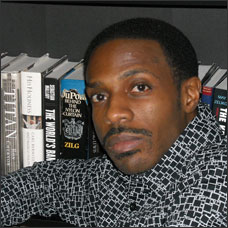
Cedric Muhammad
MTV should be commended for its recent look at something that we have been writing about for a couple of years – the surveillance of Hip-Hop artists by law enforcement. But the series doesn’t go far enough.
It has been a peculiarity, at least in our view, that the subject of law enforcement and Hip-Hop artists has been primarily reviewed from the prism of two major police departments – the Los Angeles Police Department (LAPD) and the New York Police Department (NYPD). Certainly there are logical and natural reasons for this. And for sure, any investigation of this subject should include those law enforcement officers and departments who have the most contact with artists at the local level. But the fact that the Notorious B.I.G.’s car was being followed by the FBI and ATF agents at the moment he was shot; the fact that the DEA was on the point of a major investigation of Rap-A-Lot Records and Hip-Hop legend Scarface (Read Our “Hip-Hop Fridays: Rap COINTELPRO Part IV: Congress Holds Hearings On DEA Rap-A-Lot Investigation”); the fact that the FBI and IRS were investigating Death Row Records at the height of the record label’s popularity and when Tupac Shakur was murdered; the fact that the FBI and IRS have been watching Puffy (P.Diddy) and Bad Boy Records’ business activities for at least 8 years; the fact that a government informant infiltrated the Wu-Tang Clan over two years ago and the ATF was offering convicts less time if they would implicate the group in gun-running (Read Our “Hip-Hop Fridays: Rap COINTELPRO Part II”); and the fact that federal law enforcement agencies are investigating the Murder Inc. record label right now and raided its offices recently should make it clear as to why we are not satisfied with any investigative report that makes the NYPD and/or the LAPD the end-all or be-all.
The problem isn’t MTV. They actually did a service and credible job exploring the context for how all of this mischief-making is possible and how the need for Hip-Hop-centered investigations is “plausible”, due to the cultural and socio-economic conditions and deleterious aspects of the Hip-Hop industry.

Russell Simmons
The problem is that for a variety of reasons activists, journalists, artists and executives can’t seem to accept the premise that what is happening is a continuation of COINTELPRO and not profiling or harassment. Many know that what is happening goes way above the power and influence of any local police department. But they are afraid to follow the trail all the way up. This was an important part of my recent conversation with Russell Simmons. Russell’s reticence in tackling the issue is understandable but until the Hip-Hop community learns the lessons of history and shakes its fear and state of denial, it is doomed to repeat the mistakes that others made before them in ignorance. Once the reality of RapCOINTELPRO is accepted for what it is then the appropriate political leaders can be pressured to hold hearings, write letters and obtain the files that would show beyond a shadow of a doubt that the United States Government, partly through the NYPD and LAPD is absolutely at war with Hip-Hop. And the rest of the members of civil society can confer on what actions should be taken. We have a lot of work to do in only a little bit of time.
The War on Street Gangs has been merged with a War On Drugs which has been merged with a War On Terrorism which will intensify with the war in Iraq. In all of this Hip-Hop will be framed as a primary force of sedition in America.
This is definitely one issue that separates the men and women from the boys and girls.
Cedric Muhammad
February 21, 2003

photo credit: Panther 1619
Here is the first portion of MTV’s report followed by a link to the subsequent portion(s) of the series:
One of the most hotly debated topics in the hip-hop world is the New York Police Department’s reported clampdown on the rap industry.
In the wake of high-profile investigations into the slaying of Jam Master Jay, the joint FBI-NYPD raids on the offices of Murder Inc., and the recent arrests of 50 Cent and Fabolous on weapons charges, the hip-hop community is abuzz with talk of an elite “hip-hop squad” or “rap task force” whose duties include tailing rappers’ vehicles and even monitoring their lyrics.
During a recent stint as a guest DJ on New York’s Hot 97, 50 Cent tauntingly shouted out the “hip-hop cops” that he claims follow him everywhere. But does such a task force targeting rappers really exist?
No, insists the NYPD.
“There is no such thing,” said Detective Walter Burns, a senior NYPD spokesperson. “We have no hip-hop task force, no hip-hop unit, no hip-hop patrol.”
Police point out that when they do create task forces, like the Terrorism Task Force or the Hate Crimes Task Force, one of their purposes is to let the public know they’re making an extra effort to stop crime. “If we did have a hip-hop task force,” another NYPD spokesperson said, “we wouldn’t deny it. We’d want to tell you that it exists.”
But many artists aren’t buying it.
“It’s definitely a task force,” Fat Joe said. “You go to hip-hop spots now and they ain’t just your normal walking-the-beat cops. There’s cops out there in undercover cars like they know something we don’t know. Like bin Laden’s in the club, B.”
“It’s just a thing where it’s targeting hip-hop,” Fabolous said. “I don’t think you should target something. If it’s a problem, you go handle the problem, that’s what cops are for. They are there to protect and serve. They’re not there to make a problem.”
Hip-hop Web sites liken the current situation to the once-secret FBI surveillance of African-American leaders and civil rights activists in the 1960s. Many rappers claim to have first-hand knowledge of the elite task force’s existence, and some say they’ve even seen confidential NYPD Intelligence Division documents containing information on rappers’ places of residence and vehicles.
“It’s called the Entertainment Task Force,” Keith Murray said. “They watch you as far as on the streets, and they watch you as far as monetary operations, taxes, who’s paying who what, where you getting money from. They got they scope on rappers right now.”
Pressed on his source for the existence of this task force, Murray said, “I’ve read numerous things on it and I’m seeing it come to fruition.”
The story of a hip-hop unit within the NYPD has been widely disseminated by major news organizations, and such reports have led to accusations of “rapper profiling” and civil rights infringement. But police spokespeople as well as other sources within the force say it’s simply not true. “We don’t target rappers,” Burns said. “The NYPD investigates crimes.”
Perhaps it’s a sense of self-mythologizing – all the Italian-gangster wannabes populating the ranks of the hip-hop game – that leads some rappers to feel they’re constantly under surveillance. Just how did they think law enforcement was going to react to artists who take on the surnames of crime kingpins like Gotti and Capone and Gambino?
Lieutenant Tony Mazziotti, a retired 28-year veteran who oversaw investigations of actual gangsters – major racketeers in the Gambino and Genovese crime families – said: “With the rappers, I think it’s this sense that, ‘Hey, we’re worthy of being investigated. That means we’re for real.’ ”
But what’s actually for real, one retired NYPD detective insists, is that there is a rap-related unit within the police force. What’s more, he said, he’s the cop who created it.
“I was the one who started the whole thing,” Derrick Parker revealed to MTV News. “The unit was created in ’98. … When Biggie was buried here in New York, there was a lot of concern, there were a lot of threats made. The chief [of the department] wanted me to run this entire investigation for him and to report to him.”
Parker said that for more than four years he gathered intelligence on the rap community, compiled files, went to nightclubs and interviewed rappers who were jammed up in criminal cases. Pressed on the exact name for the entity he created, Parker said, “It’s not called the hip-hop unit, it’s really just under Gang Intel.”
www.mtv.com/bands/t/task_…dex2.jhtml
Cedric Muhammad
Friday, February 21, 2003
www.blackelectorate.com/a…asp?ID=810



 Having been General Manager of the multi-platinum group Wu-Tang Clan with whom Killarmy, the group Mr. Russert mentioned, was affiliated, I can, with authority, dismiss the idea that the activities of the alleged sniper are what Killarmy had in mind when they were motivated to record the album Silent Weapons For Quiet Wars. I was there when they recorded the album, knew the young members of the group personally, and at times, conducted business on their behalf as it related to Wu-Tang Clan.

 When the Los Angeles Times article came out implying that Biggie was the mastermind behind the murder of Tupac I immediately recognized that some force(s) was attempting to use the murder of both rappers to divide the Black community, in particular, in a manner similar to how the murder of Malcolm X had been used, for over 30 years.
 Remember what I included last week of the contents of a letter Lt. Col. Fletcher Prouty, author of the book JFK, wrote to me. He wrote of his covert responsibilities in the U.S. government as well as what was really involved in the assassination of President Kennedy, beyond the murder itself:
 That after nearly two years of no
 In some way, something similar has to happen where Tupac and Biggie’s murders are concerned, if healing is to take place and manipulation is to be ended. It would be helpful, if Tupac and Biggie’s families and Suge Knight and Sean Combs with the help of their supporters, spiritual leaders, advisers, and East and West Coast artists and music executives, were one day able to put their personal hurt aside and recognize and understand that their pain and emotions are being used to divide whole communities. P. Diddy was present that night in the Apollo when the Minister and Sister Betty began to publicly reconcile. Before, during, and after that Apollo meeting, Minister Farrakhan called for the government to open the files on the assassination of both Malcolm X and Dr. Martin Luther King. Puffy’s relative public silence on the matter of the Los Angeles Times story on Biggie should be studied. It has had both a positive and negative affect on the situation.
 To our knowledge, not a single major Hip-Hop magazine has done a cover story on 1)The fact that the NYPD in 2001 openly admitted that it has the New York Hip-Hop community and industry under surveillance 2) The DEA and Houston Police Department’s investigation, use of informants, and COINTELPRO-like tactics in the investigation against Scarface and Rap-A-Lot Records in 2000 3) The federal investigations – FBI, ATF and IRS pertaining to Tupac, Biggie, Death Row and Bad Boy or the fact that both artists were under surveillance in the general time period or night of their murders.
 From my experience and point of view the whole thing was an elaborately planned conspiracy to accomplish a Coup d’etat. To do so it was necessary to kill JFK, among other things. This is why there has never been any prosecution or trial for anyone since that crime. A coup d’etat of such dimensions is carefully planned, is the consensus decision of many powerful people, and then the work of pure professionals who are highly skilled.
 It can certainly be said that competition and frank verbal communication are what make Hip-Hop, in certain ways, very special. There is a tremendous value placed upon the full expression of the individual in Hip-Hop, which is admirable. And there is a constant attention placed upon the improvement of one’s skills and the mastering of their craft. Comparisons play a big part in this. It is hard to not watch or read a Hip-Hop interview where one artist is not compared to another. Comparisons are not inherently bad. Neither is competition. But the same can not be said for invidious comparisons which now seem to be increasingly common in Hip-Hop and in the positioning of Hip-Hop artists in alternative, Black and music industry-related media and particularly in the mainstream media, which serves an audience that is unfamiliar with the nuances of the Hip-Hop community and industry. That is why it was so easy for those who get their picture of Hip-Hop from the mainstream media to be deceived into believing that the murders of Biggie and Tupac were the result of an East Coast/West Coast rap feud – a picture that was largely created by provocative articles written in Hip-Hop publications fed by the actual words of Hip-Hop artists.


 “One week after Russell Poole took over the Biggie Smalls murder investigation, the media learned that as many as a dozen law-enforcement officers had been on the scene when Smalls was shot to death. Six cops had been working for Smalls that night. The rapper was being shadowed as well by an assortment of undercover officers from the New York Police Department and the Federal Bureau of Alcohol, Tobacco and Firearms. The New York cops believed that the same man who shot Tupac Shakur at Quad Studios had killed by one of their off-duty officers and might still be working for either Puffy Combs or Biggie Smalls. The ATF officers were part of a federal task force investigating allegations that employees of Death Row Records were involved in money laundering and the sale of stolen weapons.”
 Why would a supposedly enterprising reporter like Sullivan not work his investigation from the actual scene of the shooting? Why do we have so much information in his article about people at the party that Biggie attended before the shooting where “Muslim-looking” individuals and off-duty police officers connected to Death Row were seen, and so little information about the government agents and undercover NYPD officers following Biggie’s car when he was shot?
 A basic reading of the story indicates that Sullivan directly or indirectly was fed information from people in the U.S. government who have been watching Death Row and Bad Boy Records and who work with the LAPD and NYPD. No one can reasonably refute that from the manner in which Sullivan quotes unnamed sources and weaves in information into his story that had to have been given to him by the government itself, or through others in touch with the FBI or Justice Department.
 Far from an effort to save rap artists, the effort is an indication of a return to the FBI’s Counter Intelligence Program – a program that was aimed at organizations like the Nation Of Islam, the 5% Nation Of Islam,