7 Ways to Save Radio Now
By Jerry Del Colliano
 //
//
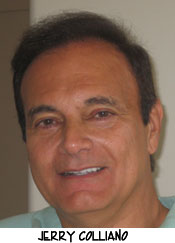 (Rested and ready for this week’s NAB Radio Show in Philly)
The new National Association of Broadcasters CEO is going to be introduced to his constituents this week at the NAB’s annual Radio Show in Philadelphia.
There is little time to waste righting the ship from the ravages of radio consolidation.
I know what you know about Gordon Smith, a former Republican senator from Oregon but if Bonneville’s Bruce Reese had an influence in this choice — after all, Reese headed the search committee — then I am willing to cut Smith some slack and wish him the best of luck.
At the same time, I’ve got some suggestions for Smith — a man whose roots are in radio — that his new agenda at the NAB should embrace.
There is no time for business as usual.
I know. I know.
Associations are all about maintaining the status quo and protecting the shortsighted members for whom the CEO works.
But if Gordon Smith chooses that road, there will be no NAB in the next ten years and if one remains, it will be one that has been rendered powerless.
So here are seven suggestions as to how the new NAB CEO can save the radio industry and with the NAB’s Radio Show this week, now couldn’t be a better time to have a public discussion on priorities.
1. Negotiate with the record labels to gain advantageous rates for any terrestrial radio station doing new media projects
My friends in the music industry are having radio for lunch. They are just better at lobbying, better than radio at rallying the cause for more royalties. The RIAA and MusicFirst Coalition have already offered to work on a compromise with the new NAB head.
Look, I will always believe that radio deserves a free pass when it comes to the performance tax exemption because it has given the labels a free ride in publicity from which to sell its products.
But … that is increasingly looking like a lost cause.
A growing segment of the public doesn’t back radio’s position. Even though the NAB has been able to hold a slim lead in arm twisting among Congressional representatives, it’s about even with members of Congress backing the performers demand for repeal of radio’s exemption.
If Gordon Smith decides to fight until the last person is standing on this issue, it will be like Custer’s Last Stand. Radio is going to lose the battle over more royalties, sad to say, so it’s time to negotiate for a sweet deal before the industry only gets to pay more tax. That is, if you agree with me that royalties are coming to a radio station near you, then get something back in return.
What?
Low, long-term and very favorable rates for terrestrial broadcasters who want to start new content streams on the Internet — rates separate and apart from other interests. This is one of the places radio operators will have to go for their future and now is a good time to nail down low rates and favorable conditions that will give broadcasters an edge over other competitors in that space.
2. Build strength through small operators
Past NAB CEOs have kissed the butts of the “big boys” for too long.
Look around, the “big boy”s are going down. Radio may very well be redistributed to smaller operators who want to make a last ditch try at terrestrial radio and new media together as a business brand. What a great time for the NAB to embrace the needs and concerns of these small or medium operators who are going to have to mop up the mess Clear Channel, Citadel, Cumulus and some predecessors have left for them.
3. Encourage small ownership
The future of radio — if there is to be one — is in smaller companies doing local radio well — and whether they know it or not — also doing original content as webcasters, mobile content providers and social network engineers.
Gordon Smith should lobby his former associates in Congress in whatever way would be helpful to give a break to small and medium operators stepping in to save radio. This means tax breaks (I’m sounding like a Republican) and government oversight but not heavy regulation (I’m sounding like a Democrat).
Loans for locals looking to preserve local broadcasting in smaller markets.
4. Do not oppose some deregulation
I can just see this scenario coming — the first Smith press release from the NAB trying to fight deregulation.
Consolidation as it was implemented was wrong and didn’t work.
But if the NAB comes out in favor of the status quo (which is likely), it will not be cooperating with the inevitable which is that either radio stations wind up in the hands of smaller local groups with some responsible oversight or it won’t last the way it is configured now.
What we have now is unacceptable and if the NAB espouses that, the NAB will be unacceptable.
5. Fight against the so-called Fairness Doctrine
No Fairness Doctrine — not now, not ever.
It won’t be needed if the NAB fights for local operators because these stations will guarantee that enough local voices will he heard on every issue.
This is non-negotiable as as tenet of our industry’s valued and hard fought freedom of speech.
I expect Gordon Smith to lead this fight for as long as it takes and keep in mind that freedom of speech is always under attack — unfortunately.
6. Get podcasting royalties that are favorable as podcasting is the next radio
Look around, no boom boxes — just iPods and mobile devices. The next radio will be podcasting and right now podcasters can’t even play music without going broke in a confusing set of rules pertaining to music on podcasts.
If podcasting is to be a key element of radio’s future, now is the time to lead the fight for fair, low and long-term rates to kick start the industry.
7. Pitch a big tent to become the National Association of Broadcasters and Content Providers
There are 80 million new listeners coming of age in the next generation. It’s fair to say they are not big radio listeners — they are mobile phone users, iPod owners and social networking devotees. Radio is morphing into other things and this is as good a time as any to welcome in new media to create one strong association for like-minded media interests.
If you feel as I do that the appointment of Gordon Smith is a good time to reset the agenda for the interests of the real radio industry and not just more of the same for consolidators, then feel free to forward this piece to your friends and associates.
And make these and other priorities known to the new NAB — after all, it’s your trade group. Why not show them who the boss is?
For those of you who would prefer to get Jerry’s daily posts by email for free, please click here. IMPORTANT: Your subscription will not become “active” until you open an email from Feedburner immediately sent to your email inbox or spam filter.
Thanks for forwarding my pieces to your friends and linking to your websites and boards.


 Figures like Joan Morgan, Kevin Powell, Toure, Karen Good, Danyel Smith, Michael Gonzalez, and Scott Poulson Bryant—what I’ll call the Vibe Magazine generation—along with seasoned critics like Harry Allen, Greg Tate, Barry Michael Cooper and Nelson George (all veterans of the Village Voice in the 1980s) were among the writers that graced the pages of Vibe Magazine, contributing to what became a late 20th century renaissance of Black thought and thinkers. The best of those writers brought contemporary Black popular culture in conversation with the rich traditions that came before. At its best, the Vibe Magazine generation helped establish the criteria for high-end popular cultural criticism and perhaps the first sustained critical view of Black youth culture that was informed by Black youth culture.
 The Internet has been an important component in bringing so many more voices to light—voices that were largely ignored a generation ago—but the democratization of criticism has undermined the value of cultural and critical expertise. Thus figures like Stanley Crouch and John McWhorter can be pitched as credible critics of hip-hop culture, though neither man has expertise on the subject.
 In this ever changing and evolving digital music world, listeners are able to get their music fix from numerous sources. While urban radio’s PPM ratings are not bad nationwide, there are some stations that are struggling pretty badly. Either way corporations needing to cut costs are eliminating black programmers in certain markets and using

 This Year, Hip Hop Congress is proud to announce its 2009 National Conference to be held in SEATTLE, WA. With a bubbling hip-hop scene easing it’s way on to the national radar, Seattle provides a prime location. The conference will focus on practical “do it now” solutions to create social and business progress for the hip-hop community and the communities it was born from.

 Back in 1865, two years and some change after Abe Lincoln’s Emancipation Proclamation, the slaves in Texas finally got the memo that chattel slavery had been abolished. Better late than never I suppose. However, if the right wing talking heads had their way, black folks would still be picking cotton in 2009.