Looking Back at Huey Newton’s Thoughts on Gay Rights…In the Wake of Obama’s Endorsement

This was a speech given August 15 1970 by Huey Newton co-founder of the Black Panther Party..here he addresses the issue of Gay Rights… Its serious food for thought coming in the aftermath of President Obama endorsing Same-sex Message…
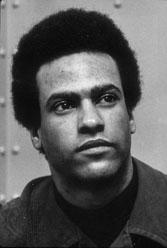
Huey Newton

During the past few years strong movements have developed among women and among homosexuals seeking their liberation. There has been some
uncertainty about how to relate to these movements.

Whatever your personal opinions and your insecurities about
homosexuality and the various liberation movements among homosexuals
and women (and I speak of the homosexuals and women as oppressed
groups), we should try to unite with them in a revolutionary fashion.
I say ” whatever your insecurities are” because as we very well know,
sometimes our first instinct is to want to hit a homosexual in the
mouth, and want a woman to be quiet. We want to hit a homosexual in
the mouth because we are afraid that we might be homosexual; and we
want to hit the women or shut her up because we are afraid that she
might castrate us, or take the nuts that we might not have to start
with.

We must gain security in ourselves and therefore have respect and
feelings for all oppressed people. We must not use the racist attitude
that the White racists use against our people because they are Black
and poor. Many times the poorest White person is the most racist
because he is afraid that he might lose something, or discover
something that he does not have. So you’re some kind of a threat to
him. This kind of psychology is in operation when we view oppressed
people and we are angry with them because of their particular kind of
behavior, or their particular kind of deviation from the established
norm.

Remember, we have not established a revolutionary value system; we are
only in the process of establishing it. I do not remember our ever
constituting any value that said that a revolutionary must say
offensive things towards homosexuals, or that a revolutionary should
make sure that women do not speak out about their own particular kind
of oppression. As a matter of fact, it is just the opposite: we say
that we recognize the women’s right to be free. We have not said much
about the homosexual at all, but we must relate to the homosexual
movement because it is a real thing. And I know through reading, and
through my life experience and observations that homosexuals are not
given freedom and liberty by anyone in the society. They might be the
most oppresed people in the society.

And what made them homosexual? Perhaps it’s a phenomenon that I don’t
understand entirely. Some people say that it is the decadence of
capitalism. I don’t know if that is the case; I rather doubt it. But
whatever the case is, we know that homosexuality is a fact that
exists, and we must understand it in its purest form: that is, a
person should have the freedom to use his body in whatever way he
wants.

That is not endorsing things in homosexuality that we wouldn’t view as
revolutionary. But there is nothing to say that a homosexual cannot
also be a revolutionary. And maybe I’m now injecting some of my
prejudice by saying that “even a homosexual can be a revolutionary.”
Quite the contrary, maybe a homosexual could be the most
revolutionary.

When we have revolutionary conferences, rallies, and demonstrations,
there should be full participation of the gay liberation movement and
the women’s liberation movement. Some groups might be more
revolutionary than others. We should not use the actions of a few to
say that they are all reactionary or counterrevolutionary, because
they are not.

We should deal with the factions just as we deal with any other group
or party that claims to be revolutionary. We should try to judge,
somehow, whether they are operating in a sincere revolutionary fashion
and from a really oppressed situation. (And we will grant that if they
are women they are probably oppressed.) If they do things that are
unrevolutionary or counterrevolutionary, then criticize that action.
If we feel that the group in spirit means to be revolutionary in
practice, but they make mistakes in interpretation of the
revolutionary philosophy, or they do not understand the dialectics of
the social forces in operation, we should criticize that and not
criticize them because they are women trying to be free. And the same
is true for homosexuals. We should never say a whole movement is
dishonest when in fact they are trying to be honest. They are just
making honest mistakes. Friends are allowed to make mistakes. The
enemy is not allowed to make mistakes because his whole existence is a
mistake, and we suffer from it. But the women’s liberation front and
gay liberation front are our friends, they are our potential allies,
and we need as many allies as possible.

We should be willing to discuss the insecurities that many people have
about homosexuality. When I say “insecurities,” I mean the fear that
they are some kind of threat to our manhood. I can understand this
fear. Because of the long conditioning process which builds insecurity
in the American male, homosexuality might produce certain hang-ups in
us. I have hang-ups myself about male homosexuality. But on the other
hand, I have no hang-up about female homosexuality. And that is a
phenomenon in itself. I think it is probably because male
homosexuality is a threat to me and female homosexuality is not.

We should be careful about using those terms that might turn our
friends off. The terms “faggot” and “punk” should be deleted from our
vocabulary, and especially we should not attach names normally
designed for homosexuals to men who are enemies of the people, such as
Nixon or Mitchell. Homosexuals are not enemies of the people.

We should try to form a working coalition with the gay liberation and
women’s liberation groups. We must always handle social forces in the
most appropriate manner.

Dead prez, Mikeflo & Mos Def (Yasin Bey) Remake Nas classic in honor of Trayvon Martin

This is a nice re-make of Nas‘ song ‘Made You Look’ by Mos Def aka Yasin Bey, dead prez and Mike Flo. Its called ‘Made You Die’ and it’s a tribute to Trayvon Martin. Its a dope song we all needed to hear as it definitely hits the mark in a big way..

I recently got a chance to talk to M1 of dead prez earlier this month about the song and he noted that all of them happened to be in New Orleans at the same time for some events surrounding Katrina survivors when they got together and decided to do something special for Trayvon..He noted its important for artists to step up and give the people something to be inspired or be healed by.. He noted the streets are his office and he and his crew will always be there for the people. In other words it was a no brainer for them to do such a song..

During our convo, M1 also gave some insight about the climate in and around Sanford, Florida.. M1 used to live in that area and still has family down there.. While its overtly racist, he noted that the Uhuru Movement is headquartered not to far from Sanford and hence there is a strong spirit of resistance in that area..

You can peep our interview with M1 at the link below..

http://www.youtube.com/watch?v=WcmUAG210oM

Below is a video of the group working on the song ‘Made You Die‘.. here they give some insight as to why they decided to step up and represent..

http://www.youtube.com/watch?v=54heaNynlfs

Our Interview w/ George Clinton Battling the Music Industry Sharks

We sat down with the Godfather of Funk George Clinton and talked about the state of music in 2012.. His relationship with Hip Hop.. We also went into great detail about his financial situation with respect who owns what when it comes to his catalogue.. Clinton talks about the shadiness of the industry and what he’s doing to fight back..Thus far there have been law suits and George working on a new project designed to make sure artist get their copyrights and the industry is flipped upside down.. Enjoy

George Clinton Interview

The Death of Adam MCA Yauch is a Hard One to Shake

Yesterday Hip Hop lost a pioneering figure and legend Adam ‘MCA’ Yauch of the Beastie Boys. There’s so much one can say about him ranging from his pioneering status of being a member of one of the first successful white acts in Hip Hop (they sold more than 40 million albums) to his activism around Tibet and their independence movement and more recently around Occupy Wall Street.

It was pointed out by writer Dave Zirin that Yauch who had been battling cancer for the past 3 years was part of that infamous March last fall across the Brooklyn Bridge when police were shown beating and arresting over 700 protestors.Yauch risked arrest and bodily harm that day in his participation.. He was in the middle of cancer treatments when he marched.

We can talk about Yauch coming out of Punk Rock culture and and how there’s a rich and undervalued history that shows how early Hip Hop and Punk found kinship and natural alliance as members of both genres felt alienated and disenfranchised by society and back then,  a disco laden, formulaic music industry.

We can talk about Yauch being part of a crew who under the musical production of Rick Rubin as writer Dan Charnas recently noted, helped usher Hip Hop from the Beat Box era to the sampling era. We can talk about how Run DMC introduced the world to the Beastie Boys and later the Beasties introduced the world to Public Enemy.

We can talk about Yauch branching out and becoming a skilled music video producer and film director. He founded Oscilloscope Laboratories, an independent film production and distribution company based out of New York City.

Adam did great things. He accomplished much… and those who knew him personally described him as serious, sensitive, genuine and a really cool guy. He will definitely be missed.

Yesterday we did a tribute n Hard Knock Radio 94.1 FM  with Big Payback author Dan Charnas.  Here’s what he had to say about Adam MCA Yauch

http://www.youtube.com/watch?v=74WJkyUtBYs

Heavy D is one of many iconic figures to pass away from health related ailments before the age of 50

Above and beyond his music career and activism, for many in the Hip Hop Generation Adam’s death  underscores a very disturbing trend. Him dying at 47 is increasingly becoming commonplace where many of our icons, peers, family and friends are barely living to 50. In the past couple of years we’ve lost many legends including MIchael Jackson, Whitney Houston, J-Dilla, Guru, Professor X, Big Pun, Poetic, DJ Screw, Heavy D, Eyedea, MC Breed, Pimp C, Big Moe, ODB, Nate Dogg, Bernie Mac, and Special One of the Conscious Daughters just to name a few..

These names are on top of those we know and love who died violently or via accident like; Proof, Freaky Tah, Big L, Stack Bundles, Souljah Slim, Left Eye, Aaliyah, Dolla, M-Bone, Mac Dre, Left Eye and most recently football legend Junior Seau.

If we toss in names like Eazy E, Marvin Gaye, 2Pac and Biggie the names of untimely death is a long one.

Yesterday someone attempting to be stoic & cavalier upon hearing about the death of Adam, asserted,  ‘Oh well death is a part of life’..

I responded;  ‘What kind of life is this when so many who we, know, luv and admire are all dying before the age of 50.’

This is not just about people dying at the hands of violence, but so many on the list of names I noted above, are dying from health related ailments. This is unacceptable and should not be ‘just a part of life’. That’s called settling.

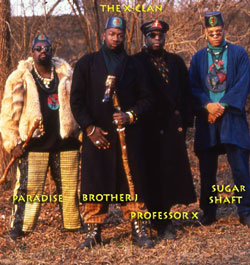
During our tribute show around Adam’s death  Paradise Gray of the group X-Clan came on and recounted his friendship with Adam. He also reminded our listeners how the Hip Hop Generation has grown up in a world during the Reagan era when society started dismantling  safety nets. Our generation saw the beginning of repressive forces gutting and further privatizing healthcare and other much-needed services..

Paradise said we are now starting to see the results of that societal divestment with so many people checking out before age 50.

‘Many in Hip Hop never had health insurance’, Paradise said. This is an issue he knows all too well having lost two of his groups members to untimely health related death, Sugar Shaft and Professor X.

Here’s our Interview w/ Paradise Gray:

It’s not just health insurance when your sick, but the ability to go to the doctor, get routine check ups and be educated on ways top prevent early disease. Paradise said over the next 10 years things will get worse, because many never really took care of themselves or had the opportunity or resources and as a generation hits their late 40s and then 50s illnesses will start to emerge and yield serious consequences.

We lost Adam to cancer, but in recent times we’ve some like artist/activist DJ Kuttin’ Kandi and pioneering photographer Ernie Paniccioli who have been saddled with massive medical bills after getting sick. Last year we were all out collecting money Ernie who was diagnosed with cancer as well as for the Father of Hip Hop Kool Herc who suffered from severe kidney stones and had no health insurance.   Kandi who was recently had her heart stop and had to get emergency surgery is raising money for her care HERE

In the wake of Adam’s passing, the Hip Hop Generation has much to reflect upon. The Black Panthers who were a couple of generations ahead of us, had the good common sense to open up free health clinics for the community. This act may have saved countless lives. We within Hip Hop need to step our game up in a big way and take the vast amounts of money and resources we have access to and follow suit. We should do this for ourselves and do this for those in our ranks who are ailing. We should do this in memory of Adam who we saw emerge as a keen activist, generous and thoughtful man….

RIP Adam MCA Yauch

Cinco de Mayo: Marking it’s 150th Anniversary & it’s hidden link to African people

Ron Wilkins

In 1861, the 1st year of the U.S. Civil War, the Secretary of State for the Confederate States of America Robert Tombs sent John Pickett as his envoy to Mexico City. Since Union forces had blockaded southern ports, Pickett’s mission was to persuade the government of President Benito Juarez to allow slave produced cotton from the U.S. south to be transported overland and loaded onto ships anchored in Mexican ports. The cotton was to eventually be sold to various European countries to help support the Confederate war effort.

Despite persistent attempts to gain Mexico’s approval the Mexican government refused and John Pickett’s mission failed. To compound Pickett’s failure and disappointment prior to his return empty handed to the U.S. south, he was thrown into jail in Mexico City after getting into a fist fight with a Union sympathizer there. U.S. rulers have been careful to exclude this event and any acknowledgement of the mutually beneficial history that Mexican and African people share.

The destiny of Africa’s scattered people has been impacted and decided in more countries than popular history has acknowledged. Mainstream history does not reveal how Africans benefited from France’s humiliating defeat at Puebla, Mexico on May 5, 1862. Cinco de Mayo is a fitting and spirited annual celebration which reminds us of Mexico’s heroic, although short-lived victory over Napoleon 3rd’s larger and better-armed forces.

Black people should also celebrate the French army’s defeat at the hands of Mexican forces for two reasons. First, Napoleon’s generals, who commanded the French invaders, supported the slave-holding Confederacy in the U.S. Second, Benito Juárez, the president of Mexico at that time, gave land to anti- colonial Black-Seminoles.

Napolean III

Napoleon III had hoped that the Confederacy would quickly win the U.S. Civil War, retain slavery and supply southern cotton to French textile mills. Napoleon was encouraged by the major Confederate victory over union forces at Bull Run. He envisioned an alliance between himself and slaveholding U.S. southerners to guarantee raw materials for French industry. Napoleon was well on his way to satisfying this ambition when the defenders at Puebla, although out- manned and out-gunned, interrupted his imperialist ambitions to conquer and subjugate Mexico’s people, and position himself side by side with those who held Africans in bondage.

The French forces, considered to be the best army of that day, were so contemptuous of Mexican forces that they attempted to push right through the center of Puebla’s defenders in their first assault. This tactical error cost the French over a thousand casualties, dead or wounded, strewn on the battlefield. The Mexican army was so heartened by their success that they left their positions and chased the humiliated French troops. The defeat of a Confederate ally such as Napoleon, is a historic event that descendants of enslaved Africans and all others who uphold democracy should celebrate with enthusiasm. It was President Benito Juárez who gave land to a faction of the Black-Seminole freedom fighters that had carried on a long and courageous war of liberation against Spanish and U.S. colonizers. It was certainly in the interest of Blacks on both sides of the Rio Grande, that the Juárez government which had befriended rebellious slaves, and whose predecessor had outlawed slavery, survive Napoleon’s invasion and continue in office.

It is interesting to note that Napoleon was urged to invade and overthrow the Mexican government by the brother of Austria’s emperor Archduke Maximilian. Maximilian’s involvement in the plot gives Africans even more cause to join with Chicano neighbors in celebrating Cinco de Mayo. Six years before Napoleon’s ill-fated invasion of Mexico,

Maximilian married Carlotta, sister of the infamous King Leopold 2nd of Belgium- a racist despot who was personally responsible for colonizing, mutilating and annihilating millions of Congolese in his drive for profits. It is also worth noting that during this period Europe’s ruling elites were busily plotting the conquest of non-Western people-often cooperating with one another and occasionally competing. By 1884 at the infamous Berlin Conference France, Britain, Germany, Portugal, Spain, Belgium, Italy and the Netherlands, joined by the U.S. as godfather, resolved their differences and divided the African continent among themselves.

Through shared misfortune – conquest and slavery – the histories of Mexicans and Blacks in this hemisphere have become inseparably linked. Few, if any, oppressed people have overcome adversity without assistance from allies. Indigenous and African people have been one another’s primary ally in many instances, since the beginning of the pillage, slavery and genocide initiated by Columbus in the Americas over 500 years ago. From Canada to the southern tip of South America, countless acts of joint resistance to colonization and slavery are central to the suppressed history of both peoples. Present-day Black and Brown conflicts whether at high school campuses, on the streets, on the big yard at San Quentin or between equally disempowered Latino and Black laborers in South L.A., rewards the same elites whose wealth and power are dependent upon divided and unorganized people of color.

Whether the flashpoint is Puebla or Chiapas, Cinco de Mayo is a perfect time to reflect upon and discuss the continuing resistance by Mexico’s people to domination, and when appropriate, the complimentary dynamics of the struggles for Black and Brown liberation. Cinco de Mayo is not to be commercialized by opportunists or trivialized as a one day superficial and lukewarm acknowledgement of Mexican culture. When honest accounts of history are finally written into textbooks, African and Mexican (Latino) youth will be be better able to affirm, deepen and project their long-established unity into the future.

written by Ron Wilkins (Professor & original LA Slauson)

source: http://thesoundstrike.info/2012/05/03/cinco-de-mayo-marking-its-150th-anniversary-its-hidden-link-to-african-people/

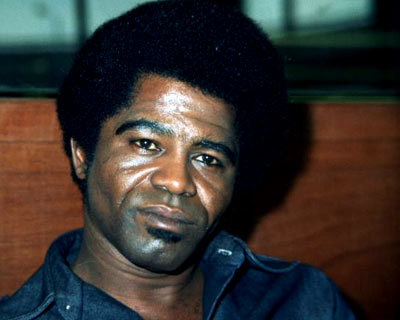
Today is James Brown’s Bday: Did Your Local Hip Hop Station Remember Him?

Today is May 3rd and for many of us this date holds no real meaning except that it either signifies another payday or the start of Cinco de Mayo weekend (Cinco de Mayo is May 5th). Sadly, there are many of us who are knee-deep in Hip Hop culture who have never took notice when May 3rd rolled around, but perhaps we should. After all, it was on this day back in 1933 in Barnwell, South Carolina that Hip Hop’s true Godfather was born.

Like so many within Hip Hop he had a harsh childhood. Before he was even 5 years old, Hip Hop’s ‘true Godfather was shipped off to Augusta, Georgia where he lived in a brothel owned by his Aunt. As a child he earned his keep by running errands and trying to solicit soldiers from the nearby base to visit his Aunt’s establishment. Like so many who came after him, the hardships and him needing to hustle led to a life of crime. He eventually had to serve jail time until he finally got himself together. It was that humble and troubled upbringing that sparked a fire and laid down the ethos of Hip Hop-to create something out of nothing.

No, I’m not talking about is not Kool Herc, Afrika Bambaataa, Grandmaster Flash or any of the other often named pioneering cats. However, if you sit any of them down in a room, they will tell unequivocally that they are children and grandchildren to this individual who wound up being Hip Hop’s original driving force and musical inspiration. His music, vocal delivery and showmanship would influence everyone from Chuck D of Public Enemy to MC Hammer.

One has to understand that back in the days when Hip Hop was first evolving in the 1970s Hip Hop’s pioneering figures routinely paid tribute to the musical offerings of this individual. While Black radio stations moved in a direction that embraced formalized disco, the musical landscape of the early Hip Hop Park Jams was juxtaposed. Classic songs like ‘Soul Power‘, Pass The Peas‘, Funky Drummer‘ and ‘Get Up, Get Into It, and Get Involved‘ would blare through the sound systems of Hip Hop’s early deejays and drive the early b-boys and b-girls to the edge. In later years many would point to this individual’s signature dance ‘the Good Foot‘ and his song ‘Get On the Good Foot‘ as the inspiration for what we now call ‘break dancing’.

http://www.youtube.com/watch?v=4DAfBZbz3tI

For those who don’t know who I’m talking about; it’s the ‘Hardest Working Man in Show Business‘. I’m talking about ‘Mr. Dynamite’ himself-Soul Brother #1- James Brown and today-May 3rd is his birthday. There are more than a few good reasons to celebrate. Let’s just say for starters that no individual has been sampled more times than James Brown. To date his music al treasure chest has been sampled by more than a thousand artists. To see a partial list of all the songs that contain James Brown samples go to http://www.xampled.com/blog/sampled-from/james-brown/

Peep this insightful incredible interview w/ James Brown from Detroit’s Black Journal

http://www.youtube.com/watch?v=Y-_8oRFB-9c

Professor Rick Vincent-

History of Funk‘ author and KPFA Radio host Professor Ricky ‘The Uhuru Maggot’ Vincent notes that James Brown is perhaps the most important individual in modern music who has done more to change the structure of Black music than any other person in history. Vincent explained that in many respects James Brown ‘Africanized’ Black music by changing the rhythm, the structure and the manner in which soul/Black music was played.

Vincent elaborated by noting that prior to James Brown, much of Black music was based in the Blues tradition which derived from the slave experience and the fact that we were not allowed to play the drum. Much of our music had a melancholy feel that was sometimes accompanied by polyrhythmic swings. This ‘swing’ aspect is clearly defined in traditional music forms of Black music like Spirituals, Ragtime, Bebop, Jazz and early Rock-N-Roll which was called Race Music. According to Vincent, this polyrhythmic swing aspect was essentially our collective attempts to recreate the drum

When James Brown entered the scene all that changed. He delivered the drum front and center. Vincent noted that James Brown brought out a more prominent rhythmic foundation for the music and introduced the important concept of ‘Hitting on the One’. James Brown focused his entire band including the complex horn, rhythm guitar and keyboard arrangements of his band mate Fred Wesley, Pee Wee Ellis and Nat Jones to ‘deliver on the one’. James Brown punctuated his efforts by using his voice with his vintage grunts, groans and screams as a binding force which also drew everything ‘on the one’. It seems so simple and commonplace today, but back then it was ground breaking.
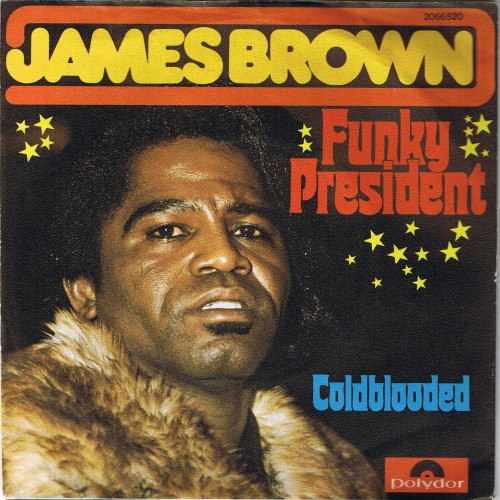
Vincent who eloquently breaks this whole thing down in book ‘The History of Funk’ went on to add, that prior to James Brown most American music built upon the Blues tradition. After James Brown, American music built upon the tradition of the Funk concept of ‘Hitting on the one’. Everything from ‘disco’ to ‘modern rock’ to Hip Hop has built upon that concept introduced by James Brown. In later years the West Coast Hip Hoppers would build around the music of Parliament and George Clinton who themselves were directly influenced and inspired by the ‘Hit it on the One’ concept of James Brown.

What’s even more interesting about James Brown was the fact that early Hip Hoppers kept his name in circulation and his music ‘in the mix’ at a time when many in the music industry seemed to move beyond him. Vincent explained that in the 60s James Brown for the most part had become a pop star who was delivering hit after hit. [The only person to have more number one records then James Brown was Elvis Presley]. He suddenly found himself out of favor on the pop side of town after he delivered his anthem ‘Say It Loud I’m Black and I’m Proud’. Songs which came after like ‘The Big Payback’ which was his most successful venture came after further pushed him away. He had simply become two Black for pop radio.

By the early to mid 70s Black radio at least in New York City had stopped playing James Brown despite the fact that he was recording 2-3 albums a year. That’s at a higher pace then 2Pac and that’s not counting the additional recordings he delivered with members of the James Brown family which included artists like Lynn Collins, Marva Whitney, Bobby Byrd, Maceo, Fred Weasly and the JBs, and Martha High. Brown’s relentless drive positioned him to be a major force in music during the 70s and while he did drop a couple of big hits he wasn’t the mainstay artist like those who came after him and built upon his concepts.

https://www.youtube.com/watch?v=1N5jY00z_Sk

Vincent noted, the problem that James Brown was running into was the fact that many of the artists who came after him retooled their overall sound to be smoother and more mellow. In the early 70s artists like Curtis Mayfield, Eddie Kendrick, Marvin Gaye and Teddy Pendergrass ruled the airwaves with their message type songs over melodic beats. For the most part James Brown remained raw and gritty and very street.

By the mid 70s to late 70s disco began to take hold and displaced the sounds delivered by many of the aforementioned soulful artists. At one point James Brown tried to shake things up and boost sagging record sales by releasing an album called ‘The Original Disco Man‘ which contained a song called ‘Too Funky‘. Sadly, the album never ‘moved the crowd’ and wound up flopping.

James Brown & Afrika Bambaataa

So while James struggled to get a foot hold within the changing discotized music industry, in the parks and on the early Hip Hop sets of the Bronx, James Brown was king. You could not go to a jam and not hear James Brown. And soon as one of his jams hit the turn tables the place would go wild. His raw gritty street style sound was embraced whole heartedly by the Hip Hop community who rode with him full throttle all the way up until the late 80s. By then James Brown had hooked up with a number of rap artists including Afrika Bambaataa, Full Force and MC Hammer to record songs.

https://www.youtube.com/watch?v=ZS0W57nFZcg

It wasn’t until the p-funk/George Clinton inspired sounds of West Coast Hip Hoppers began to emerge that James Brown began to take a back burner within Hip Hop circles. It also didn’t help that he along with the rest of the music industry started clamping down on recording artists were sampling his music like there was no tomorrow.

We could do an entire book on the significance of James Brown. In fact there are several that are already written and film maker Spike Lee is gearing up to do a movie that chronicles the life and times of Mr. Brown.

It’s both interesting and sad that many of us in Hip Hop allow our pioneers to drift away in obscurity. Many of us even get arrogant and try to act like that what they are doing is new and unique when in fact it has been done before over and over. Without the history, not only do we not have the opportunity to build on past legacies, we also run the risk of making false analysis and assumptions.

For example, I ran into some ‘keep it real type cat’ who took the position that James Brown had nothing to do with Hip Hop. Dude really believed what he was saying but as we talked I came to find out that he did not know that James had even recorded a song with Bambaataa. But at 19 years old where was he really gonna get that info? He wasn’t even born when that landmark record ‘Unity‘ was first released. The local Hip Hop stations never play the song and even sadder they certainly they don’t do any interviews with Bambaataa or James Brown when he was alive and came to town.

Contrast that with the type of respect and reverence folks have for rock icons. We celebrate their birth dates and various milestones of their careers. Music legends like The Beatles, Elvis Presley, The Rolling Stones and even Kurt Cobain of Nirvana are given major dap as their musical legacies are passed down from one generation to the next.

Recently former Beatle Paul McCartney swung through Oakland to kick off his tour and it was a sight to behold. Not only did the event sell out and was the lead story on the evening newscasts, you also got a chance to see in attendance father and son and in some cases, grandfather, father and son. The bottom-line there was definitely an appreciation and an upholding of the musical heritage and legacy for a sizable segment of our population. Rock-N-Roll will live forever, because fans and practitioners make it a point to never let their heroes wither away into obscurity.

http://www.youtube.com/watch?v=G7JUzrkQZkQ&feature=related

The perception is that Little Johnny from the suburbs is likely to know at least a little something about Elvis or The Beatles while Little Darnel from the hood is hard pressed to tell you something about the most recent musical icons. I swear to God when I speak at schools I’m amazed how kids who love Juvenile, BG and Jay-Z will draw blank stares when you mention groups like X-Clan, Jungle Brothers and even Public Enemy. They’re completely at a loss when you start talking about James Brown, George Clinton and others. Sure they may have heard the names, but they never heard the songs. Sadder still they have no idea of their importance. Hence, that is the reason for penning this article. It’s up to us to make the necessary changes. Not only do we wanna say happy Birthday James Brown, but also we want to pass along a few tidbits to build upon.

For more info on James Brown be sure to peep out Ricky Vincent’s book ‘The History of Funk‘. Also be sure to peep www.kpfa.org starting tonight after 7pm and all day Saturday to hear non stop James Brown…

written by Davey D

http://www.youtube.com/watch?v=BawG-N9_FR8&feature=related

https://www.youtube.com/watch?v=MBKz8pDNuto

Righteous and ready to burn: 20 years after LA

It’s time to show the mothafuckin’ news how the streets feel /
Give ‘em a cup of this truth they need a refill…
Damn, that’s the life we live /
If a pig wanna shoot you than your life is his /
I guess the laws don’t know what bein’ righteous is
By Any Means, Young Gully (2010)

Righteous and ready to burn: 20 years after LA

by Jesse Strauss

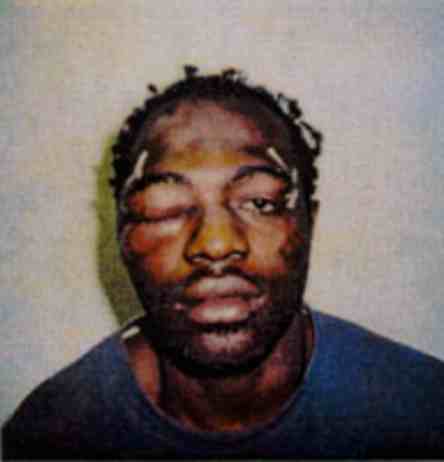
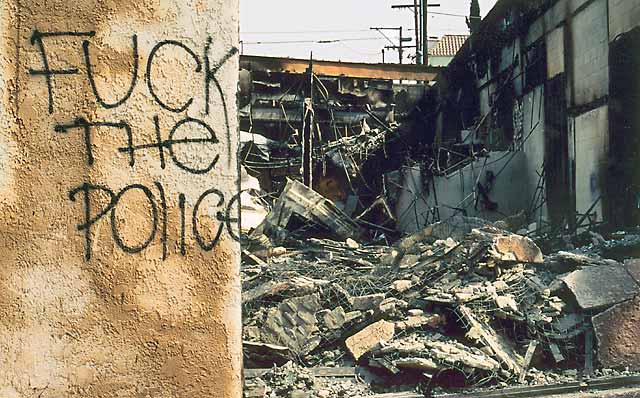
Twenty years ago this weekend, after four cops were acquitted for the widely publicized assault of Rodney King, communities in LA united in anger. In under a week, thousands showed through physical expression of their anger that the Dream of the U.S. was not working. In that time 53 lives were taken and more than 3,000 fires caused about a billion dollars of damage, according to reports. But let’s be clear: two decades after LA went up in flames, the anger still bubbles barely beneath the surface and the US remains in crisis.

Every April, I spend time finding accounts and analyses of the 1992 rebellions. For the 20th anniversary, some LA-based news organizations have put together spotlight websiteshighlighting the events of 20 years ago and what has changed since. A few things stand out.

First, there’s a heavy focus on ways the Los Angeles Police Department has improved in the past two decades. There’s a similar focus on how “race relations” have improved.

Fuzzy comfort

Rodney King

As evidence of how LA has “changed over the years”, the LA Times offers a short photo gallery of “then” and “now” images — for example, what a burning building looked like in the midst of rebellion, and what that same space looks like now — without any explanation of what the contrast is meant to represent. Buildings currently standing where others burned may look better now than they did while on fire. But beyond the fuzzy feeling that a modern lack of fire means peace, they’re irrelevant. LA continues to have decrepit buildings and abandoned overgrown lots, some in the same places where buildings burnt down in 1992. A photo series could have the exact same effect if it compared images from burning buildings in the 1965 Watts Rebellion to what those same places looked like on April 28th 1992—the day before another round of rage-fueled fires ignited.

The anniversary coverage in 2012 tries to offer a warm-and-fuzzy comfort, but some of it seems pulled from thin air. This MSNBC article cites a Loyola Marymount University study reporting that “most say LA is unlikely to see a repeat of such riots in the coming years.” Butthe study doesn’t seem to say anything like that. Rather, it is entirely focused on people’s changing perceptions of police since 1997, and actually suggests that people are slightly more dissatisfied with the LAPD overall than they were when the study started.

The implied sense of calm or peace that the photos and bizarre survey reports offer is in a way representative of cultural change in the past 20 years. We haven’t seen uprisings to the scale of the LA rebellions since then, but the righteous anger that fueled those events has not been significantly addressed. Rather, it’s been reinforced.

Let’s be clear: a lot has changed since 1992. Globalization has affected us deeply: We now have a much more intensely consolidated media mechanism; “free trade” policies that encourage migration patterns moving north from Latin America; wars that have been fought and lost in our names for more than a continuous decade – which corresponds to the racial targeting of Middle Eastern, South Asian and Muslim people; and far more access to global communications (internet) than most of us could’ve imagined in ‘92. Racism has changed too, but rather than being at ease, it has adapted. “Free trade” with Mexico comes with legally- and racially-targeted limited freedom of movement for Xicanos/Latinos in the form of the Minute Men, laws like Arizona’s SB1070 and that same state’s elimination of ethnic studies curriculum. 9/11 and a decade of war corresponds to Islamophobia campaigns and religiously (and often racially) targeted violence towards Middle Eastern, South Asian and Muslim. And urban outbursts, kicked off by racially stigmatized events, still happens regularly.

Putting the PIC on blast

The famed video of Rodney King being attacked in the middle of a road by a crew of baton-wielding aggressor cops became the first incidence of “citizen journalism” (or according to media reports back then: “amateur photography”) that, when brought to a mainstream news source, demonstrated to the world what was already known to many in Black and Brown communities about racially-targeted police violence. But that didn’t tip off rebellions, as the video emerged in March of ’91: more than a year before the rebellions.

Neither was the tipping point caused by the emergence of a surveillance video that showed the killing of 13-year-old Latasha Harlins, shot by Sun Ja Du over a fear that Harlins may have been stealing an orange juice bottle from Du’s store (the video was released two weeks after the video of King’s beating). Or even when Du was sentenced to a mere probation term for the killing (which was contrasted on local Channel 4 news at the time with a man being sentenced for 30 days in prison for beating his dog).

What set people off was the complete acquittal, on April 29th, 1992, of all the cops who attacked King.

Together, the series of events displayed publicly the ways that the “criminal justice system” works on many fronts to enforce and defend racism. Rather than exposing a few bad apples, the events showed ways that racism is embedded in the functioning of the Prison-Industrial-Complex (PIC) , both on the streets and in courtrooms. The events catalyzed an expression of righteous anger about what had been happening under the mainstream radar for a long time: so long, in fact, that there was already a built-in soundtrack for the rebellions. Music that appeared in previous years that became anthems for the rebellion was not a causal factor of burning or looting. Rather, it reflected cultural experiences and attempts to name the realitiesthat had been part of artists’ communities’ everyday experiences.

Original media coverage of the events seems to recognize some of those realities, at least superficially. One ABC news report from the time of the unrest says: “Civil rights organizations say the Los Angeles Police Department has a history of brutality and misconduct that goes back a quarter of a century, including one incident that sparked the Watts Riots. So far this year there have been 125 complaints of police misconduct filed with watchdog organizations.” While the expressions of anger in LA were largely reported as “riots” or “looting” in original news material, I don’t see as significant reference to histories and patterns of violence in newer coverage of relatable events.

In fact, a Sky9 news anchor, reporting during the uprising, referenced the local history of the Watts uprising, the present situation, and a warning for the future: “As you said, this has no boundaries. 1965, 1992, and from looking at the scores of children on the streets, you kind of hate to wonder what will happen 20 years from now.” The historicity of this comment seems almost too apt in 2012.

The LA Times’ initial report included a surprising quote from LA Mayor Tom Bradley: “The jury’s verdict will never blind the world to what we saw on the videotape.” Bradley also reportedly called the verdicts “senseless.” While this may not amount to a critique of the PIC as a whole, it offers recognition that the system can produce dysfunctional results.

Seventeen years later, on New Year’s morning of 2009, Oscar Grant, a young Black man and a father, was shot in the back by a cop while lying facedown on a subway platform, all caught on video. Afterward, bureaucratic inaction fostered impunity for the trigger-happy officer, along with his racist co-workers, leaving the people of Oakland to assume that Grant’s case would repeat what many had been seeing in their neighborhoods for a long time: official immunity from the PIC for those who benefit from it. That is, those whose job it is to enforce the PIC (police, ICE agents, judges, etc) as well as communities that are not targeted or extra-heavily policed (which happens in largely working class neighborhoods where mostly people of color live and experience in the forms of profiling and gang injunctions, for example).

The first public comment by Oakland Mayor Ron Dellums on the situation came more than a week after the killing, and after some property in the city’s downtown area had been damaged by people expressing rebellious anger. Unlike the comment from Bradley, Dellums directed his focus in a way that validated the PIC. He said he wanted the official police process “to investigate this homicide the way [they] would investigate any other homicide in the city of Oakland.” With this, Dellums missed the mark. Many in Oakland had experienced that the way official investigations operate leave more Black men in prison and corrupt cops on the streets.

Oakland’s 2009 unrest paled in comparison to LA’s in 1992, doing far less physical damage to the city. But rather than relating Oakland’s deep history of Black struggle to current events, the news slapped loaded labels like “rioter,” “outside agitator,” and “looter” on the people expressing their righteous anger in a disorganized way.

Righteous chaos

London Riots

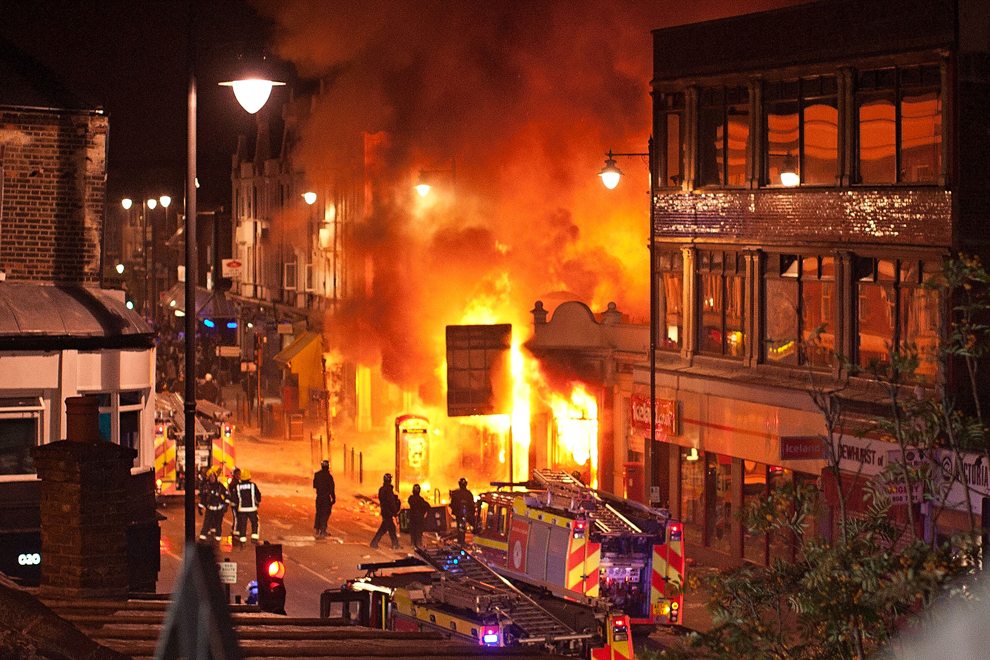
Last summer, however, we saw collective expressions of anger more closely rivaling the LA rebellions—this time in the U.K.

At a rally to support “justice” for Mark Duggan, a Black man who had been killed by gun-toting cops in his own neighborhood of Tottenham, London, a few days earlier, police reportedly started a confrontation with a young woman, setting the crowd off from a growing sense that cops hadn’t earned the authority they were demanding. London became engulfed byrighteous chaos.

The news repeated a statement by David Cameron, Britain’s prime minister: The actions were “criminality, pure and simple”, as opposed to any kind of thoughtful anger being expressed. To underline his point, Cameron said in parliament that “gangs were at the heart of the protests and have been behind the coordinated attacks.” Research by the U.K.’s Guardian showed otherwise: Not only were gang members inactive in a coordinated way during the rebellions, but that there was a de facto gang truce during that time—which also happened during LA’s rebellion.

The British government’s neglect of the underlying reasons for righteous anger leaves London unsure of it’s peaceful future. An official report on the London uprising leads to the same conclusion: “Will riots happen again? The answer is quite possibly ‘yes’.” This is because the report authors “noted a collective pessimism about the future. We were shocked by the number of young people we spoke to who had no hopes or dreams for their future.” In other words, London could reach another tipping point any day. Let’s remember that the killing of Mark Duggan wasn’t even recorded.

Globalization and adaptation

Former LAPD Chief William Bratton

London is just as far from LA geographically as it was in 1992, but the two cities’ police systems are less distinct. After the London uprising, the city brought in “gang expert” William Bratton straight from LA. Similarly, the Gulf Kingdom of Bahrain hired John Yates, a British assistant police commissioner, and John Timoney, a former Miami police chief, to help shut down the country’s yearlong unrest. This is not to equate the struggles in LA, London, and Bahrain, but rather to underline that as we begin to develop a global understanding of anger and its various and chaotic expressions, these and other governments recognize the value of practiced stifling of expression.

While righteous anger can be expressed in many ways, state responses to it appear to be growing more homogenized and standardized. The globalization of what we experience in the U.S. as over-policing or even systematic violations of our constitutional rights is becoming a valued trade technique for “experts” in crowd control.

But beyond recognized police misconduct (when cops break their own policies and the law), the expertise being imported to the U.K. and Bahrain is based on a strong handling of the PIC as a problematic and discriminatory system.

Moreover, unless a grassroots people’s movement of some kind gives the media no choice, these killings receive no attention. And this is lesson one: rebellions work. Without convincing videos or some kind of salacious sensationalism, police misconduct gains no public traction. We don’t see public beatings or killings, like those of Rodney King or Oscar Grant, every day, but that’s largely because our media mechanisms don’t care to focus on them.

That’s certainly the case in the Trayvon Martin police operation. After Martin was killed in February by a self-appointed neighborhood watch volunteer, national media couldn’t have cared less. It was a growing show of public anger, albeit very different in appearance from the LA or Oakland rebellions that brought Martin’s death into the spotlight. In his case, it was the same demonstration that the PIC is working just as it was designed, that catalyzed anger. The law supported police to allow an admitted killer to avoid arrest until a nationwide mobilization that included vigilante bounties and hoodie solidarity gave them no other choice.

But we’re still in the early stages of the Martin ordeal. Now that we have a global audience tuned in to killer George Zimmerman’s trial, what will happen if he is acquitted?

Righteous anger – 2012 remix

Twenty years after LA burned, tension stays heated. Police maintain repressive crowd control that is sanctioned by the PIC, but intensely organized policing promotes neither justice nor peace, let alone eases tensions. The experience of anger changes over time and adapts to societal changes, but the persistence of the PIC ensures a significant righteousness. On top of local experiences—as in the government’s handling of Hurricane Katrina, or school districts being shut down and sold to the highest bidders in New Orleans or Philadelphia—the root of righteous anger acted on in LA 20 years ago is being exacerbated nationally.

United for a Fair Economy’s State of the Dream 2012 report shows that already: “Blacks are six times more likely to be in prison than Whites, and people of color make up over 65 percent of the prison population.” The report offers evidence to suggest that in the next 30 years: “If we do not change course, we will continue on a path toward becoming a country in which the overwhelming share of the emerging non-White majority is economically insecure… If the trends in racial economic inequality of the last thirty years continue for the next thirty years, the racial economic divide in 2042 will be vast and devastating for communities of color and the nation as a whole.”

Let’s also not forget that as a remaining underlying construct for the PIC, slavery remains legal “as a punishment for crime” in the very document our entire legal system is based on, the Constitution.

Trayvon Martin

Of course, anger is not the only reaction we could have to these injustices, or to the case of Trayvon Martin, or of any of the 28 Black people killed by “police officials, security guards, and keepers of the peace” in the first three months of 2012. But expressions of righteous anger have not gone away. They will continue to show up in spurts and in different forms – and in potentially dangerous ways, if this is at all indicative. To be clear, I am not excusing the destructiveness, violence and rage that was expressed in LA’s, Oakland’s or London’s rebellions. Rather, this is a call to reposition responsibility for those actions on the legal sanctioning of targeting and killing people from certain communities (1) – that is, on the everyday function of the Prison-Industrial Complex.

An anger-fueled soundtrack continues to smolder twenty years after LA’s fires burnt out. With music as a reflection of socio-cultural experience, rebellious recordings are being produced out of studios and basements, and are easily accessible online. Time keeps our soundtrack moving forward, but it doesn’t erase samples from the past. While raw funk beats bumping on the radio might be replaced by the downloadable synth-heavy soundtrack of 2012, throwback references to NWA and Tupac anchor them in continued righteousness in the context of state-sanctioned injustice. Whatever actions today’s soundtracks accompany, they will reflect realities deeply rooted in local and global power structures—realities far more complex than tidy photographs of restored buildings.

(1) This piece focuses on rebellions sparked by the PIC’s targeting of people of color, and specifically Black men. This focus is intentional, in that the significant uprisings in the past two decades that share characteristics of LA’s ’92 rebellion have been sparked by the killings of Black men. These types of rebellions are characterized by the ejection or exclusion of a class of people from mainstream US culture, which is why it’s relevant to reference the PIC-sanctioned targeting of people who’ve been ejected like indigenous Americans, migrants, Muslims and queer people. In the past 20 years there have not been outright rebellions sparked by the targeting of those communities, but righteous anger from being targeted is easily accessible. But, for example, San Francisco saw the White Night rebellion in 1979 after the PIC handed the lowest possible sentence to Dan White, the killer of the city’s first queer and out elected politician, Harvey Milk, as well as Mayor George Moscone. All three of those men are white, and the uprising was acted on by righteous anger that had swelled in San Francisco’s queer and queer-supporting community.

written by Jesse Strauss

We Remember the Rodney King Uprisings and the Historic Gang Truce of 1992

As we look back on the 20th anniversary of the Rodney King/ LA Uprisings there are a few things to keep in mind that’ll hopefully bring all that went down April 29th 1992 into a clearer perspective..

The vicious beating of unarmed motorist Rodney King which was caught on tape, March 3 1991 by bystander George Holiday angered many. But at the same time it gave people some sort of hope that things would change. The video tape was seemed the crucial piece of evidence that many had long been waiting for that would vindicate thousands of Black and Brown folks living in Southern, Cali who had long complained about the brutality of LAPD…Many felt it would lead to the arrest and criminal punishment of the 4 officers who were seen striking King over 50 times with batons and tasering him. The video tape underscored the long list of social and political conditions that were leading up to the 92 Uprisings. You can peep that infamous video HERE

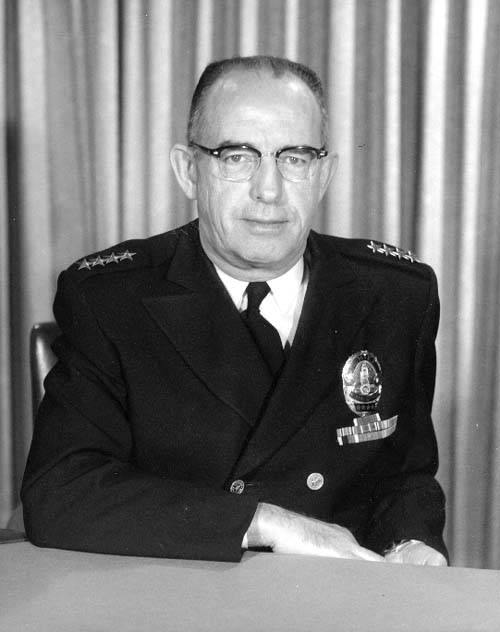
The Sordid Legacy of Daryl Gates and LAPD

Rodney King

Prior to the Rodney King beating, many in the mainstream (whites) were dismissive of complaints from people in the hood about LA police brutality. In their minds they figured whatever was done by the police was justified, after all many had come to believe that areas like South Central LA, Watts, Compton and East LA to name a few, were ‘infested’ with out of control gangbangers who needed to be ‘suppressed’ at all costs.

I use words like ‘infested‘ and  ‘suppressed‘ deliberately because that’s the dehumanizing language often used by the main antagonistic to Black and Brown communities in LA at that time, former Police Chief, the late Daryl Gates.

For those who don’t know, Gates was a  media savvy, sadistic man who ran a well-heeled media campaign that convinced the world that his police force needed to be further militarized. Building off the legacy and policies of his mentor and predecessor LA’s police chief William H Parker, Gates started dressing his officers in military garb and supplying them with military weapons. He also got the department to  adopt intrusive tactics more associated with Marine invasions vs protecting and serving the community which is the slogan seen on LA police cars.

Gates used the influx of crack cocaine and fights over drug turf as the rationale for ramping up his force. He even went out and got a tank that was modified to knock down crack houses. This tank was immortalized in the song Batter Ram by LA rapper Toddy Tee.. The Batterram garnered headlines when zealous officers knocked down the homes of innocent people thanks to faulty information or them being overzealous. Gates was unapologetic.

His campaign was suppression of the Black and Brown folks, no matter what walk of life. Under an infamous policy known as Operation Hammer, everyone from those communities who came in contact with LAPD  was seen as a gang member. Again this is not exaggeration. Part of Gate’s strategy was to establish an extensive gang database, hence anyone pulled over for a traffic violation or stopped and detained for minor infractions was most likely to be entered into the database.

Gate’s policy was simple; you were associated with a particular gang based upon the neighborhood you lived in. The result of this policy was aggressive and harsh treatment, suspicion & profiling and oftentimes arrest when police pulled you over or detained you and found your name listed in the gang database.

Any crime committed against you was tainted as ‘gang related‘. The implication was , you were a victim of a robbery, or assault because of gang ties. This resulting in many crimes not being taken seriously. On top of that, complaints against the police was put on the back burner, especially if it could be shown that you were a ‘gang member’ listed in the database. By the time the Rodney King/LA Uprisings kicked off, a whooping 47% of Black males between the ages of 21-25 in Los Angles were deemed gang members thanks to the database.

LAPD’s Unwritten Policy of Suppression

The unwritten policy of LAPD dating back to the 1950s under Chief William H Parker was to establish dominance send a strong message to the growing population of Black and Brown folks that the police were in charge. This was done two ways. First, Parker notoriously recruited officers from states throughout the South, which were still immersed in Jim Crow. Many of the officers harbored strong anti-Black sentiments and carried it with them to their new jobs in Los Angeles.

LAPD Chief William H Parker

Second, his officers would make it a point to stop and detain Black youth while they were pre-teens or in their early teens. This was Parker’s way of as a way establishing presence. He wanted certain residents of LA to know the police were always around and ready to roll and clamp down. Parker’s attitude was get to them while they’re young and put fear in them. The adults who were stopped by his men were treated even more harshly. Oftentimes they were talked to in a demeaning manner i.e. being  called ‘boy’ or a racial epithet.

Parker’s cops were known to purposely embarrass adults in front  of their kids or on husbands in front of their wives.. All this hostility was complicated by the fact that LA at that time was very segregated and had on its books housing covenants which restricted the areas that Black and Brown folks could live..

Watts was the main Black area was known among police officers as ‘the Duck Pond. Here officers who patrolled it, did so with the goal of containing Black residents and keeping them from entering into white sections of the city.

There was study done in the 60s that showed that 90% of the juveniles arrested by LAPD were not charged. This was essentially Stop-N-Frisk ala NYPD decades before it showed up as police practice in NYC. Many say Parker’s harsh policing policies led to the 1965 Watts Riots/Rebellions..

It’s important to understand this history when looking at the Rodney King uprisings. Its important for folks to know and understand how deep rooted and systemic police/ community relations were and the type of discontent that it caused.  In the 1965 Watts rebellion, in spite of the resulting  39 dead and over a 1000 injured, conditions and policy didn’t change too much in LA. If anything they got worse.

By the 1980s  LA’s first Black Mayor Tom Bradley continued that harsh policing when he famously ordered massive roundups and arrests via Daryl Gates, of Black and Brown men as LA hosted the 1984 Olympics. It’s reported that over 25 thousand were locked up. A few years later Gates implemented Operation Hammer which was a system of gang sweeps and massive arrests. One weekend he locked up over 1200 residents suspected of being ‘gang members’.

Gates said there was a war going on in the streets and his police force was determined to fight it. However, as we now know Gate’s war machine should’ve been directed at the government who supplied infamous drug dealers like Freeway Rick with the cocaine and not the community who were catching hell on both ends. On one hand, many in  Black and Brown communities fell prey to crack addiction or crack related violence. While on the other hand, they also felt the the wide sweeping brunt of Daryl Gates and his brutalizing police force.

Latasha Harlins

Latasha Harlins

In looking at the Rodney King uprisings, many believe you can not overlook the shooting death of 15-year-old Latasha Harlins at the hands of Korean grocery store owner Soon Ja Du. her death happened 2 weeks after Rodney King was beaten.. A video tape surfaced showing Harlin’s being shot in the back of the head as she attempted to leave a store where she was suspected of ‘stealing a soda.

According to court transcripts, what went down was; Harlin put a soda in her backpack and went to the counter to pay for it. Ja Du not seeing the money in Harlins’ hand grabbed her and a tussle ensued.  During the struggle, Du threw a stool at Harlin, she in turn picked up the soda and threw it on the counter. Harlins then turned to leave the store at which point Du pulled out a gun and shot her in the head claiming she feared for her life.

Tensions between Black and Korean merchants exploded. Korean merchants felt that they were frequent victims to violent crimes at the hands of Blacks. Black customers felt they were always being far too often deemed suspicious and treated badly by Koreans who were getting money from the community yet didn’t live there or show respect. Harlins murder was the tipping point.

Verdicts Gone Wrong

The trials demanding justice for Harlin and King looked to be open and shut with convictions eminent. Many in the Black community were hopeful, after al,l both incidents were caught on tape. Unfortunately these trials were anything but simple.

In spite of the video and contradictory testimony Du was sentenced to 5 years probation at the conclusion of her November 1991 trial. A news report at the time showed a Korean man being sentenced around the same time for being cruel to a dog. He received 30 days.. That was contrasted with the Harlin’s verdict and caused widespread outrage. You can peep that video HERE.

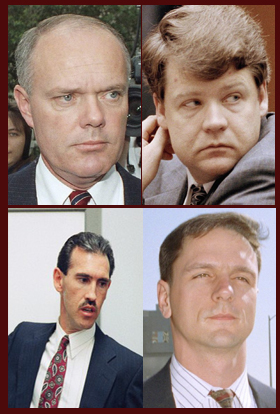
Koon, Powell, Briseno & Wind

The Rodney King trial took a longer path. First, it was moved out of LA to Simi Valley which is home to a lot of police officers. defense lawyers claimed there was too much pre-trial publicity.

Second, there were no African-Americans on the jury. The trial to convict LAPD officers  Stacey Koon, Laurence Powell, Theodore Briseno and Timothy Wind was heard by a jury consisting of ten whites, one Latino and one Asian..

On April 29 1992, that Simi Valley jury acquitted all 4 officers. Once the word got out, all hell broke loose. The result?  53 people dead, about 2,500 injured and more than $400 million in property damage.

The sentiment was Black life didn’t matter and there would never be any justice for those who found themselves on the receiving end of oppression and abuse.People were angery and felt hopeless, as if nothing they did mattered or would be given a fair shot.

Mayor Tom Bradley visibly taken a back by the verdict publicly stated; ‘the jury’s verdict will not blind us to what we saw on that videotape. The men who beat Rodney King do not deserve to wear the uniform of the L.A.P.D.

Then President Bush sr stated; ‘viewed from outside the trial, it was hard to understand how the verdict could possibly square with the video. Those civil rights leaders with whom I met were stunned. And so was I and so was Barbara and so were my kids’.

Daryl Gates defended his department and his decision not to have extra officers on hand after the verdict was read.. He claimed that his department would shut down any disturbance. After the uprising, Gates was asked to step down, by Mayor Bradley, he steadfastly refused and a huge public dispute between the two men emerged. Gates finally stepped down, two months later in June 1992.

6 months after the uprising Gates showed his true sadistic colors when he acknowledged that he made errors in judgement around handling the uprising. He said; “Clearly that night we should have gone down there and shot a few peoplethat’s exactly what we should have done. We should have blown a few heads off.’

The 92 Gang Truce

The LA Uprising brought to life a beautiful facet that had  been in the works for a couple of years prior and had been cemented two days before the infamous Rodney King verdict.

Rival Blood and Crip sets in Watts signed historic Gang Truce on April 27th. More than 300 gang members showed up at City hall to mark the occasion. Many didn’t realize a truce had went into effect until all the turmoil jumped off and folks noticed that rivals gangs were working hand in hand, calling for unity and exuding a spirit of cooperation. There were signs painted all over the city that read Crip, Bloods and Eses Together. Many thought the lopsided verdict brought everyone together overnight. The truth of the matter was the ensuing rebellion underscored and accentuated the peace and healing work various cliques had been working toward…

What led to the truce was gang members tiring of senseless deaths. LA had its highest murder rate two years in row leading up to the uprising. Much of the violence was around drug turf. In response gang members in Watts began to wake up and start a process that would eventually lead to peace.

Landmark meetings with Minister Farrakhan of the Nation of Islam and later numerous gatherings at the home of former football legend Jim Brown played key roles in helping facilitate the various peace process gang members had undertaken..Its said Brown put almost half a million dollars of his own money into efforts to lay down a foundation for peace.

The 92 Gang Truce set off similar efforts throughout LA and around the nation. Its also one of the most under reported facets of what went down 20 years ago.

http://www.youtube.com/watch?v=uYm-dx_k0Jw

Aqeela Sherills

We recently sat down with Aqeela Sherrills who was part of that important process. In this interview he gives an indepth run down of what took place and what’s going on now in LA, 20 years later. He talks in great detail about the decrease in crime because of the Truce. He noted that LA has its lowest crime in over 40 years and that its currently in its 8th year of decreases. He also talked about how the 92 Gang Truce was an inspiration for the Million man march which took place 3 years later.

He also goes into detail explaining the attempts to break the Truce.. The main culprit? LAPD. He noted that the police had strong economic incentive to keep the chaos going due to the huge amount of income they were generating via overtime pay and the formation of specialized task force. It was in their interests to play up the fear and downplay the truce.

In our interview  Aqeela also talks about the Black/ Brown conflict. He explains how a lot of the beef has been rival gangs (one Black  one Brown) going at it and not so much due to racial hatred..

Here’s a link to this insightful interview..that aired yesterday on our TRadioV show

Below is an incredible clip just days after the Rodney King Uprising..It aired on Nightline w/ Ted Koppell and features gang members Bone and Lil Monster

http://www.youtube.com/watch?v=60jXGIEcw5I

We went digging in the crates to pull out an insightful interview w/ former Gang member Twilight Bey who was the inspiration for the PBS show Twilight LA…He gives a solid breakdown of the 92 Gang Truce and what led up to LA Uprisings..  Much of what he said 10 years ago holds true today.. Below pt 1 of the 4pt conversation..

http://www.youtube.com/watch?v=byUzkkMav74

The Role of Hip Hop

As we close out we have to acknowledge the role music and Hip Hop played in the Rodney King/ LA Uprisings.. First a bit of history… Back in 1965 during the Watts Rebellion, the media and the police blamed popular African-American disc jockey Magnifigent Montague for setting it off. Montague was heard on KGFJ where he frequently peppered his on air banter in between the hottest R&B and Soul songs of the day with tidbits about African American history. He would often have guest on his show including Malcolm X. Martin Luther King name checks him in a couple of speeches praising him for his activism.

Montague had a slogan that he used whenever he played a hit record.. That phrase was ‘Burn Baby Burn‘. Listeners would call up when he played a dope song and repeat the phrase.  During the Watts Rebellion in 65, folks in the streets adapted the phrase. Some flipped it and said Burn Whitey Burn..

Montague was on the air encouraging folks to go home, but that didn’t stop Chief William Parker from publicly calling for Montague to be fired. LAPD also stepped to him to stop using the phrase. Montague kept his job, but dropped the slogan and changed it to Learn Baby learn as he committed himself to working with youth and calling for peace.

Ice Cube

The scapegoating of Montague should be noted because years later during the 92 Uprisings, folks blamed rappers like Ice Cube for setting a tone that would lead to social unrest.  Folks looked at songs like Black Korea, which Cube did in homage to Latasha Harlin 7 months before the 92 unrest where he warned Korean merchants to respect the Black fist or get burned to a crisp.. When folks went after Korean stores during the rebellion, Cube was called to task and accused of being racist..

What was overlooked was that Cube and many others were soundtracking the emotions and sentiments held by many at that time.. We could look back to Toddy Tee doing Batterram and Ice T doing 6 N the Morning as giving us early glimpse into what Black folks in LA were struggling with..

NWA‘s Fuck tha Police took it to a whole other level and became an anthem, which netted response from police departament and the FBI.. Police in cities throughout the country pressured venue owners to not allow the song to be played.. An FBI member sent a letter to the group condemning the group.

After the uprisings Cube shunned his critics and turned up the heat with songs like We Had to Tear This Mother Up Here he talks about going after the Simi Valley jury and personally assaulting the 4 officers who were aquitted. He name checks each of them and drops a line explaining the violent manner he would like to see befall them.

Meanwhile, his then newly signed artist Kam who was apart of the Gang Truce documents and celebrates it in his song Peace Treaty . His video brings to life the beauty of unity that was unfolding in Watts.

In the wake of that dozens of songs emerged referencing the 92 Gang Truce, the LA Uprisings and anger toward the police.

Conclusion

As we look back on the 20th anniversary, lets allow what occurred to be an inspiration. Lets learn lessons from the historic gang truce, lets try to bring similar efforts in our own communities. Lets also learn the lessons of a police force that refuses to change. 20 years after the Uprisings we seen the police departments get worse. It was just last week that we saw the investigation into LA sheriffs about a group of rogue cops calling themselves the Jump Off Boys.. The struggle continues..

written by Davey D

An Epic Intv w/ Jeru tha Damaja: Maturing In Hip Hop & Making An Album in Poland

It’s always good to chop it up w/ Brooklyn emcee Jeru tha Damaja.. We go back a long ways and with each interview he provides more and more jewels.

This past week was no different, Jeru came by the crib where we chopped it up about everything under the sun.. We talked about the origins and meaning of his name and what he meant when he used the tag ‘damaja’. It was a question I never asked, believe it or not.. he said it meant he was one to destroy the mics and destroy misconceptions…

We talked about maturing in the industry and the importance of not being seen as ‘old school’ but instead being seen as classic.. We talked about the importance of Hip Hop pioneers Kool Herc and Afrika Bambaataa who recently celebrated birthdays. Jeru explained about how both men have always respected him and he in turn have viewed them as big brothers who have positive impact on him..

We talked about his friendship w/ the late Guru of Gang Starr.  Jeru reminisced how Guru rescued him from the streets and help give him direction. he talked about the formidable rap crew that included Group Home, MOP, they had when Guru released th Ill Kids project. He regretted that everyone didn’t stick together We also talked about the issues related to the 2Pac hologram its pros and cons.. We also talked about his travels and what parts of the world he likes performing in.. Jeru talked about a new album he just did in Poland that features both American and Polish emcees..

http://www.youtube.com/watch?v=DjtDZj-nkJ4

Florida is Home to a Rapper Sent to Jail for 2Years for doing a Cop Killer Song

Antavio Johnson

In the wake of the Trayvon Martin situation many are re-examining the strange case of Lakeland, Florida resident Antavio Johnson. Two years ago Johnson known as DJ TO was charged with 2 counts of Treat To a Public Servant due to saying the names of two Lakeland Police Department officers from Polk County Florida. According to an article detailing the case in the The Ledger, DJ TO was facing 5 years on each charge but accepted a plea bargain for 2 years total. You can read that story HERE

The song was discovered by Polk County sheriff’s Cyber Crime unit  after it was put on the MySpace page of a local record promotion company called Hood Certified Ent .

On the YouTube page, HCE head Lucky posted the following;

I myself, “Lucky” from HCE was locked up with T.O. and I still remain friends with him. I’ve come out publicly saying that I take full blame for the outcome of this case. With that said like I said on a news interview “I will never apologize to the law enforcement community however I do apologize to T.O. because if cops are threatened by the lyrics of a song, then they are in the wrong line of work.”

Apparently because DJ TO was on parole, it’s speculated that him making threats even in a song was somehow a violation.. The ACLU disagrees.. All of us should pause for a minute and take stock in how powerful police officers have become over the past few years. We now have some states where it’s illegal to film them. We have a Policeman’s Bill of Rights in states all over the country including California and Florida where its difficult for the public to have access to police abuse reports. In Cali, its damn near impossible to use that information in court cases. We in Cali found this out during the Oscar Grant case, when the past abuses of former BART cop Johannes Mehserle was inadmissible

http://www.youtube.com/watch?v=kJ9yCmhnfNk

Here’s Lyrics to the song

Hi, Grady

Free My Ni**a Chico

Straight up

Free My Ni**a Chico

Im’ma see you when you get home, homey.

Im’ma kill me a cop one day

He’ey

Cause I’m tired of em playin’ with my life

Lord, I know it ain’t right.

It ain’t right, no

If Officer ……………….[name removed upon request by LPD] he care at all

Get my timing wrong

Im’ma be puttin’ one in his dome

Mr. Officer

Mr. Officer

Try me on the wrong day

And I’m offin’ ya

I gotta grudge with the judge

Rugers for prosecutors

Calicos for C.O.’s

Bullet holes for P.O.’s

Call me crazy but I think I fell in love with the sound

Of hearing the dispatcher saying, “Officer Down”

Im’ma kill me a cop one day

He’ey

Cause I’m tired of em playin’ with my life

Lord, I know it ain’t right.

It ain’t right, no

Hey!!! T.O.!!!

If Officer …………… [name removed upon request by LPD]

The Wonder Woman

Get my timing wrong

I’m a be puttin’ one in her dome

Mrs. Officer

Mrs. Officer

Try me on the wrong day

And I’m offin’ ya

I gotta Glock for a cop

Choppers for crime stoppers

And one in the cartridge

For the Lakeland Police Department