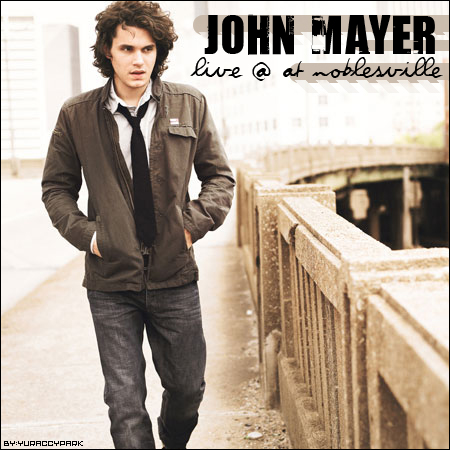
. . . and the ‘hood pass’-Adam Mansbach Goes in on John Mayer

. . . and the ‘hood pass’-Adam mansbach Goes in on John Mayer

By Adam Mansbach
AS JOHN Mayer’s racially-charged comments in Playboy magazine ricocheted around the Internet this week, I found myself exhausted by the sad reality that the national dialogue on race remains driven by the engine of celebrity gaffes and gotcha moments.

Our voracious, ADHD-afflicted news cycle castigates, forgives, and forgets at a rate that precludes sustained discussion, so expect Mayer to spend a week with his head on the chopping block and then jog away, rubbing his neck, to join Chris Matthews, Harry Reid, Michael Richards, Geraldine Ferraro, Don Imus, and John Rocker on the list of figures whose shocking transgressions have faded to dim memories.

An analysis of such incidents and their scant longterm fallout suggests that it is now more acceptable to publicly spout racism than to publicly accuse someone of spouting racism. Look for Mayer to continue to make a vague apology to a fanbase and a punditry eager to excuse racist action because they can find no racist feeling behind it. Look for Mayer to swear he’s never uttered the n-word before and never will again, and look for the context in which he said it and the clumsy if well-intentioned point he was trying to make about white privilege to be obscured.

Look for him to continue not address more problematic statements from the interview, in particular the one about his male organ being a “white supremacist’’ — a flippant attempt to explain his dating preferences that takes up the language of dehumanization and reveals a blithe willingness to reinforce any number of stereotypes about sex, race, and desirability. Look for the mainstream media to ignore that comment too.

Look for the “hood pass’’ Mayer stumbled so badly in trying to discuss to be serially snatched away and restored in a blogopshere-wide game of capture-the-flag. Far more importantly and indicatively, look for the very notion of a “hood pass’’ to go largely unexplored.

The “hood pass’’ is symbolic of white acceptance, personal or artistic, by the black community. Although both the notion of a monolithic black community and the conflation of blackness with the “hood’’ are problematic, the “hood pass’’ has been widely accepted. Part of the reason may be that it appears to place agency in the hands of black people, as arbiters of who and what constitutes tolerable incursion. Given the profound legacy of white co-option and exploitation of black life and culture, this might seem like a step in the right direction.
The problem with the “hood pass,’’ though, is that it turns racial progressivism from an activity to a state of being. It places engagement with this country’s system of structural racism, and the privileges white people accrue from it, in the past tense — as if everybody in possession of a “hood pass’’ has already fought and won what is actually an ongoing struggle with one’s self and one’s country.

This complacency underwrites the widespread belief of young white Americans that they can be as “down’’ as necessary by consuming black cultural artifacts pushed by media conglomerates whose profits depend on expert marketing of the ghetto to the exurbs, black to white, and visceral “realness’’ to a generation of voyeurs. Full of empathy and short on identity, with few relationships to actual black people and less understanding of the machinations of institutional racism, they conclude that they, too, have “hood passes.’’ Through the magic of circular logic, they then conclude that every stereotype they embrace is as legitimate as they are. Much as Mayer seems to have.

It was a conversation with an old friend, filmmaker Kesime Bernard, that reminded me what we stand to gain by talking about the latest display of ignorance by an avatar of a culture that rewards it. “Our generation has built a cottage industry around uncomfortably edgy racial humor,’’ she wrote, “but the reaction is as important as the delivery.We carve out boundaries in real time. These little celebrity scandals do ‘teach’ us little by little where we stand.’’

I want to believe she’s right — that we can make this not about Mayer’s hood pass, but the hood pass, not one rock star’s cavalier bigotry, but the millions nodding to it. That Americans can learn from where we stand, and that we stand for something. Because if we don’t, as the old saying goes, we’ll fall for anything.

Adam Mansbach is author of “The End of the Jews,’’ and “Angry Black White Boy.’’

Return to Davey D’s Hip Hop Corner

Minister JR from Haiti, Part 1: Starvation and Jim Crow racism

Minister JR from Haiti, Part 1: Starvation and Jim Crow racism

by Minister of Information JR

http://www.sfbayview.com/2010/minister-jr-from-haiti-part-1-starvation-and-jim-crow-racism/

Today, on the one month anniversary of the earthquake in Haiti, I went all over Port au Prince and saw the devastation firsthand and the occupation by Brazil under the guise of the U.N., and of course the U.S.A. I rode through Port au Prince all day and didn’t see one act of recovery going on.

 I haven’t left Port au Prince. Here it looks like the city was hit with an atomic bomb. All through the city you could smell dead bodies and see people going through the rubble lookin for scraps of metal to build a shanty-house and for anything that can be eaten, drunk or sold.

I don’t see where the millions of dollars that have been raised for Haiti is going. Everywhere people is starving. Me and my comrades gave some of the most desperate some money, but the thing is that it might help them today; what about tomorrow?

We been staying at a makeshift hospital run by some white so-called American missionaries. Today at the house I witnessed my first act of Jim Crow-type racism from so-called friends on this particular trip.

Haiti is like a time machine. It’s like 1920 here in terms of the apartheid type of relationships that the whites have with the Blacks. The white woman of “God” that runs the house says that Haitians can’t come in the house from their shantytown in the backyard after the hospital closes, but check this out: Multiple dogs have free reign all over the property. So in other words, these dogs are more important than the Haitians – including the hungry babies, the old people, the wounded and maimed and regular everyday people.

One of the members of our delegation was told not to feed the Haitians in the tent city in the backyard because they already eat once a day. The issue is, why do they think that they can determine who I share my food with? The house is full of white people who have free reign to eat as much as they want, and whenever they want.

One of the members of our delegation was told not to feed the Haitians in the tent city in the backyard because they already eat once a day.

The second issue is that when we went to Port au Prince we had a 19-year-old Haitian translator named Gady who helped our team. When we got back, the rooster-neck nun who is ultimately in charge of the house told him that he can’t be in the house, although we met him in the house the day before and hung out and listened to music to about 1 a.m.

We asked why, and she told us he wasn’t a good translator. I told her he did great with us, from 10 a.m. to 4 p.m. She told me he doesn’t know enough English medical terms to assist the doctors. I informed her that my team consists of journalists, and we didn’t need him to know English medical terms.

 She then quickly said there were other reasons, then told us that she just didn’t want him in the house, and if we needed a translator, contact her and she would hook it up. Most of the translators that I met were very subservient, except ours, and that’s why we got along.

She kicked him out, and we went out the house after him and paid him a third of what he would make in a month as a translator, because we realize how hard it is to find money, water and food, let alone a regular job.

I’m currently writing this from the house, and God knows I wish I had somewhere else to go out here rather than deal with these undercover racists. I don’t, so like my Haitian “auntie” told me, I’m supposed to see all of this so I can report it.

On another note, most of the Black people from the U.S. out here that I have met are complicit in this Jim Crow racism. They act like they don’t see it because it is not affecting them. These dumb ass people don’t recognize that these same crackers were doing this to their grandparents 60 years ago. It’s like Malcolm taught us, when he talked about the house slave and the field slave.

Like my Haitian “auntie” told me, I’m supposed to see all of this so I can report it.

This is my first report, on my first full day here. There is more to come, so stay tuned …

Return to Davey D’s Hip Hop Corner

Corporate Influence:How the Congressional Black Caucus is a Fundraising Powerhouse

Share/Bookmark//

This is a compelling article on a number of levels…First of all it outlines some of the ways money exchanges hands in Washington and for that reason we should always have opportunity to be informed. It outlines all the ways that Washington is wrong and with the recent Supreme Court ruling allowing corporations to spend unlimited amounts of money and resources in election this is likely to get worse…

The fact that the Congressional Black Caucus has always described itself as the conscience of the Congress, makes this story troubling… As you read this story pay close attention to the main people sponsoring them and look at the end result… Whats most glaring to me are the telecoms, AT&T and Verizon who successfully got 3/4th of the CBC to vote against the COPE act which would’ve gotten rid of Net Neutrality which levels the playing field on the Internet. Bobby Rush was at the center of this.. Currently those same telecom firms have pushed even harder and expanding their lobbying efforts to  a handful Civil Rights groups and leaders who have jumped on board to end Net Neutrality.. I urge folks to pay close attention to this alignment because it will have dire effect if left unchallenged and unchecked.

At the same time, one has to question why did the NY Times do a story on the CBC? Was it to expose their influence and the increasing potential for corruption?  Was it to undermine Black lawmakers exercising increasing influence in Washington?   Will CBC become the poster boy for corruption while others skate? Are there other caucuses in congress that play a similar game?  This does not excuse the CBC for any wrong doing, but these are questions we should ask.. In short is this just the tip of the iceberg? Lastly as I mentioned earlier is this a precursor to the way business will be done because of the Supreme Court ruling?

It’s hard not to take into account the current backlash that has been spawned around the country now that Barack Obama is in the White House. Along with the anger and discontent expressed at his policies has come increasing expressions of racial hatred. With an article like this I can easily see racism barring its fangs and folks circling the wagon to the point we overlook any wrong doing by CBC. Protecting one from racial attacks trumps ethics questions especially when we know this country has a sordid history of  lynching burning down cities and making life miserable for Blacks who have accumulated wealth. We saw that during the Obama campaign when we would hear remarks about Obama being ‘uppity’ and needs to be put in his place..

-Davey D-

In Black Caucus, a Fund-Raising Powerhouse

 By ERIC LIPTON and ERIC LICHTBLAU
Published: February 13, 2010
http://www.nytimes.com/2010/02/14/us/politics/14cbc.html?pagewanted=1&partner=rss&emc=rss

WASHINGTON — When the Congressional Black Caucus wanted to pay off the mortgage on its foundation’s stately 1930s redbrick headquarters on Embassy Row, it turned to a familiar roster of friends: corporate backers like Wal-Mart, AT&T, General Motors, Coca-Cola and Altria, the nation’s largest tobacco company.Soon enough, in 2008, a jazz band was playing at what amounted to a mortgage-burning party for the $4 million town house. 

Soon enough, in 2008, a jazz band was playing at what amounted to a mortgage-burning party for the $4 million town house.

Most political groups in Washington would have been barred by law from accepting that kind of direct aid from corporations. But by taking advantage of political finance laws, the caucus has built a fund-raising juggernaut unlike anything else in town.

It has a traditional political fund-raising arm subject to federal rules. But it also has a network of nonprofit groups and charities that allow it to collect unlimited amounts of money from corporations and labor unions.

From 2004 to 2008, the Congressional Black Caucus’s political and charitable wings took in at least $55 million in corporate and union contributions, according to an analysis by The New York Times, an impressive amount even by the standards of a Washington awash in cash. Only $1 million of that went to the caucus’s political action committee; the rest poured into the largely unregulated nonprofit network. (Data for 2009 is not available.)

The caucus says its nonprofit groups are intended to help disadvantaged African-Americans by providing scholarships and internships to students, researching policy and holding seminars on topics like healthy living.

But the bulk of the money has been spent on elaborate conventions that have become a high point of the Washington social season, as well as the headquarters building, golf outings by members of Congress and an annual visit to a Mississippi casino resort.

In 2008, the Congressional Black Caucus Foundation spent more on the caterer for its signature legislative dinner and conference — nearly $700,000 for an event one organizer called “Hollywood on the Potomac” — than it gave out in scholarships, federal tax records show.

At the galas, lobbyists and executives who give to caucus charities get to mingle with lawmakers. They also get seats on committees the caucus has set up to help members of Congress decide what positions to take on the issues of the day. Indeed, the nonprofit groups and the political wing are so deeply connected it is sometimes hard to tell where one ends and the other begins.

Even as it has used its status as a civil rights organization to become a fund-raising power in Washington, the caucus has had to fend off criticism of ties to companies whose business is seen by some as detrimental to its black constituents.

These include cigarette companies, Internet poker operators, beer brewers and the rent-to-own industry, which has become a particular focus of consumer advocates for its practice of charging high monthly fees for appliances, televisions and computers.

Caucus leaders said the giving had not influenced them.

“We’re unbossed and unbought,” said Representative Barbara Lee, Democrat of California and chairwoman of the caucus. “Historically, we’ve been known as the conscience of the Congress, and we’re the ones bringing up issues that often go unnoticed or just aren’t on the table.”

But many campaign finance experts question the unusual structure.

“The claim that this is a truly philanthropic motive is bogus — it’s beyond credulity,” said Meredith McGehee, policy director at the Campaign Legal Center in Washington, a nonpartisan group that monitors campaign finance and ethics issues. “Members of Congress should not be allowed to have these links. They provide another pocket, and a very deep pocket, for special-interest money that is intended to benefit and influence officeholders.”

Not all caucus members support the donors’ goals, and some issues, like a debate last year over whether to ban menthol cigarettes, have produced divisions.

But caucus members have attracted increasing scrutiny from ethics investigators. All eight open House investigations involve caucus members, and most center on accusations of improper ties to private businesses.

And an examination by The Times shows what can happen when companies offer financial support to caucus members.

For instance, Representative Danny K. Davis, Democrat of Illinois, once backed legislation that would have severely curtailed the rent-to-own industry, criticized in urban districts like his on the West Side of Chicago. But Mr. Davis last year co-sponsored legislation supported by the stores after they led a well-financed campaign to sway the caucus, including a promise to provide computers to a jobs program in Chicago named for him. He denies any connection between the industry’s generosity and his shift.

Growing Influence

The caucus started out 40 years ago as a political club of a handful of black members of Congress. Now it is at the apex of its power: President Obama is a former member, though he was never very active.

Its members, all Democrats, include the third-ranking House member, Representative James E. Clyburn of South Carolina; 4 House committee chairmen; and 18 subcommittee leaders. Among those are Representative Charles E. Rangel, chairman of the Ways and Means Committee, and Representative John Conyers Jr., chairman of the Judiciary Committee.

There are hundreds of caucuses in Congress, representing groups as disparate as Hispanic lawmakers and those with an interest in Scotland. And other members of Congress have nonprofit organizations.

But the Congressional Black Caucus stands alone for its money-raising prowess. As it has gained power, its nonprofit groups — one an outright charity, the other a sort of research group — have seen a surge in contributions, nearly doubling from 2001 to 2008.

Besides the caucus charities, many members — including Mr. Clyburn and Representative William Lacy Clay Jr. of Missouri — also have personal or family charities, which often solicit donations from companies that give to the caucus. And spouses have their own group that sponsors a golf and tennis fund-raiser.

The board of the Congressional Black Caucus Foundation includes executives and lobbyists from Boeing, Wal-Mart, Dell, Citigroup, Coca-Cola, Verizon, Heineken, Anheuser-Busch and the drug makers Amgen and GlaxoSmithKline. All are hefty donors to the caucus.

Some of the biggest donors also have seats on the second caucus nonprofit organization — one that can help their businesses. This group, the Congressional Black Caucus Political Education and Leadership Institute, drafts positions on issues before Congress, including health care and climate change.

This means, for example, that the lobbyists and executives from coal, nuclear and power giants like Peabody Energy and Entergy helped draft a report in the caucus’s name that includes their positions on controversial issues. One policy document issued by the Black Caucus Institute last year asserted that the financial impact of climate change legislation should be weighed before it is passed, a major industry stand.

Officials from the Association of American Railroads, another major donor, used their board positions to urge the inclusion of language recommending increased spending on the national freight rail system. A lobbyist for Verizon oversaw a debate on a section that advocated increased federal grants to expand broadband Internet service.

And Larry Duncan, a Lockheed Martin lobbyist, served on a caucus institute panel that recommended that the United States form closer ties with Liberia, even as his company was negotiating a huge airport contract there.

The companies say their service to the caucus is philanthropic.

“Our charitable donations are charitable donations,” said David Sylvia, a spokesman for Altria, which has given caucus charities as much as $1.3 million since 2004, the Times analysis shows, including a donation to a capital fund used to pay off the mortgage of the caucus headquarters.

Elsie L. Scott, chief executive of the Congressional Black Caucus Foundation, acknowledged that the companies want to influence members. In fact, the fund-raising brochures make clear that the bigger the donation, the greater the access, like a private reception that includes members of Congress for those who give more than $100,000.

“They are trying to get the attention of the C.B.C. members,” Ms. Scott said. “And I don’t think there is anything wrong with that. They’re in business, and they want to deal with people who have influence and power.”

She also acknowledged that if her charity did not have “Congressional Black Caucus” in its name, it would gather far less money. “If it were just the Institute for the Advancement of Black People — you already have the N.A.A.C.P.,” she said.

Ms. Scott said she, too, had heard criticism that the caucus foundation takes too much from companies seen as hurting blacks . But she said she was still willing to take their money.

“Black people gamble. Black people smoke. Black people drink,” she said in an interview. “And so if these companies want to take some of the money they’ve earned off of our people and give it to us to support good causes, then we take it.”

Big Parties, Big Money

The biggest caucus event of the year is held each September in Washington.

The 2009 event began with a rooftop party at the new W Hotel, with the names of the biggest sponsors, the pharmaceutical companies Amgen and Eli Lilly, beamed in giant letters onto the walls, next to the logo of the Congressional Black Caucus Foundation. A separate dinner party and ceremony, sponsored by Disney at the National Museum of Women in the Arts, featured the jazz pianist Marcus Johnson.

The next night, AT&T sponsored a dinner reception at the Willard InterContinental Washington, honoring Representative Bobby L. Rush, Democrat of Illinois and chairman of the House subcommittee that oversees consumer protection issues.

The Southern Company, the dominant electric utility in four Southeastern states, spent more than $300,000 to host an awards ceremony the next night honoring Ms. Lee, the black caucus chairwoman, with Shaun Robinson, a TV personality from “Access Hollywood,” as a co-host. The bill for limousine services — paid by Southern — exceeded $11,000.

A separate party, sponsored by Macy’s, featured a fashion show and wax models of historic African-American leaders.

All of this was just a buildup for the final night and the biggest event — a black-tie dinner for 4,000, which included President Obama, the actor Danny Glover and the musician Wyclef Jean.

Annual spending on the events, including an annual prayer breakfast that Coca-Cola sponsors and several dozen policy workshops typically sponsored by other corporations, has more than doubled since 2001, costing $3.9 million in 2008. More than $350,000 went to the official decorator and nearly $400,000 to contractors for lighting and show production, according to tax records. (By comparison, the caucus spent $372,000 on internships in 2008, tax records show.)

The sponsorship of these parties by big business is usually counted as a donation in the caucus books. But sometimes the corporations pay vendors directly and simply name the caucus or an individual caucus member as an “honoree” in disclosure records filed with the Senate.

(The New York Times Company is listed as having paid the foundation $5,000 to $15,000 in 2008. It was the cost of renting a booth to sell newspapers at the annual conference.)

Foundation officials say profit from the event is enough to finance programs like seminars on investments, home ownership and healthy living; housing for Washington interns; and about $600,000 in scholarships.

Interns and students interviewed praised the caucus.

“The internship for me came at a very critical moment in my life,” said Ervin Johnson, 24, an intern in 2007, placed by the Justice Department. “Most people don’t have that opportunity.”

Still, Ms. Scott, the foundation’s chief executive, said that members of the caucus’s board had complained about the ballooning bills for the annual conference. And some donors have asked that their money go only toward programs like scholarships. She blamed the high prices charged by vendors mandated by the Washington Convention Center.

Legislative Interests

The companies that host events at the annual conference are engaged in some of the hottest battles in Washington, and they frequently turn to caucus members for help.

Internet poker companies have been big donors, fighting moves to restrict their growth. Caucus members have been among their biggest backers.

Amgen and DaVita, which dominate the kidney treatment and dialysis business nationwide, have donated as much as $1.5 million over the last five years to caucus charities, and the caucus has been one of their strongest allies in a bid to win broader federal reimbursements.

AT&T and Verizon, sponsors of the caucus charities for years, have turned to the caucus in their effort to prevent new federal rules governing how cellphone carriers operate Internet services on their wireless networks.

But few of these alliances have paid off like the caucus’s connection to rent-to-own stores.

Some Democrats in Congress have tried to limit fees charged to consumers who rent televisions or appliances, with critics saying the industry’s advertisements prey on low-income consumers, offering the short-term promise of walking away with a big-screen TV while hiding big long-term fees. Faced with rules that could destroy their business, the industry called on the caucus.

In 2007, it retained Zehra Buck, a former aide to Representative Bennie Thompson, Democrat of Mississippi and a caucus member, to help expand a lobbying campaign. Its trade association in 2008 became the exclusive sponsor of an annual caucus foundation charity event where its donated televisions, computers and other equipment were auctioned, with the proceeds going to scholarships. It donated to the campaigns of at least 10 caucus members, and to political action committees run by the caucus and its individual members.

It also encouraged member stores to donate to personal charities run by caucus members or to public schools in their districts. Mr. Clay, the Missourian, received $14,000 in industry contributions in 2008 for the annual golf tournament his family runs in St. Louis. The trade association also held a fund-raising event for him in Reno, Nev.

“I’ll always do my best to protect what really matters to you,” Mr. Clay told rent-to-own executives, who agreed to hold their 2008 annual convention in St. Louis, his home district. Mr. Clay declined a request for an interview.

On a visit to Washington, Larry Carrico, then president of the rent-to-own trade association, offered to donate computers and other equipment to a nonprofit job-training group in Chicago named in honor of Mr. Davis, the Illinois congressman who in 2002 voted in favor of tough restrictions on the industry.

Mr. Davis switched sides. Mr. Carrico traveled to Chicago to hand over the donations, including a van with “Congressman Danny K. Davis Job Training Program” painted on its side, all of which helped jump-start a charity run by Lowry Taylor, who also works as a campaign aide to Mr. Davis.

In an interview, Mr. Carrico said support from caucus members came because they understood that his industry had been unfairly criticized and that it provided an important service to consumers in their districts.

While some caucus members still oppose the industry, 13 are co-sponsors of the industry-backed legislation that would ward off tough regulatory restrictions — an alliance that has infuriated consumer advocates.

“It is unfortunate that the members of the black caucus who are supporting this bill did not check with us first,” said Margot Saunders, a lawyer with the National Consumer Law Center. “Because the legislation they are supporting would simply pre-empt state laws that are designed to protect consumers against an industry that rips them off.”

The industry’s own bill, introduced by a caucus member, has not been taken up, but it does not really matter because the move to pass stricter legislation has ground to a halt.

“Without the support of the C.B.C.,” John Cleek, the president of the rent-to-own association, acknowledged in an industry newsletter in 2008, “our mission in Washington would fail.”

Return to Davey D’s Hip Hop Corner

Dr Dre Wants His Damn Money-Sues Death Row for Unpaid Royalties

All I can say is the music business is the messiest biz you can get into… It operates on the premise of not paying people what’s due  while simultaneously taxing and collecting money on behalf of everyone..For example, all those law suits that the RIAA was doing for people who were illegally downloading.. How much of those millions were given to artists? Which artists and how much?  This is sad but not surprising that even the most successful figures in this industry are still owed money because of the way money is kept, not kept and spread around for superfluous expenses.. I suggest anyone trying to get into this biz head on over to www.rapcoalition.org and read everything Wendy Day has posted.. If anyone tells you NOT to learn about this industry or they insist on doing it for you while suggesting you go away and focus on making art and not business, I say run away in the other direction..

-Davey D-

Dr Dre Sues Death Row Over Unpaid Royalties

http://news.yahoo.com/s/ap/20100212/ap_on_en_mu/us_people_dr_dre_7

LOS ANGELESDr. Dre sued the new iteration of Death Row Records on Thursday claiming the label failed to pay royalties and released a new version of his iconic album “The Chronic” without his permission.

Dre, whose real name is Andre Young, filed the suit in federal court in Los Angeles against WIDEawake Death Row Records and its parent companies.

Young has not been paid royalties on the original “The Chronic” album since he split with Death Row in 1996, the lawsuit states. The label, a one-time powerhouse of rap music artists, eventually fell into bankruptcy but was bought by WIDEawake and re-formed.

Young’s lawsuit claims his attorneys notified the new owners that he was owed royalties, but they have never paid him. He also claims the label issued “The Chronic Re-Lit” and a greatest hits collection without his permission or the proper rights.

WIDEawake Death Row Records has also sold digital copies of “The Chronic” without having the proper rights, the lawsuit states. Young’s original contract with Death Row didn’t include digital distribution rights, according to the suit.

“When it came to paying artist royalties and honoring limits on Dr. Dre recordings that could be released, the “new” Death Row Records, to quote our client, ‘forgot about Dre,'” Young’s attorney Howard King said in a statement. “This lawsuit will make sure they remember.”

An after-hours phone message left for Wide Awake was not immediately returned.

Young’s lawsuit seeks unspecified damages of more than $75,000 for several claims, including breach of contract, false advertising, trademark infringement and misappropriation of publicity.

“The Chronic” was first released in 1992. Since then, Young has remained a top rap producer working with best-selling artists such as Snoop Dogg, Eminem and 50 Cent.

Return to Davey D’s Hip Hop Corner

Breakdown FM w/ Davey D-All Day Play #8: There Goes the Neighborhood

Share/Bookmark//

Click HERE to Listen to Podcast

As we kick off our 3 day weekend  and with so many people snowed in, we decided to put some funk in your trunk with this week’s show.. We took it back to the old school and came with some vintage joints that’ll have you really appreciating this thing we call Hip Hop…Highlights include the Public Enemy. When you listen beyond their most well known hits you realize Chuck D and company have a pretty deep catalogue of songs.. Almost all of them address some sort of issue.. I think they are underestimated..

Had to dig deeper and pull out something from the late Pumpkin. he was Hip Hop’s first official drummer and of course we had DJ Cheese and his landmark cut ‘King Cut’

We kick things off with a special back to Africa remix I did featuring Malcolm X and music from the late J-Dilla..

Its all butter folks.. please enjoy

http://www.alldayplay.fm/episodes/breakdown-fm-w-davey-d-there-goes-the-neighborhood

Breakdown FM w/ Davey D on All day Play#8

There Goes the Neighborhood

01-J-Dilla ‘J-Dilla Meets Malcolm X’-(DaveyD remix)

02-Dr Dre w/ Ice Cube ‘Natural Born Killa’

03-Public Enemy ‘Assault Mix’

04-Public Enemy ‘House of Rising Son’

05-Public Enemy ‘How to Kill a Radio Consultant’

06-DJ Punisher ‘The Cutting Edge’

07-DJ Pumpkin ‘King of the Beat’

08-DJ Cheese ‘King Cut’

09-Bobby Jimmy ‘We Like Ugly Women’

10-Digital Underground ‘DooWhatchalike’

11-MC Lyte ‘10% Diss’

12-Lost Boyz ‘Music Makes me High’

13-Ice Cube ‘The Mack’

14-Outkast ‘Players Ball’

15-Ice T ‘Colors’

16-‘Dr Dre w/ Snoop Dogg ‘Next Episode’

17-Marley Marl w/ MC Shan ‘The Bridge’

18-Ice T  ‘6 In the Morning’

19-Eric & Rakim ‘ The Ghetto’

20-Conscious Daughters ‘Something to Ride To’  ‘(Davey D Screwball remix)’

21-Snoop Dogg ‘Gin & Juice’

22-Mystical ‘Shake Your Ass’

23-Black Sheep ‘The Choice Is Yours’

24-Grandmaster Flash ‘Girls Like the Way he Spins’

25-Donald D ‘FBI’

26-Whodini ‘Friends’

27-Dogg Pound ‘Lets Play House’

28-Kool Moe Dee ‘Go see the Doctor’

29-The Doc ‘ It’s Funky’

30- MC Lyte ‘Cappucino’

31-Craig Mack ‘Get Down’

32-Heavy D ‘Black Coffee’

33-Mobb Deep ‘Shining’

34-Gang Starr ‘Words I Manifest’

35-KRS-One ‘Outta Here’

36-Kool G Rap ‘Road to the Riches’

37-Brand Nubians ‘To the Right’

38-Schooly D ‘Megamix’

39-Ice Cube ‘Megamix’

Return to Davey D’s Hip Hop Corner

An Interview w/ David Banner-Contrasting Katrina and Haiti Recovery Efforts

Share/Bookmark//

Click HERE to Listen

With all eyes on Haiti and the horrific devastation that has taken place there, it was natural for many to think back to how government officials and leaders handled recovery efforts in the aftermath of Hurricane’s Katrina, Rita and Ike and see what lessons could be gleaned as we move forward with Haiti. Within our generation, one of the first people who came to mind was popular rap star/producer/ actor  David Banner. Best known for hit records like ‘Cadillac on 22s’, ‘Like a Pimp’ and ‘Play’, Banner is better known for the heroic efforts he put forth in the recovery efforts that took place in Mississippi after Katrina. So much so that he was awarded a prestigious Visionary Award by the National Black Caucus of the State Legislature.

In 2005 Banner was on a roll and was at the height of his career. ‘Play‘ was a number one record, his soon to be released album ‘Certified‘  was anticipated to be a huge success and the doors to Hollywood were starting to open.  Banner was on tour when Katrina hit. He immediately suspended all operations and turned his tour buses into rescue vehicles. Banner personally delivered water, clothing and food to those in need, spending tens of thousands of dollars of his own money…Ironically this caused tension between him and his record label because Banner stopped promoting his much anticipated album when appearing on popular media outlets like MTV or BET  and instead talked about relief efforts and what fans could do to help Katrina victims.

David Banner

As Banner often pointed out, New Orléans went through her immense suffering and death by the destructions of the levees which flooded the city and not the Hurricane itself which by the time it hit was downgraded from a category 5 to 3.  It was his native Mississippi that experienced Katrina at level 5 and bore the resulting devastation half way through the state.  The horrors suffered by Mississippi has not really been spoken about or fully documented. But Banner saw it all and was on the ground helping out just days after. He is still helping out in recovery efforts to this day..

When we sat down to talk with David  Banner, he explained that Haiti has been going through earthquakes ever since she freed herself from slavery and established that country.  She’s gone through economic and political earthquakes caused by the policies of our government including some put forth by George Bush and Bill Clinton who are heading up recovery efforts now. It’s like they were sent to finish a job they started. 

 Banner cautioned that all of us need to keep an eye on and be careful about the people and organizations we send our money. He reminded listeners that many of the recovery agencies involved with Katrina  made money and pimped the victims. He sees and hears many of the same troubling behavior with Haiti. Banner also recounted his own experience of seeing lots of money coming into organizations and it not being delivered to the people. He noted he saw how food and clothes that he brought to these organizations were taken away from poor parts of town and delivered to places where people were a little bit more well to do.. This is a complaint we are hearing over and over in Haiti.

Click HERE to listen to David Banner Interview

Banner also talked about all the money and opportunities that were granted when it came time to rebuild. He cautioned that we should all pay attention to the contracts being given out in Haiti, because after Katrina many of the people who were displaced and lost their homes did not get opportunities to work on the rebuilding. Banner said companies like Halliburton made tons of money while people most in need were left with nothing.

Banner also talked about the psychological damage that victims of Katrina had to endure. He explained that while people were still in shock after seeing a loved one drowned, eating by alligators or seeing their homes and personal effects destroyed, unscrupulous developers flooded the areas offering to buy people’s home for cheap and turn the areas into mini Las Vegas with expensive homes popping up and poor people being permanently displaced.

Banner said the solution to all this is for us in Black America to be prepared and understand Katrina and Haiti will happen again.  He said we will see some sort of catastrophe happen and that we need to be preparing ourselves now, because at the end of the day we’re gonna have to help ourselves..

We concluded by noting how fellow artists like Nelly, T.I. and Young Jeezy came to Banner’s help when he ran into road blocks and red tape by the government who tried to put all sorts of restrictions on the way he could help his own community. He talked about how his Heal the Hood foundation got hit with all sorts of red tape and that Nelly came along and absorbed Banners charity into his and helped him get all the paper work correct.

You can hear the full interview HERE

http://www.swift.fm/mrdaveyd/song/21400/

Return to Davey D’s Hip Hop Corner

Black History Fact: When Hip Hop Took on Everything from Hollywood to Education.. Remember these songs?

Share/Bookmark//

 Public Enemy meets Big Daddy Kane and Ice Cube

Burn Hollywood Burn.. This video speaks for itself.. An incredible song and video..

http://www.youtube.com/watch?v=k6MlwT1lBk0

http://www.youtube.com/watch?v=_BxBs4f4RIU

Grand Puba founding member of Masters of Ceremony and later Brand Nubian kicked off one of the dopes  songs about education I ever heard… Here he talks about what we’re being taught and how it has major impact did one of the dopest songs aboutt education & the pyschological effects of  racism..The name of the cut is called ‘Proper Education’ click link to hear:  http://bit.ly/cknaJy

In ’92 The Dismasters sampled Martin Luther King & did a Hip Hop version of Black Nat’l Anthem The name of the song was ‘Black and Proud’ …click link to hear:  http://bit.ly/bF1yuz

This is one of the most underrated groups to come out during the Golden Age of Hip Hop… They were Philly based 3xDope.. They had a cut I would rock all the time called ‘Increase the Peace’ where they sampled both Malcolm X and Martin Luther King.. It was the first time I had heard the two slain leaders in the same songs..  And incredible piece click link to hear: http://bit.ly/d4CtCO

My home girl DJ Chela from North Carolina turned me onto this song from her fellow North Carolinian .. Its from a dope artist named K-Hill.. The cut features lots of quotes from Malcolm X.. The song is called ‘My People’ click link to hear: http://bit.ly/bbv4JD

Erase Racism featuring Kool G Rap, Big Daddy Kane & Biz Markie.  

A land mark song that spoke honestly and scared folks half to death back in 199o

click link below to watch..

http://www.youtube.com/watch?v=aFUg6EuYEKk

Return to Davey D’s Hip Hop Corner

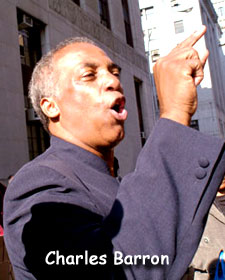
NYC Councilman Charles Barron being Dissed by Fellow Democrats who Denied him Chairmanship

Share/Bookmark//

When I read this story about Charles Barron the first thing I thought of was the irony of this happening on the watch of a majority minority city council line up and not seeing any outrage…I guess one shouldn’t be surprised, we are in a day and time where folks feel the best way to play the game is to be safe and be corporate… So a guy who is as outspoken as Barron finds himself at odds with those who feel that if ‘he’d only keep quiet’ things would be better..

I personally like and admire Barron for his brashness and fearlessness especially in the areas of police brutality. He was absolutely right in accussing the NYPD of allowing terrorism within the department. With all the madness that has gone on from outlandish killings of Amadou Diallo to Sean Bell… what else do you call it?

As far as him calling for the naming of a street after Sonny Carson why not? lets just say for aminute you actually believe the reduction of Carson to being a thug… Shouldn’t it be up to the community to decide? In addition, we have all sorts of streets, airports and buildings etc named after former domestic terrorists and slave owners.

Below is a speech Barron gave at the first Hip Hop convention in 2004 in Newark, New Jersey… He came in and talked about the importance of voting and how to hold people accountable.. 

http://bit.ly/dxDAFd 

Former Black Panther & NY City Councilman Charles Barron has always made himself accessible to the people in the community.. Boo to the City Council for denying him a chairmanship..

City Council slaps down Charles Barron, the only Dem without committee seat
BY Frank Lombardi
DAILY NEWS CITY HALL BUREAU
Monday, February 8th 2010, 4:00 AM
 
Hermann for News

Charles Barron got a stinging slapdown from the City Council; he’s the only Dem without a committee chairmanship or a lucrative annual “lulu” stipend. 

In a City Council that for the first time has a nonwhite majority, black empowerment activist Charles Barron now finds himself a minority of one.

After eight years of boat-rocking incumbency as councilman for Brooklyn’s 42nd District (East New York, Brownsville), Barron is the only Democratic member without a committee chairmanship or a lucrative annual “lulu” stipend.

That took some doing, given the Council now consists of 45 Democrats and five Republicans. (A vacancy in the Borough Park district will be filled in a March 23 special election.)

Barron, 59, was bounced as chairman of the Higher Education Committee last month and stripped of his $10,000 lulu in a 47-to-1 vote engineered by Speaker Christine Quinn (D-Manhattan). His was the only “no” vote.

Barron was not named chairman of any other committee, though all 11 Democratic newcomers were. The only other members without a committee or lulu are three of the Republicans.

As Council slapdowns go, it was a stinging one. But Quinn and his colleagues can cite a litany of offenses for Barron’s penalty-box punishment, including:

Organizing a City Hall reception in 2002 for Zimbabwean despot Robert Mugabe; a failed attempt to give the same honor to vilified Venezuelan strongman Hugo Chavez in 2008, and saying at a 2002 rally in Washington that he was so angry at resistance to reparations he wanted to slap “the closest white person.”

There are more, his critics say: fueling a raucous Council session in 2007 by championing a failed push to co-name a Brooklyn street after the late Sonny Carson, a self-professed “anti-white” black activist; accusing Quinn of “a form of ethnic cleansing” for firing his chief of staff, Viola Plummer, in the aftermath of the Carson street-naming clash, and accusing Police Commissioner Ray Kelly at a 2007 hearing of allowing “terrorism of the Police Department to take place in our community.”

More recently, Barron engaged in an angry public confrontation with CUNY trustee Jeffrey Weisenfeld, who denounced him as “a disgrace.” Barron called Weisenfeld a “sickening racist.”
Punishment or not, Barron has no intention of being a silent minority of one.

“I have a right to dissent,” he said last week. “I have a right to be black, to be bold, to be radical, to speak my mind, to be a revolutionary, to be socialist – whatever I call myself, I have a right to be that. …I have a right to be all that and speak my mind in a body without being punished. That is my First Amendment right.”

flombardi@nydailynews.com

Chuck D speaks on Cointel-Pro, Global Politrix & Oscar Grant

A conversation with Chuck D of Public Enemy, and Davey D the media activist. We discuss Cointelpro, Media, and More. Big shout out to kingofblaxmedia for rocking this..

Chuck D drops science at SF State

Return to Davey D’s Hip Hop Corner

Think Hip Hop Songs Cause Violence? Frank Sinatra Songs Causing Lots of Killings

People always like to point fingers at things that are convenient, fit a narrative and have no voice to respond back… Case in point, there have been lots of studies, numerous discussions all the way up to the halls of congress and even within the office of the President about the so harmful effects of Hip Hop. Artist like 2pac were even sued as their songs were cited as the cause for violent crimes..I guess one should suspend all their judgement and explain whats going on in the article below..

While your doing that please note there are genres of music all over the world from Oprah to folks songs that extol unsavory themes.. Yes, Lil Wayne and his buddies should probably pull their pants up and not rap about sipping on syrup, but then again we can’t say their the sole fault or even the worse that’s out there..Big shout out to the folks from Playahata.com for bringing this to our attention

-Davey D-

Sinatra Song Often Strikes Deadly Chord

Jes Aznar for The New York Times

Rodolfo Gregorio, right, at a General Santos karaoke bar. Filipinos, who pride themselves on their singing, may have a lower tolerance for bad singers.

Published: February 6, 2010

GENERAL SANTOS, the Philippines — After a day of barbering, Rodolfo Gregorio went to his neighborhood karaoke bar still smelling of talcum powder. Putting aside his glass of Red Horse Extra Strong beer, he grasped a microphone with a habitué’s self-assuredness and briefly stilled the room with the Platters’ “My Prayer.”

Next, he belted out crowd-pleasers by Tom Jones and Engelbert Humperdinck. But Mr. Gregorio, 63, a witness to countless fistfights and occasional stabbings erupting from disputes over karaoke singing, did not dare choose one beloved classic: Frank Sinatra’s version of “My Way.”

“I used to like ‘My Way,’ but after all the trouble, I stopped singing it,” he said. “You can get killed.”

The authorities do not know exactly how many people have been killed warbling “My Way” in karaoke bars over the years in the Philippines, or how many fatal fights it has fueled. But the news media have recorded at least half a dozen victims in the past decade and includes them in a subcategory of crime dubbed the “My Way Killings.”

The killings have produced urban legends about the song and left Filipinos groping for answers. Are the killings the natural byproduct of the country’s culture of violence, drinking and machismo? Or is there something inherently sinister in the song?

Whatever the reason, many karaoke bars have removed the song from their playbooks. And the country’s many Sinatra lovers, like Mr. Gregorio here in this city in the southernmost Philippines, are practicing self-censorship out of perceived self-preservation.

Karaoke-related killings are not limited to the Philippines. In the past two years alone, a Malaysian man was fatally stabbed for hogging the microphone at a bar and a Thai man killed eight of his neighbors in a rage after they sang John Denver’s “Take Me Home, Country Roads.” Karaoke-related assaults have also occurred in the United States, including at a Seattle bar where a woman punched a man for singing Coldplay’s “Yellow” after criticizing his version.

Still, the odds of getting killed during karaoke may be higher in the Philippines, if only because of the ubiquity of the pastime. Social get-togethers invariably involve karaoke. Stand-alone karaoke machines can be found in the unlikeliest settings, including outdoors in rural areas where men can sometimes be seen singing early in the morning. And Filipinos, who pride themselves on their singing, may have a lower tolerance for bad singers.

Indeed, most of the “My Way” killings have reportedly occurred after the singer sang out of tune, causing other patrons to laugh or jeer.

“The trouble with ‘My Way,’ ” said Mr. Gregorio, “is that everyone knows it and everyone has an opinion.”

Others, noting that other equally popular tunes have not provoked killings, point to the song itself. The lyrics, written by Paul Anka for Mr. Sinatra as an unapologetic summing up of his career, are about a tough guy who “when there was doubt,” simply “ate it up and spit it out.” Butch Albarracin, the owner of Center for Pop, a Manila-based singing school that has propelled the careers of many famous singers, was partial to what he called the “existential explanation.”

“ ‘I did it my way’ — it’s so arrogant,” Mr. Albarracin said. “The lyrics evoke feelings of pride and arrogance in the singer, as if you’re somebody when you’re really nobody. It covers up your failures. That’s why it leads to fights.”

Defenders of “My Way” say it is a victim of its own popularity. Because it is sung more often than most songs, the thinking goes, karaoke-related violence is more likely to occur while people are singing it. The real reasons behind the violence are breaches of karaoke etiquette, like hogging the microphone, laughing at someone’s singing or choosing a song that has already been sung.

“The Philippines is a very violent society, so karaoke only triggers what already exists here when certain social rules are broken,” said Roland B. Tolentino, a pop culture expert at the University of the Philippines. But even he hedged, noting that the song’s “triumphalist” nature might contribute to the violence.

Some karaoke lovers are not taking chances, not even at family gatherings.

In Manila, Alisa Escanlar, 33, and her relatives invariably gather before a karaoke machine, but they banned “My Way” after an uncle, listening to a friend sing the song at a bar, became enraged at the laughter coming from the next table. The uncle, who was a police officer, pulled out his revolver, after which the customers at the next table quietly paid their bill and left.

Awash in more than one million illegal guns, the Philippines has long suffered from all manner of violence, from the political to the private. Wary middle-class patrons gravitate to karaoke clubs with cubicles that isolate them from strangers.

But in karaoke bars where one song costs 5 pesos, or a tenth of a dollar, strangers often rub shoulders, sometimes uneasily. A subset of karaoke bars with G.R.O.’s — short for guest relations officers, a euphemism for female prostitutes — often employ gay men, who are seen as neutral, to defuse the undercurrent of tension among the male patrons. Since the gay men are not considered rivals for the women’s attention — or rivals in singing, which karaoke machines score and rank — they can use humor to forestall macho face-offs among the patrons.

In one such bar in Quezon City, next to Manila, patrons sing karaoke at tables on the first floor and can accompany a G.R.O. upstairs. Fights often break out when customers at one table look at another table “the wrong way,” said Mark Lanada, 20, the manager.

“That’s the biggest source of tension,” Mr. Lanada said. “That’s why every place like this has a gay man like me.”

Ordinary karaoke bars, like the Nelson Carenderia here, a single room with bare plywood walls, mandate that a singer give up the microphone after three consecutive songs.

On one recent evening, at the table closest to the karaoke machine, Edwin Lancaderas, 62, crooned a Tagalog song, “Fight Temptation” — about a married man forgoing an affair with a woman while taking delight in their “stolen moments.” His friend Dindo Auxlero, 42, took the mike next, bawling songs by the Scorpions and Dire Straits. Several empty bottles of Red Horse crowded their table.

“In the Philippines, life is difficult,” said Mr. Auxlero, who repairs watches from a street kiosk, as he railed about government corruption and a weak economy that has driven so many Filipinos to work overseas, including his wife, who is a maid in Lebanon. “But, you know, we have a saying: ‘Don’t worry about your problems. Let your problems worry about you.’ ”

The two men roared with laughter.

“That’s why we come here every night — to clear the excesses from our heads,” Mr. Lancaderas said, adding, however, that the two always adhered to karaoke etiquette and, of course, refrained from singing “My Way.”

“Misunderstanding and jealousy,” in his view, were behind the “My Way” killings. “I just hope it doesn’t happen here,” he said.

Return to Davey D’s Hip Hop Corner