Today is a sad day…We lost another Hip Hop Heroe-RIP DJ Hideo

Just got a tweet from DJ K-Sly out of LA..It reads as follows..

Sad news Dj Hideo passed away 2day after his 62 week battle w/colon-liver cancer keep his family and friends in ur prayers…

This has been a sad week indeed.. we lost a few legends.. Guru, Dr Dorothy Height, Benjamin Hooks and now Hideo..He was a solid, down to earth, engaging dude who fought his cancer with strength where he exuded love..

lets appreciate life..Please visit his website  and show love..http://www.djhideo.com/

http://www.youtube.com/watch?v=Roh7USa5Sqo

Return to Davey D’s Hip Hop Corner


Zack de la Roca Speaks to Arizona’s Harsh Immigration Law-Congressman Gets Death Threats

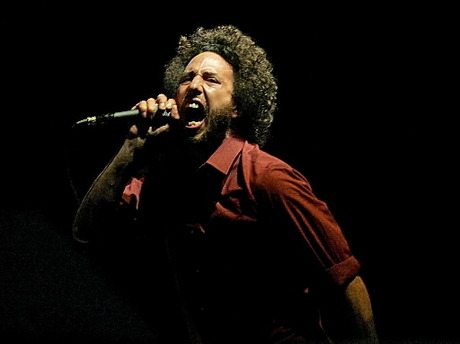
In the wake of Arizona passing what amounts to an Apartheid style anti-immigrant bill Zack de La Roca from Rage Against the Machine speaks out. He lets folks know just how bad this bill is and what we should be doing…For  Zack this is not his first time speaking to the immigration battles in Arizona. It was just a few months ago (january 16th that Zack was present at a March which was broken up by police..

http://www.youtube.com/watch?v=fVOZGAbEARM

Rep. Raul Grijalva closes Tucson office after death threats

The Arizona Democrat had called for a boycott of the state over its harsh new immigration law

http://www.salon.com/news/politics/war_room/2010/04/23/raul_grijalva_closes_office_due_to_threats

Congressman Raul Grijalva

WASHINGTON — Rep. Raúl Grijalva, D-Ariz., closed down his Tucson and Yuma district offices Friday afternoon, after a man called the Tucson office twice threatening to “come in there and blow everybody’s head off,” and then go to the U.S.-Mexico border to “shoot any Mexicans that try to come across,” an aide says.

Grijalva, the co-chairman of the Congressional Progressive Caucus, had been very critical of Arizona’s harsh new immigration law, which would require law enforcement authorities to check the immigration status of anyone they suspect isn’t in the country legally. That could, needless to say, lead to significant racial profiling and harassment in Arizona, where 30 percent of the population is of Hispanic origin. Grijalva called for conventions to boycott Arizona until the law is defeated or, if signed by Gov. Jan Brewer, overturned. (UPDATE: Brewer signed the bill into law Friday afternoon.)

“Just as professional athletes refused to recognize Arizona until it recognized Martin Luther King Jr., we are calling on organizations not to schedule conventions and conferences in Arizona until it recognizes civil rights and the meaning of due process,” he said Thursday.

So the calls Friday morning left staffers feeling uncomfortable, spokesman Adam Sarvana said. The offices were closed as a precaution, and are set to open Monday as planned. The FBI is investigating the threats.

http://www.youtube.com/watch?v=O2f6svit0tI

http://www.youtube.com/watch?v=Vm7H97Qf734

Return to Davey D’s Hip Hop Corner

Black bank Robber Turns out to Be White Guy with Hollywood Style make up..

Wow folks I don’t make these things up.. really I don’t… But it speaks volumes as to what’s going on today…Wonder how many times this happened before and we just assumed it was as was shown and stated..

http://www.youtube.com/watch?v=pD5TdzcsD8o&feature=player_embedded

Return to Davey D’s Hip Hop Corner

Guru’s Brother Harry Pens Article for Boston Globe: My brother, Gang Starr’s Guru

My brother, Gang Starr’s Guru

By Harry J. Elam Jr.

http://www.boston.com/ae/music/articles/2010/04/23/my_brother_gang_starrs_guru/?page=1

(EDITOR’S NOTE: Boston-born Keith Elam, who rose to fame as Guru, founder of the rap group Gang Starr and a person who sought to merge rap and jazz,died earlier this week. His brother, Harry, a distinguished professor of drama at Stanford, has written this remembrance).

Harry Elam

“Positivity, that’s how I’m livin..’” So goes the lyric from my brother’s early hip-hop song, “Positivity.” My brother Keith Elam, the hip-hop artist known as GURU—Gifted Unlimited Rhymes Universal—died this week at the too-young age of 48 because of complications from cancer. ‘Positivity’ was what he sought to bring to the music and to his life, and for me that will be a large part of his legacy.

In February of this year, my brother went into a coma, and I traveled across the country from my home in California to see him. At his bedside, I stood and stared at his overly frail frame, his head that he had kept clean-shaven for the last 20 years uncommonly covered with hair, his body connected to a sea of tubes and wires. I listened to the whirl of machines around us and took his hand. As I did, my mind flashed back to now-distant times, so many memories. And I saw us as teenagers at the beach on Cape Cod playing in the water together. And I saw us as boys, driving to school. My brother was five years younger than me, so we attended the same school only for one year — my senior year, his seventh-grade year — at Noble and Greenough School, and I would often drive us both to school. Invariably, I made us late, yet my brother, never as stressed as me, was always impressively calm. At school he endured the jests and teasing from the other boys about being my “little brother.” I was president of the school and had charted a certain path at Nobles. But my brother found his own creative route at school, as he would throughout his life. His journey was never easy, never direct, but inventive. Through it all he remained fiercely determined with a clear and strong sense of self.

Over the years I had proudly watched my brother perform in a wide variety of contexts. While at Nobles, we had a black theatre troupe known as “the Family.” In 1973, we put on a play entitled ”A Medal for Willie,” by William Branch, and because he was only in the seventh grade, Keith played only a small role, but even then you could see his flair for performance, his comfort on the stage. At home, our older sister Patricia would teach him the latest dances, and he would execute them with verve as I watched from the sidelines, impressed with his moves, and not without a few twinges of jealousy since I’ve always had two left feet. As a teenager he raced as a speed skater. I do not remember how he became involved in the sport; I only remember traveling with my family to watch his meets in the suburbs of Boston. I do not remember if he won or lost, I do know that he always competed with great ferocity and commitment.

When he announced to me that he was dropping out of graduate school at the Fashion Institute of Technology to pursue a career in rap, I thought he was making a grave mistake and warned him against it. But as always he was determined, and in the end he would succeed beyond perhaps what even he had imagined. Early on in his rap journey, he visited me in Washington., D.C., over a Thanksgiving weekend. I was teaching at the University of Maryland then, and we went to what was perhaps the most dreadful party we had ever attended. As we hastened out the door, I apologized for bringing him to this party. My brother replied “let’s write a rap song about it,” and we did. The lyrics made us laugh as we collaborated on the rhyme scheme and rode off into the D.C. night. It is one of my fondest memories, this spontaneous brotherly moment of collaboration and play.

Keith’s big break came with Spike Lee’s film ”Mo’ Better Blues,” with his song “A Jazz Thing” underscoring the credits. I watched that film over and over again just to hear my brother at its end. Soon he was on to creating his first Jazzmatazz album with others to follow, and he became credited for creating a fusion between jazz and hip hop. To be sure, that fusion owes something to our grandfather Edward Clark and Keith’s godfather, George Johnson, who introduced Keith to jazz by playing their favorite albums for him. He credits them both on his first Jazzmatazz. That first Jazzmatazz album featured musical heroes of my youth, Roy Ayers, and Donald Byrd, and here was my brother featuring them on his album. And with this success, came tours. I have seen him perform all over the world, and each time he would give a shout out from the stage to his brother and my wife, Michele. And I was so proud. It sometimes struck me with awe that all these people were there to see my brother. I watched him deal out magic; he was in his element feeling the crowd, and them responding to his groove. This was my baby brother, the kid with whom I once shared a room. The kid whose asthma would cause him to hack and cough and wheeze at night keeping me up. But when I would complain, my parents would send me out of the room. The message was clear: Love your siblings, whatever their frailties. Shorter than me and slighter of build, my brother suffered from asthma and allergies his whole life, but he was always a survivor.

Back in 1993, when he played at Stanford University, I was in perhaps my third year as a professor there. As I walked into the auditorium that night, the assembled audience of students looked at me with a new awareness, “that’s the Guru’s brother,” not that’s Professor Elam, but the Guru’s brother.

And I was, and am, the Guru’s brother. I admired and loved him deeply, my little brother. And I was and am so proud of him, and how he made his dreams reality . And with the outpouring of love that has crowded my e-mail with his passing, I know that he touched so many with his music. My brother cared deeply about family. He raps of my parents in more than one song. They are featured on his video “Ex girl to next girl.” It was one thing seeing my brother on MTV; it was another seeing my parents. His son K.C. was the joy of his was the joy of his life.

The doctors told me back in February that there was not much chance of my brother recovering from the coma. But my brother has always been a fighter, always been one to overcome surprising adversities, so this seemed just one more. We prayed that he would again prevail. But it was not to be. Still his drive, his spirit, his energy, his positivity will live on, and so will his music. “that’s how I’m livin…”

Harry J. Elam Jr. is the chairman of the drama department at Stanford University and the author of several books, including “The Past as Present in the Drama of August Wilson.”

First South Africa and Now Mississippi-White Supremacist Stabbed and Beaten

This is crazy.. and remarkably similar to what just happened in South Africa.. Crazy White Supremacist got killed over there..
http://hiphopandpolitics.wordpress.com/2010/04/12/rising-dissatisfaction-among-post-apartheid-blacks-is-south-africa-on-the-brink-of-a-bloodbath/

This past weekend Neo-Nazi’s got smashed on in LA and now this…

Richard Barrett

Slain Miss. white supremacist was stabbed, beaten

PEARL, Miss. – A white supremacist lawyer known for riding his bicycle around his quiet, rural neighborhood was stabbed and beaten to death by a black neighbor who had done yard work for him, police said Friday.

A preliminary autopsy showed Richard Barrett, 67, was stabbed multiple times in the neck and bashed in the head, Rankin County Sheriff Ronnie Pennington said. He had burns over 35 percent of his body, though investigators believe he was killed Wednesday night and his house set on fire Thursday to cover up his death.

Pennington did not disclose a motive but said neighbor Vincent McGee, 22, was charged with murder Thursday and deputies charged three other people in the case Friday. Albert Lewis, McGee’s stepfather, was charged with being an accessory after the fact, while Vicky and Michael Dent, who live nearby, are charged with being accessories after the fact and arson.

Pennington did not describe their involvement but said all three were being held at the county jail. He did not know if they had attorneys.

Barrett traveled the country to promote anti-black and anti-immigrant views and founded a supremacist group called the Nationalist Movement. He had a knack for publicity but little real influence, one expert said.

“Richard Barrett was a guy who ran around the country essentially pulling off publicity stunts,” said Mark Potok, who monitors hate groups for the Alabama-based Southern Poverty Law Center. “He really never amounted to any kind of leader in the white supremacist movement.”

His body was found Thursday morning after neighbors saw smoke coming from his house in a rural area of Jackson.

The sheriff said McGee had not yet hired a lawyer and the suspect’s mother had no comment when she went to the jail where her son was being held.

McGee was released from state prison in February after serving five years of a six-year sentence for simple assault on a police officer and grand larceny.

Barrett, a New York City native and Vietnam War veteran, moved to Mississippi in 1966, just before he founded the Nationalist Movement. He ran it from an office in the small rural town of Learned, about 20 miles southwest of Jackson, where he also ran a school for skinheads.

Barrett attracted about 50 supporters to a 2008 rally protesting the Martin Luther King Jr. holiday in the Louisiana town of Jena, where six black teenagers were charged with beating a white classmate. Years earlier, he sued over a ban on Confederate flags at University of Mississippi football games.

His modest, one-story brick home with white columns and shutters sits off a winding rural road. Yellow police tape was stretched across the yard and investigators worked on the scene late into the day.

Residents described the neighborhood as quiet and safe. Henderson Craig, who lives a few houses down, said Barrett mainly kept to himself though he was often seen riding his bicycle.

In 1994, he spearheaded an unsuccessful movement to get then-Gov. Kirk Fordice to pardon Byron de la Beckwith, who was convicted of murdering Mississippi NAACP leader Medgar Evers in 1963.

Evers’ brother, Charles Evers of Jackson, said Thursday he has long thought that Barrett didn’t really believe the things he said, but used them to entice people to donate money to his cause.

“I think it was just a way he had to live,” Evers said. “He made a living talking all that racist talk.”

original article;http://news.yahoo.com/s/ap/20100423/ap_on_re_us/us_white_supremacist_dead

Associated Press Writer Jack Elliott contributed to this report.

An Open Letter to 97.9 The Box-in Houston-Don’t Ban Trae the Truth

First we have to give props to Matt Sonzala for doing what so many in his position don’t do speak up for the artist in his area and step to an institution that could potentially be a future employer. Matt as well as being the man who heads up the Hip Hop potion of SXSW is first and foremost a radio cat… So while many remain silent, he at least is willing to speak up and call crap crap.. The open letter below lays out situation surrounding Trae the Truth being banned from Houston station 97.9 the Box and several DJs being fired for supporting him. He also explains the extent of the ‘ban’ which forbids DJs from engaging Trae on twitter, FB, and other activities outside the station..

To be honest if a station has beef with an artist on I can get them not wanting to mess with him to a degree.., however when were talking about Radio One there’s always some things to consider that would make you say mmmm. Case in point, While Radio One is banning indy artist Trae for insulting one of their deejays on a mixtape, they didn’t seem to have problem keeping corporate backed, commercial mainstay the Game in the mix after members of crew were accused of whupping on one of their popular jocks (Zxulu ) at WYKS in Washington DC a few years back  sending him to the hospital.

The way that incident went down was Radio One banned Game from all 69 stations but after a week they rescinded the ban. The official story according to game’s manager Jimmy ‘Henchmen’ Rosemond was they ‘cleared it up a misunderstanding’. The industry whispers amongst radio and label folks was that label heads called and deals were cut.. One of the more persistent stories was the label sunk a ton of promo money into Game  and if Radio One wasn’t  gonna play him, then they  wanted their  money back’. Weeks later even though the official line was Game’s people weren’t involved and it was all a mistake, he had no problem bragging about the beating and even issuing a veiled threat on the remix of ‘Hate it or Love it’, which on occasion could be heard on Radio One stations. Talk about being scandalous. is this really about Radio One towing amoral line of sorts or is this about the money that’s something to ponder

-Davey D-

An Open Letter to 97.9 The Box About Trae being banned

From Matt Sonzala

http://austinsurreal.blogspot.com/2010/04/open-letter-to-979-box-from-matt.html

Matt Sonzala

To Whom it May Concern,

And as this is an “open letter,” I mean all y’all. All of you who are or should be concerned about the situation happening at 97.9 The Box in Houston.”

It pains me to write this letter, as this week, I along with every lover of hip-hop music and culture have already been hit hard by the passing of Keith “Guru” Elam. When Guru, the voice behind Gang Starr, passed away on Tuesday, I and plenty of other people pulled out our old Gang Starr records and celebrated the life of one of hip-hop’s most engaging and important MC’s. We listened to his music as we mourned our collective loss.

As I listened, I personally began thinking hard about hip-hop, and what it has become. Listening to his deft word play and deep, meaningful lyrics, often about street life, I felt a jolt of energy flow through me, like something I haven’t felt in a long time. I realized while listening to this music, some of which is 20 years old, how much hip-hop music has taught me throughout my life. This week – tragically through Guru’s passing – I remembered that hip-hop music is a serious gift to our generation.

And the loss of Guru made me think about how much we need to respect its power.

When I heard about 97.9 The Box (KBXX) banning Trae tha Truth, I honestly brushed it off. Fact of the matter is, Trae has the support of the streets of Houston. And I figured that an MC of his stature in the community probably doesn’t really even need a station like The Box.

Then on the night of Wednesday April 21st, I got the news that the Kracker Nuttz – a group of three incredible DJ’s who have been on KBXX for over 12 years, and were always rated extremely high in the market as they were not afraid to take chances and play certain hip-hop music that exists “outside the box,” – had been fired from KBXX for playing a Chamillionaire song that featured a verse from Trae.

I then realized that this situation affects a lot more than just Trae.

For anyone reading this letter who does not know what went down, allow me to try to briefly explain.

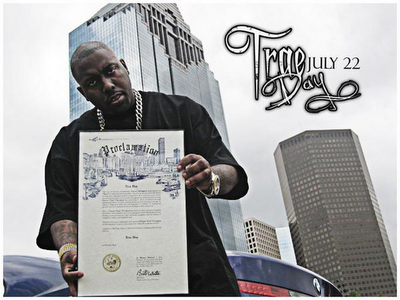
A couple years back, the City of Houston and its former Mayor Bill White, issued Trae tha Truth a proclamation and a humanitarian award in honor of all of the community work he has done in his city. The day this proclamation was given has now become known as Trae Day in Houston.

On the second anniversary of Trae Day, Trae held a concert and carnival of sorts for families on the campus of Texas Southern University. After a positive day of music, fun and games, and after Trae and all of the other artists, presenters and much of the crowd had left, there was an altercation that involved gun play.

The next morning, KBXX conducted an interview with Trae. On air personality Nnete made some off color comments that from all accounts I have received, implied that a situation like this would of course happen at an event produced by Trae Tha Truth. Basically she said that these are the kinds of people that he and his music attract.

Bun B phoned in to the station immediately after hearing that and told them that they were wrong for what they said.

Trae of course took offense to the statements made against him and on his next mix CD, mentioned Nnete on two songs. The rhymes were insulting, but not threatening.

After that he was banned from KBXX, and rumor has it, all Radio 1 owned stations.

This is the email that was allegedly sent to all staff at KBXX:

“URGENT: – Effective Immediately: DO NOT AIR: “Trae tha Truth” on our station. No interviews, no calls, no comments, no posts on our website, no station twitter, no station facebook, no songs in mix show no verses on remixes, or songs in regular rotation. No exceptions. The current online postings will be removed shortly. We wish him all the best in his future endeavors. Thank u. Have a great weekend!”

So in effect, Trae has been banned from KBXX because of some words he said on a mixtape that were derogatory towards a KBXX employee.

I can semi-understand that as I am quite often quick to defend my people as well (as evidenced by this letter). But fact of the matter is, this is America and here we are supposed to have free speech. A man insulting another man or woman generally should not merit an all out ban.

But if you want to go deeper, KBXX boasts day in and day out that it is Houston’s Home for “Interactive Hip-Hop and R&B.” Meaning, in some way they represent hip-hop culture, and have even built a “home” for and from it in Houston.

Well, if this is the case, then this “hip-hop” station should recognize that what Trae did represents the essence of hip-hop. Before you go and label me some backpacker, who is overly sensitive about hip-hop (and uses words like “essence”), you, KBXX, have to realize that what you say every day about representing for hip-hop is serious to many of us.

Trae did not come down to the station and grab Nnete by the neck, he wrote a song that took some verbal stabs at her. Trae did not attack or disrupt any business being done by Nnete in the name of KBXX or otherwise. He wrote a song that she found to be insulting.

Nnete used her platform, under the banner of hip-hop, to air out her grievance with Trae, and Trae used his platform, under the banner of hip-hop, to air out his grievance with Nnete. And for this he has been banned? That is extremely petty, and goes very much against what hip-hop is and has been since it’s inception.

Closing the door to dialogue is never positive, and that is exactly what KBXX has done.

In the time since the ban, DJ GT was suspended without pay for a week and a half for responding to a Twitter post that questioned his involvement in the ban (and supposedly mentioned his mother). DJ Baby Jae of the Kracker Nuttz was suspended for a week and a half without pay for making a mixtape – totally outside of the work environment – that featured Trae.

Two weeks ago, Houston rapper Killa Kyleon visited Michael Watts on his Swisha House mix show and shouted out Trae. The next day we learned that Kyleon was also banned from KBXX (though this has not been officially confirmed to me as of yet) and that the Swisha House show was cut down to only two hours.

Now we come to learn that three of Houston’s most respected DJ’s, who served over 12 years on the air at KBXX, have been fired for playing a Chamillionaire song that features Trae.

It’s just ridiculous.

In addition to these firings, other problems arise from the banning of Trae from KBXX. For one, Trae is an artist who can draw a strong crowd at a Houston club. KBXX is the main means of promoting a lot of the urban club nights that happen in Houston. If the promoter adds Trae to a show, he or she cannot have Trae mentioned in an advertisement, Trae music cannot be played in the advertisement, and nothing about Trae can be used in any sort of promotion on KBXX.

This limits many promoters ability to make money and survive in Houston.

It may not seem like much to you, but consider this scenario. In the days following the tragic earthquake in Haiti, Bun B put together a benefit concert with a lot of Houston hip-hop artists to raise money for the impoverished nation. Trae, being a popular artist and a man of the community was of course invited to be a part of it.

The event organizers were informed that KBXX would not support it at all, if Trae was a part of it. Trae decided to back out of the show so that it could be advertised and promoted on Houston’s main urban radio outlet – but still showed up in support of the cause.

This ban affects a lot of things on a lot of levels and is a gross abuse of power on the part of KBXX. This especially pains me, as for years KBXX was one of the premier urban radio stations in the nation. I personally saw their ascent, as I interned on their promotions team for their first two years of existence. For two years in the early 1990’s, I was out in the streets, driving their van and promoting their station. And at the time they were at war with Majic 102 to become the top urban station in the city.

They ended up winning, and winning big. You want to know how? They listened to and supported the community. They played records by UGK, Big Mello, Geto Boys, Scarface, all sorts of Houston rappers, many before anyone outside the city had ever heard of them. They kept it fresh, supported the city and stayed in the streets.

And they became an extreme force to be reckoned with in the Houston hip-hop community.

I’m not sure what happened after that, but it sure isn’t like it was.

So I have a few questions for KBXX and Radio 1, but first I have to make this statement.

KBXX – you are in the wrong here. You initiated this problem, and now refuse to work to fix it. Your ban on Trae, and the subsequent actions you have taken on fairly innocent parties, is reprehensible and cowardly. It’s also lazy. I realize that in the age of 140 character tweets and Facebook updates, genuine conversations often take a back seat. This situation merits a genuine conversation, and a solution.

Your half assed, one sided solution is not the answer.

My questions:

You play a song called “Mr. Hit That Hoe” almost every hour, every day. It plays like a mantra to the youth, spewing the nonsensical line over and over again “Hit that hoe, hit that hoe, hit that hoe, hit that hoe.” How do you justify banning an artist who instead of hitting a woman when he was angry, wrote a song and attempted to make a point, rather than hurt someone? (And yes I understand the “sort of hip-hop” meaning of this song, but still, over and over it states “Hit that hoe, hit that hoe, hit that hoe, hit that hoe.” And KBXX plays it, a lot.)

Do you recognize how far and wide this ban reaches, and how many people you are really affecting with this? Do you really want your actions to force supporters of your station to turn their backs on YOU?

Are you willing to talk to Trae and come to some sort of an agreement? Will you realize that you were wrong to fire the Kracker Nutz before some other station comes to town, snatches them up and destroys you from 7 p.m. – Midnight (or whatever slot they put them in)?

Will you admit to the city that you were hasty in making the decisions that you have made?

Or, will you tell the city the real reason you banned Trae the Truth? If there’s another reason out there, and it is legitimate, this will save you from the backlash that you are about to endure.

Seriously, this issue has been blown way out of proportion, and a solution needs to be found. I don’t really expect you or your corporate cronies to really care about the words that I am writing on this matter, but I do ask you to think about hip-hop, the culture that you misrepresent, and the effect you are having as a whole on the Houston Hip-Hop Community.

Sincerely (Thank u. Have a great weekend!),

Matt Sonzala

Return to Davey D’s Hip Hop Corner

Henry Louis Gates pens Article Absolving White People For Slavery-Wants us to Blame Africans

Wow this is a two page story that the New York Times is running…You’d think Henry Louis Gates would’ve learned a few things after his confrontation with Cambridge police last year when they accused him of breaking into his house and jammed him up… Apparently not.. All I can do is shake my head and note that this article appears the night after ABC Nightline ran that story about Black Women not finding suitable men.. As author Bakari Kitwana pointed out, Yes today we all need to highlight and celebrate Black pathologies…

So this article basically says Africans helped white slavers capture us.. Duh.. We’ve been known that. Hell it was Black slaves that usually ran to master and told about slave insurrections. It was Black slave that were sometimes made to be overseers. None of that absolves the horrific institution of slavery which here in the US was rooted in the strong belief that our ancestors who were forced to work those fields were less than human and forced to endure unspeakable horrors. The hatred for us because of skin color remained long after slavery into Jim Crow and as we can see in recent days continues..We wont even get into a discussion of colonialism and the racialized politics around that especially as African nations fought to be free. Meanwhile while this Gates article appears, the state of Texas is erasing and downplaying the harshness of slavery in its history books.

This article is akin to pointing out that there were Jews who helped the German during the height of Nazi Germany.. Not for one minute would one ever think of absolving germany for her role in the holocaust and nor should we be absolving those Europeans who gleefully played roles in Transatlantic slavery, no matter what Africans helped out.. What took place in this 2000 x 3000 land mass we call America rest on the shoulders of ‘Mr Charlie’. He gets no pass on what was done..He was caught holding the bag.. and to be honest if there was some nutcase on the continent who “Helped” sell us into bondage they can be dealt with as well.. But in the meantime it was Mr Charlie of European decent who was all up in here raping our mothers, sisters and grandmothers, snatching up kids and separating our families, beating our people to pulps and basically using and abusing human being stolen from their land.  I dont care how many Henry Gates articles are published by the NY Times..He (Mr Charlie ) gets no pass..nuff said

-Davey D-

Ending the Slavery Blame-Game

by Henry Louis Gates

http://www.nytimes.com/2010/04/23/opinion/23gates.html?pagewanted=1

Henry Louis Gates

THANKS to an unlikely confluence of history and genetics — the fact that he is African-American and president — Barack Obama has a unique opportunity to reshape the debate over one of the most contentious issues of America’s racial legacy: reparations, the idea that the descendants of American slaves should receive compensation for their ancestors’ unpaid labor and bondage.

There are many thorny issues to resolve before we can arrive at a judicious (if symbolic) gesture to match such a sustained, heinous crime. Perhaps the most vexing is how to parcel out blame to those directly involved in the capture and sale of human beings for immense economic gain.

While we are all familiar with the role played by the United States and the European colonial powers like Britain, France, Holland, Portugal and Spain, there is very little discussion of the role Africans themselves played. And that role, it turns out, was a considerable one, especially for the slave-trading kingdoms of western and central Africa. These included the Akan of the kingdom of Asante in what is now Ghana, the Fon of Dahomey (now Benin), the Mbundu of Ndongo in modern Angola and the Kongo of today’s Congo, among several others.

For centuries, Europeans in Africa kept close to their military and trading posts on the coast. Exploration of the interior, home to the bulk of Africans sold into bondage at the height of the slave trade, came only during the colonial conquests, which is why Henry Morton Stanley’s pursuit of Dr. David Livingstone in 1871 made for such compelling press: he was going where no (white) man had gone before.

How did slaves make it to these coastal forts? The historians John Thornton and Linda Heywood of Boston University estimate that 90 percent of those shipped to the New World were enslaved by Africans and then sold to European traders. The sad truth is that without complex business partnerships between African elites and European traders and commercial agents, the slave trade to the New World would have been impossible, at least on the scale it occurred.

Advocates of reparations for the descendants of those slaves generally ignore this untidy problem of the significant role that Africans played in the trade, choosing to believe the romanticized version that our ancestors were all kidnapped unawares by evil white men, like Kunta Kinte was in “Roots.” The truth, however, is much more complex: slavery was a business, highly organized and lucrative for European buyers and African sellers alike.

The African role in the slave trade was fully understood and openly acknowledged by many African-Americans even before the Civil War. For Frederick Douglass, it was an argument against repatriation schemes for the freed slaves. “The savage chiefs of the western coasts of Africa, who for ages have been accustomed to selling their captives into bondage and pocketing the ready cash for them, will not more readily accept our moral and economical ideas than the slave traders of Maryland and Virginia,” he warned. “We are, therefore, less inclined to go to Africa to work against the slave trade than to stay here to work against it.”

To be sure, the African role in the slave trade was greatly reduced after 1807, when abolitionists, first in Britain and then, a year later, in the United States, succeeded in banning the importation of slaves. Meanwhile, slaves continued to be bought and sold within the United States, and slavery as an institution would not be abolished until 1865. But the culpability of American plantation owners neither erases nor supplants that of the African slavers. In recent years, some African leaders have become more comfortable discussing this complicated past than African-Americans tend to be.

In 1999, for instance, President Mathieu Kerekou of Benin astonished an all-black congregation in Baltimore by falling to his knees and begging African-Americans’ forgiveness for the “shameful” and “abominable” role Africans played in the trade. Other African leaders, including Jerry Rawlings of Ghana, followed Mr. Kerekou’s bold example.

Our new understanding of the scope of African involvement in the slave trade is not historical guesswork. Thanks to the Trans-Atlantic Slave Trade Database, directed by the historian David Eltis of Emory University, we now know the ports from which more than 450,000 of our African ancestors were shipped out to what is now the United States (the database has records of 12.5 million people shipped to all parts of the New World from 1514 to 1866). About 16 percent of United States slaves came from eastern Nigeria, while 24 percent came from the Congo and Angola.

Through the work of Professors Thornton and Heywood, we also know that the victims of the slave trade were predominantly members of as few as 50 ethnic groups. This data, along with the tracing of blacks’ ancestry through DNA tests, is giving us a fuller understanding of the identities of both the victims and the facilitators of the African slave trade.

For many African-Americans, these facts can be difficult to accept. Excuses run the gamut, from “Africans didn’t know how harsh slavery in America was” and “Slavery in Africa was, by comparison, humane” or, in a bizarre version of “The devil made me do it,” “Africans were driven to this only by the unprecedented profits offered by greedy European countries.”

But the sad truth is that the conquest and capture of Africans and their sale to Europeans was one of the main sources of foreign exchange for several African kingdoms for a very long time. Slaves were the main export of the kingdom of Kongo; the Asante Empire in Ghana exported slaves and used the profits to import gold. Queen Njinga, the brilliant 17th-century monarch of the Mbundu, waged wars of resistance against the Portuguese but also conquered polities as far as 500 miles inland and sold her captives to the Portuguese. When Njinga converted to Christianity, she sold African traditional religious leaders into slavery, claiming they had violated her new Christian precepts.

Did these Africans know how harsh slavery was in the New World? Actually, many elite Africans visited Europe in that era, and they did so on slave ships following the prevailing winds through the New World. For example, when Antonio Manuel, Kongo’s ambassador to the Vatican, went to Europe in 1604, he first stopped in Bahia, Brazil, where he arranged to free a countryman who had been wrongfully enslaved.

African monarchs also sent their children along these same slave routes to be educated in Europe. And there were thousands of former slaves who returned to settle Liberia and Sierra Leone. The Middle Passage, in other words, was sometimes a two-way street. Under these circumstances, it is difficult to claim that Africans were ignorant or innocent.

Given this remarkably messy history, the problem with reparations may not be so much whether they are a good idea or deciding who would get them; the larger question just might be from whom they would be extracted.

So how could President Obama untangle the knot? In David Remnick’s new book “The Bridge: The Life and Rise of Barack Obama,” one of the president’s former students at the University of Chicago comments on Mr. Obama’s mixed feelings about the reparations movement: “He told us what he thought about reparations. He agreed entirely with thetheory of reparations. But in practice he didn’t think it was really workable.”

About the practicalities, Professor Obama may have been more right than he knew. Fortunately, in President Obama, the child of an African and an American, we finally have a leader who is uniquely positioned to bridge the great reparations divide. He is uniquely placed to publicly attribute responsibility and culpability where they truly belong, to white people and black people, on both sides of the Atlantic, complicit alike in one of the greatest evils in the history of civilization. And reaching that understanding is a vital precursor to any just and lasting agreement on the divisive issue of slavery reparations.

Return to Davey D’s Hip Hop Corner

State of Arizona is Set to Join the ‘Birther’ Movement-They Tell Obama-No Birth certificate No Name on Ballot in 2012

The state of Arizona continues to be a sad joke for the rest of the country. First it passed a stringent immigration bill that gave police sweeping powers that would essentially allow them to step to any and all people they perceived as being ion this country illegally. Translation: Arizona stepped back to the horrific days of Apartheid South Africa with a ‘Let Me See Your ID‘ law that would undoubtly target Mexican and Mexican Americans..

http://www.thesouthernshift.com/news/2010/04/let-me-see-your-id-arizonas-new-immigration-law-harks-back-apartheid-south-africa

Next we have Senator John McCain who appeared on the Bill O’Reilly show to weighed in on the hoopla around the law and decided to make the outlandish statement about Mexicans illegals  were intentionally running down people. He later backtracked and tried to explain himself. He said he was referring to people near the border fleeing law enforcement. We say it was John McCain having flashbacks of his POW days when he felt compelled to refer to his Vietenamese captors as ‘Gooks’.

http://www.thesouthernshift.com/news/2010/04/let-me-see-your-id-arizonas-new-immigration-law-harks-back-apartheid-south-africa

Today we now have Arizona trying to pass a law demanding that the President show his birth certificate if he expects to be on the 2012 ballot.. Yes Arizona the new cradle for dumbness and white supremacy..(I guess thats a redundant statement) has now officially joined the ‘Birther Movement’. Unbelievable.

-Davey D-

PHOENIX – Arizona lawmakers expressing doubt over whetherPresident Barack Obama was born in the United States are pushing a bill through the Legislature that would require the president to show hisbirth certificate to get on the state’s 2012 ballot.

The House passed the measure Wednesday on a 31-29 vote, ignoring protests from opponents who said it’s casting Arizona in an ugly light and could give the elected secretary of state broad powers to kick apresidential candidate off the ballot.

“We’re becoming a national joke,” Rep. Chad Campbell, a Phoenix Democrat who opposes the measure, said Thursday.

The measure’s sponsor, Republican Rep. Judy Burges of Skull Valley, said she isn’t sure Obama could prove his eligibility for the ballot in Arizona and wants to erase all doubts.

“You have half the population who thinks everything is fine, and you have the other half of the population who has had doubts built up in their mind,” Burges said.

So-called “birthers” have contended since the 2008 presidential campaign that Obama is ineligible to be president because, they argue, he was actually born in Kenya, his father’s homeland. TheConstitution says that a person must be a “natural-born citizen” to be eligible for the presidency.

Hawaii officials have repeatedly confirmed Obama’s citizenship, and his Hawaiian birth certificate has been made public, along with birth notices from two Honolulu newspapers published within days of his birth in August 1961.

Courts have rebuffed lawsuits challenging Obama’s eligibility, but the issue hasn’t gone away. Lawmakers have introduced similar bills in a handful of other states. They include Oklahoma, where a measure passed the House but failed in the Senate, and Missouri, where a bill was withdrawn before any action was taken.

Eleven U.S. House Republicans have signed on to a federal bill, but it hasn’t received a hearing in the Democrat-controlled House.

Arizona’s measure would require U.S. presidential candidates to submit documents to the secretary of state proving they meet the constitutional requirements to be president. The secretary of state could then decide to keep a candidate off the Arizona ballot if he or she had reasonable cause to believe the candidate was ineligible.

Arizona Secretary of State Ken Bennett opposes the bill, arguing it gives his office too much power, according to his spokesman Matthew Benson. Benson said Bennett, a Republican, has no doubts about Obama’s citizenship.

The bill now goes to the Senate, where supporters are trying to pull together enough votes to pass the measure. If they do, it’s unclear if Republican Gov. Jan Brewer will give it her support. Her spokesman, Paul Senseman, said the governor won’t comment on pending legislation, but he added she doesn’t have doubts about Obama’s citizenship.

The measure comes amid a string of controversial proposals in Arizona that have garnered national attention, including a sweeping illegal immigration crackdown awaiting action by the governor and a measure allowing people to carry concealed weapons without permits. The governor signed the gun bill last week.

Rep. Tom Chabin, D-Flagstaff, pleaded with his colleagues to oppose the birth certificate measure Wednesday.

“When you undermine the sitting president of the United States, you undermine our nation, and it makes us look very ugly,” Chabin said Thursday.

But some supporters insist the bill isn’t aimed at Obama, it’s just common sense.

“It’s our ballot,” said state Sen. Jack Harper, R-Surprise, who believes Obama has proven his citizenship. “The parties need to prove that their nominee is eligible to hold the office of president to be on our ballot.”

original story: http://news.yahoo.com/nphotos/President-Barack-Obama

Return to Davey D’s Hip Hop Corner
Solar Opens Up About His Relationship With Guru-Denies Gay Rumors

Solar Opens Up About His Relationship With Guru

‘I looked at him as a brother,’ Solar says; denies rumors of romantic relationship.

http://www.mtv.com/news/articles/1637568/20100421/gangstarr.jhtml

By Shaheem Reid, with additional reporting by Sway Calloway

Solar

“This is one solar that needs to be eclipsed,” B. Dot went on to write. And that may be one of the kindest things said about Solar, friend and confidant of the rap legend since 2002.

Twitter’s list of trending topics includes #F—SOLAR and longtime Gang Starr musical family member Bumpy Knuckles has been posting tweets directed at Solar that we cannot reprint here. Journalists such as “The Media Assassin” Harry Allen and Miss Info have openly questioned the authenticityof statements issued by Solar on behalf of Guru. Beloved rap figures such as ?uestlove have called him a fraud and Ice-T has expressed that he intends to get to the bottom of the situation.

“All this Guru drama WILL be exposed and dealt with … say no more … , ” Ice tweeted.

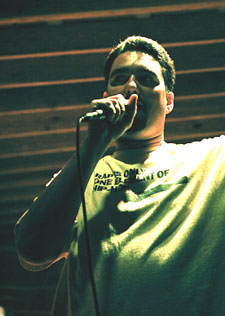
Solar maintains his intentions are pure and sat down with MTV’s Sway for an extensive discussion about his relationship with Guru and all the controversy surrounding his role in Guru’s life and tragic death.

“The friendship got close fairly rapidly,” Solar said of their first meeting through a mutual friend in 2002. “I think the reason why it got close is that I wasn’t interested in a record deal. I wasn’t interested in him as Guru. Me and him just hit it off as men. I got to know him as a man, he got to know me as a man. We were both going through tricky periods in our lives. I was working with homeless children at the time. It’s a heavy problem … Guru was dealing with certain situations. We started hanging out, hitting the clubs in New York. We needed to lighten it up a little bit.

“Once that trust developed, he was able to tell me about certain things within his life and career that was leading him to feel extremely frustrated that I believe contributed to his problems with substance abuse,” Solar continued. “Anybody who knows him knows that it was a very serious situation at the time. I wasn’t judgmental. I just listened and became a friend.”

Solar said he eventually helped Guru to rid himself of weed and other substances as well as alcohol, and he had been clean and sober since 2003.

Solar came onboard to work on Guru’s last two Jazzmatazz albums and toured with him. They also started the label 7 Grand Records.

“Once 7 Grand was started, certain aspects of Gang Starr kept holding onto him and he felt that it was dragging him down or holding him from getting to where he wanted to get,” Solar explained. “It was influences around the industry that he felt was contributing to that. It was a source of frustration for him and also for myself.”

Guru maintained a consistent touring schedule around the world. According to Solar, in early 2009, he started to experience pain in his back, which he at first attributed to vigorous gym workouts. After the pain carried on for a couple of months, Guru sought medical attention, which resulted in an MRI and a cancer diagnosis.

“He was upset and distraught,” Solar added.

Guru went in for further testing and it was confirmed that he suffered from myeloma, a cancer that affects the white blood cells. He had an operation in July 2009 that was unfortunately unsuccessful.

“It wasn’t long before we realized the operation wasn’t a success — by the end of the summer we knew the cancer was spreading.” Still, Guru and Solar continued to tour around the world — Guru was able to get onstage and perform as long as he took his medicine.

However, despite the setbacks, Solar insisted Guru didn’t want to tell his family about his situation, as he was still optimistic that he could overcome the diagnosis.

“When I met Guru, his situation with his family was somewhat of an estrangement,” Solar explained. “I was an advocate of meeting his mom, meeting his dad — developing a strong, good relationship with them.”

Solar said that Guru and his parents eventually became close again and he got back in contact with his brother as well, however he still wasn’t close with his sister Trish and her children. In March, Trish’s son Justin said that Solar — who had become Guru’s medical proxy — was keeping info from the family about Guru’s condition.

“My family has no way of knowing what is going on with Guru’s situation,” Justin said via his YouTube vlog. “[Solar] also has primary control over the decisions made for Guru’s health in the hospital. Solar has complete control of the flow of information. I know that Solar has been his right-hand man, day-in and day-out for the last six years, but that does not give him the right to make decisions about whether his family is to see Guru or learn about his status. The fact that he is acting like this lets me know that he does not have Guru’s best interests in mind.”

Solar denied that he took advantage of Guru while he was in a weakened mental state.

“He doesn’t fit the profile of someone that is mentally unstable,” Solar said calmly. ” … He knew exactly what he wanted to do, not only his business but his personal life.”

He also denied rumors that he used to physically abuse Guru while he was sick.

“Me and Guru, we used to play fight,” Solar answered. “Roughhouse. Not only with him, but other members of the band. These are all accusations without Guru being here to look you in the eye and saying that’s just ridiculous. That’s just idiotic.”

Solar also denied widespread rumors that he was involved in a romantic relationship with the MC.

“That’s untrue, completely unfounded,” he said. “Guru is a family man, I’m a family man. I don’t want to say anything against anybody living a certain type of lifestyle — everybody is free to live their life how they choose to live it — but that’s not my lifestyle or Guru’s lifestyle. We’re straight men. He dealt with women and family. I dealt with women and family. There’s never been any blurring of the lines whatsoever.”

Between last summer and February 2010, Guru’s focus shifted to his health, and his condition worsened to the point where Solar had to temporarily move into Guru’s New Jersey residence to help the rap legend with daily activities.

“It was getting bad,” Solar said. “His mobility was starting to worsen. I was staying in his home with him to help him with his day to day. I did it as a brother — I looked at him as a brother. I did that to preserve his dignity, even in those times.”

Guru checked himself into the hospital at the start of the year and underwent chemotherapy, but later suffered two cardiac arrests and slipped into a coma. He died on Monday

You can peep the video of Solar and Sway right here:

http://www.mtv.com/videos/?id=1637567


Malachi Garza: Prop 21 Reflections & Lessons-Ten Years Later

Malachi Garza: Prop 21 reflections & lesson

Being 19/ 20 years old at the time I was fueled in an indescribable way by your work to put the mass in mass movement. These are my reflections on Prop 21 and a thanks to you.

Youth built the Prop 21 movement with tenacity and political clarity of those most affected. Memories of Prop 21 days are some of my most inspirational political memories even though it hurt bad to loose after working so hard, feeling so strong. I can only imagine if we had facebook and myspace, it woulda been even more off the rickter. Youth led walkouts, marches, speak outs, lobby visits, voter registration efforts, all bringing me to some of the lessons I took with me…
Role of culture in mass mobilization
Key to the Irresistibility of our Movement
The cultural work surrounding this fight was off the chain! I remember rallies that weren’t boring with hella speeches and reiterating the problem but were concerts, M.C. battles, graffiti battles. They were live! They were fun to be at, somin you wanted to bring your friends too, even the ones who be like F*that I’m just doing me. The performers were people we looked up to, represented the crowd. Songs that came out had us singing Don’t Explain while riding the 40 bus line. The posters were so fresh people kept one to put in their crib and the rest went up anywhere folks could get em. I firmly believe the role and uses of culture at this time were essential to the mass involvement as well as general positive feelings of being in movement space at that time. Underground Railroad as an organization of revolutionary artists provided an example of artists working together in an organized way that I hadn’t seen before and haven’t since, outside of Blue Magazine and Ave. Magazine in NYC those having closed shop eventually as well. I think this is a huge need that is yet to be addressed and hinders us today.

Role of coalitional work
Youth Force Coalition in the F* house!
Folks working together! This made it possible to organize a mass, that felt like a mass, in a megalopolis as well as a way for everyone to be seen a valid/having a role. Macehuali (Olin at the time) rolled hella hard with the indigenous/Mexican@/chican@ youth, Standing Together to Organize a Revolutionary Movement (STORM) rolled hella hard with general young adult POCs, the Revolutionary Communist Party organized in Oakland High Schools with their Free Mumia work, 3rd World Liberation Front rolled UB Berkeley students of color deep, 3rd Eye Movement plugged in the young hood from Frisco and 3rd Eye 510 from the town (Oakland), Jewish Youth for Community Action (JYCA) plugged in the young mostly white Jewish kids from around the bay, C-Beyond plugged in a working class white and POC youth from the suburbs of the bay, Raj and Debug held down the South Bay. The School of Unity and Liberation (SOUL) provided spaces to develop our political consciousness and further develop our relationships with each other through training in our coalitional space and Sunday School sessions focused on varying international political histories. Through a collation that had one part-time staff and many many volunteers Youth Force Coalition was a collective expression of our power, hopes, determination and dreams. There was beef with-in all of this of course but I wasn’t close enough to it or political developed enough to see it’s expressions outside of particular groups stopping to attend or not attending Youth Force meetings. In the streets we were all there together and that’s what I remember most and really cared about. As young folks we were like this shit is FLY and there was LOVE between the masses of us. Thinking back I give props to my organizers for never fostering diversionary thinking in me. I was never told to hate on anybody. This is a lesson for us within its self, to fight our real enemies and foster a healthy distain for oppressors/the system not freedom fighters, even if someone acts like an asshole sometime cuz we all do.

A youth movement can’t do it alone
We Are IT the BEST, the LEADERS, the SHIzNIT…basically
AIN’T NO POWER LIKE THE POWER OF THE YOUTH & THE POWER OF THE YOUTH DON’T STOP sayyyyyy whatttttt AIN’T NO POWER LIKE THE POWER OF THE YOUTH & THE POWER OF THE YOUTH DON’T STOP sayyyyyy whatttttt.. I remember chanting until I couldn’t speak for days. I remember chanting into the bullhorn getting everyone pumped, the crowd jumping up and down like we were on trampoline streets. I remember the centering of youth as the future, that youth are always the leading force in social change movements; we were trained in a way that kinda made some of us youth big head crazy, meaning we knew was the shit and that’s that. Not a difficult place to work from as a youth, in fact it felt empowering but it was too narrow a view. Too narrow as far as our role as youth, what it would take to win and helped to hold the disillusionment after we lost. This highlights the necessity to develop youth within an analysis that the youth movement while essential is part of a broader international movement for justice. This way youth see themselves as more connected to communities as a whole (here and globally), youth would have had more places of entry into other movement sectors/organizations that peeked other interests of theirs. Through a fuller analysis of a movement youth can picture themselves as eventually adults in the struggle, can think of whatever fight they are currently in as part of a progression of oppression and resistance…Too many young folks who were part of the Prop 21 movement, the experience was more off the chain than anything they imagined or had ever seen before. To have defeat at the end of it meant the man was impenetrable. That in fact we had all wasted our time. Which of course is total bullshit but ya know that’s what it is. Key to this dynamic was a lack of relationship to our elders in the struggle. If we had more spaces to dialog with elders, not 30 something’s, but OGs who were 50/60+ I think that would have strengthened our youthful understanding of Prop 21 as not static in time, not a standalone fight. The elders probably coulda helped us on some other strategic thinking as well…

CA has red state tendencies
5 Districts isn’t CA, Proof of Lesson Learned
We built fierce presence, organizing, and consciousness in the Bay Area and somewhat in Los Angeles and but we got killed throughout the rest of this mammoth state. If this was a local election we woulda won so big we’d still be cheesing. We didn’t have the analysis that was in the forefront of the tactics of the civil rights movement and the tactics the right uses, we didn’t bus ourselves/organize outside our bubble. It’s a huge bubble that took everything and then some to cover and organize but simply we lost this fight in the areas most conservative, in the areas we never door knocked, in the areas of white flight and conservative POC churches, we lost in all but 5 districts with a final tally of 62.1% Yes and 37.9% No. While that is almost half of the voting population of the state we were hurt hugely by a somewhat insular local strategy. Many of the same folks that were active for justice 10 years ago still are. And many of us remembered this lesson when we built a movement to defeat Prop. 6 in our last CA state wide elections. The deliberate work to reach the central valley though Spanish language press, our inter-faith work to reach churches and there bases throughout the state, the mailings and work with the teachers and fire fighters unions throughout the state made it possible for us to defeat the most recent throw em in jail proposition. It felt good to see our growth, to remember our legacies and to F* win that time around.

Community Is What Sustains Us
Most of all I am so appreciative of the opportunity to learn so much from and build so deeply with incredible people. As a confused, radical, energetic, mixed race, G.E.D. having, poor, butch/flat top sporting young knuckle head I was taking seriously. I was treated with respect and what I had to offer was respected. The mentorship provided by people like me yet slightly older gave me an amazing portal into what I hoped to be my future.Tony Colman, Omani Imani, Sake 1, Patty Burn, Raquel Lavina, Steve Williams, Rene Quinones, Cindy Wisner, Genevieve Negron-Gonzales, Jay Imani, Favianna Rodriguez, Van Jones, Adam Gold, Joy Enomoto, Jason Negron-Gonzales, Marisol, Anita DeAsis, Jaron Brown and Maria Poblet thank you for helping me realize my future could go beyond my block and for seeing me as a butting intellectual and community organizer. The other leaders who were under 21 at the time Jasmine Barker, Jesse Osorio, Charisse Domingo, Nancy Hernandez, Rory, Aleks Zavaleta, Pacolia, Rosi Nieves, Venus Rodriguez, red haired Katie, Tina Bartolome AND HELLA MORE OF US you made me believe in possibility and myself. In this all I think there’s a lesson. You all have seen and/or personally had to experience the joys and sorrows of my growth and failures and for the most part are still in close community to me. Our grace with one another and ability to allow each other to transform must be one of the foundations of our work. Without you, I don’t know if I’d be alive yet alone here in the field working for our liberation. Without our collective we are truly alone and we need each other, our people need us and this world very clearly needs us. Thank you for all you did and continue to do.

original article: http://www.facebook.com/note.php?note_id=380590433993&id=587519790&ref=nf

Return to Davey D’s Hip Hop Corner