Wyclef to Run for President of Haiti…But Should He? The Pros & Cons

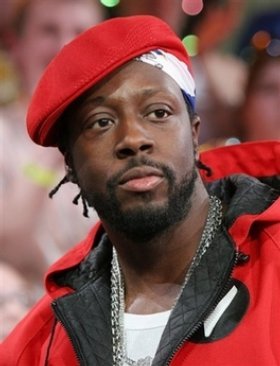
(AllHipHop News) Hip-Hop star Wyclef Jean will announce his bid for the President of Haiti, a source has confirmed with AllHipHop.com exclusively.

Sources close to Wyclef confirmed with AllHipHop.com that the rapper will announce his bid for the country’s highest office next Thursday, on August 5th.

The 37-year-old was born in Haiti, but immigrated to the United States at the age of 9-years-old, when he landed in Brooklyn, before settling in South Orange, New Jersey.

As a member of The Fugees and as a solo artist, Wyclef has sold millions of records, in addition to collaborating with artists like Paul Simon, Gloria Estefen, Destiny’s Child, Carlos Santana and others.

The rapper sprung into action on January 12th, when his native land was leveled by a 7.0 earthquake that left 300,000 people dead over a million others displaced.

Even prior to the earthquake, Wyclef Jean’s Yele Haiti organization raised funds for the country, but after the deadly earthquake, the rapper helped raise over $10 million dollars in less than three months.

The rapper will make his official announcement just two days prior to the country’s August 7th deadline to submit his plan for running for President.

Analysts are predicting that Wyclef Jean will easily win the race with his financial connections, influence among the Haitian youth and his political influence around the world.

The news of his candidacy has stoked fears in opponents planning to run for the head office in November.

“I think if Wyclef is allowed to run he will have a straight victory,” political leader and former presidential candidate Himmler Rebu told Reuters yesterday.

Jean, who maintained his status as a citizen of Haiti, was in the country yesterday, where he was preparing for his upcoming campaign.

The rapper/musician also has political clout in the country.

His uncle, Raymond Alcide Joseph, has been the Haitian ambassador to the United States since 2005 and helped Wyclef’s drive to raise money and relief aid for victims of the massive earthquake.

Elections are slated for November 28th.

original story: http://www.allhiphop.com/stories/news/archive/2010/07/30/22315089.aspx

——————————————————-

Greetings All:

The Haitian rapper Wyclef Jean is contemplating a run for the presidency of Haiti.  I liken this to the selection of Ronald Reagan in 1980, a popular entertainer who was a puppet of the right wing power brokers of this country.

Wyclef Jean has supported the military coups against the duly-elected (first with 67% and 2nd with 90% of the vote) Jean-Bertrand Aristide, affectionately called Titid by the Haitian masses and members of Fanmi Lavalas, the party that first drafted the liberation-theologean to run for President.  For more on Haitians’ love of Aristide and their ongoing demands for his return, watch this short video.  Even though it’s in French, there’s no problem understanding the message:

http://www.youtube.com/watch?v=6vuXyPsHV00

According to The Huffington Post, “The singer has been active in recent years in raising money through his Yele Haiti Foundation. The organization was widely criticized for alleged financial irregularities after the Jan. 12 quake, when scrutiny revealed it had paid Jean to perform at fundraising events and bought advertising air time from a television station he co-owns.

Let’s be clear, Wyclef’s uncle is the Haitian Ambassador to the U.S., and they’re both cozy with the self-appointed czar of Haiti, Bill Clinton, whose plans for Haiti are to make it a neo-colony for cheap labor in U.S. factories and a reconstructed tourist industry.  Wyclef is the perfect puppet.  The Haitian elite and its U.S./U.N. sponsors are counting on his appeal to young people to derail the movement to return Aristide.  I doubt it will succeed.  In fact, I believe most Haitians will not buy this bullshit at all.

Check out Charlie’s “Ghosts of Cite Soleil” – Don’t Believe the Hype:

Ghosts of Cite Soleil plays like a manipulative music video, featuring music by Haitian rapper Wyclef Jean, also the executive producer, who supported the coup and pushed the State Department line among the conscious hip-hop community and progressive celebrities in Hollywood. This contrasts to the principled stand of Danny Glover, Ruby Dee and her late, great husband Ossie Davis. You can almost hear the violins behind Chamblain, as he talks about his return to Haiti, but the music becomes dissonant and menacing behind Aristide…

-Sister Kiilu-

“Ghosts of Cite Soleil” – Don’t Believe the Hype

by Charlie Hinton

http://www.haitisolidarity.net/article.php?id=182
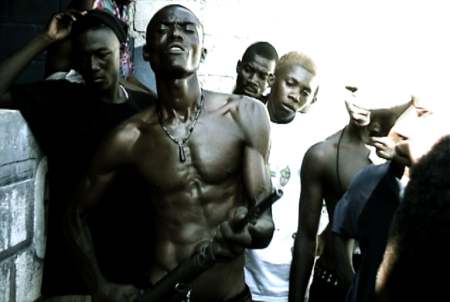
The director is Danish, not German, but Ghosts of Cite Soleil makes heroes of the made-in-Washington leaders of Haiti’s 2004 coup in a manner reminiscent of Leni Riefenstahl’s adoration for Adolf Hitler in her famous film from the 1930’s, Triumph of the Will. It builds a web of lies – lies of omission and lies of commission – into the “Big Lie” – a stylized, decontextualized, post-modern, sexy/violent piece of propaganda disguised as a documentary, full of guns but signifying nothing.

Ghosts of Cite Soleil claims to reveal the intimate personal lives of two gangsters who are brothers, Bily and 2Pac, in the deprived Cite Soleil neighborhood of Port-au-Prince. When introducing them to several foreign journalists, filmmaker Kevin Pina (Harvest of Hope, Haiti: We Must Kill the Bandits) made the following comment, “Billy and I had a falling out over the question of his accepting money from foreign journalists to hype this question of Aristide and gangsters. The more they paid the more outlandish became his claims . . .”

The director, Asger Leth, would have us believe the majority of people of Cite Soleil don’t support President Aristide, and that those who do are forced to do so by armed gangsters. He ignores the fact that massive pro-Aristide demonstrations have taken place in Cite Soliel repeatedly since the coup. In one scene, a Cite Soleil crowd shouts, “Five full years, Five full years.” Leth translates, but does not explain the significance – the people want Aristide back to finish his full five-year term.

The film doesn’t tell us that “Opposition leaders” Andy Apaid and Charles Henry Baker are also sweatshop owners who hate Aristide because he wanted to raise the minimum wage and make them pay taxes, which the rich don’t do in Haiti.
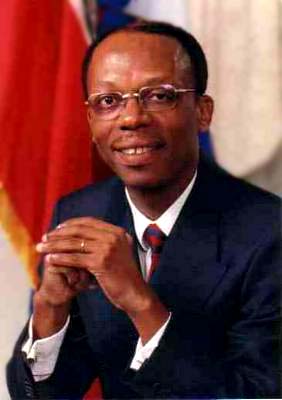
Jean Betrand Aristide

We’re told President Aristide left voluntarily – no mention of his kidnapping by the US military and his ongoing banishment from the continent. We see jubilant crowds of Aristide opponents waving as the coup makers drive into town, giving the impression most Haitians supported the coup. We don’t see the US, French, and Canadian soldiers guarding the route and making the entrance possible. We don’t learn that Port-au-Prince was totally defended the day of Aristide’s kidnapping, and the coup leaders would never have been able to take it over militarily. Instead Uncle Sam came to the rescue.

We’re not told that Louis Jodel Chamblain worked with the Duvalier dictatorship’s brutal militia, the Tonton Macoutes, in the 1980s; that following a military coup against Aristide in 1991, he was the “operations guy” for the FRAPH paramilitary death squad, accused of murdering uncounted numbers of  Aristide supporters and introducing gang rape into Haiti as a military weapon.

We’re not told that Guy Phillipe is a former Haitian police chief who was trained by US Special Forces in Ecuador in the early 1990s, or that the US embassy admitted that Phillipe was involved in the transhipment of narcotics, one of the key sources of funds for paramilitary attacks on the poor in Haiti. He says the man he most admires is former Chilean dictator Gen. Augusto Pinochet. Leth portrays both of these men as credible spokespersons, not gangsters.

Where did the weapons of the coup-makers come from? Who organized and trained them? Who spent tens of millions of dollars to create an “opposition movement” in Haiti? The United States is the real ghost in this film – it simply does not exist, except for its official version of events, scripted by George W. Bush, which Ghosts of Cite Soleil follows scrupulously.

Ghosts of Cite Soleil plays like a manipulative music video, featuring music by Haitian rapper Wyclef Jean, also the executive producer, who supported the coup and pushed the State Department line among the conscious hip-hop community and progressive celebrities in Hollywood. This contrasts to the principled stand of Danny Glover, Ruby Dee and her late, great husband Ossie Davis. You can almost hear the violins behind Chamblain, as he talks about his return to Haiti, but the music becomes dissonant and menacing behind Aristide or behind 2Pac an

written by Charlie Hinton

Haiti Action Committee

Here’s another article http://www.haitiaction.net/News/HIP/11_2_4.html

Return to Davey D’s Hip Hop Corner

Kevin Powell Goes In on Charlie Rangel & Congressman Ed Towns-This Needed to Be Said

Charlie Rangel Begat Ed Towns: Something Is Broken In Brooklyn, Too
By Kevin Powell

“Nearly all men can stand adversity, but if you want to test a man’s character, give him power.”
—Abraham Lincoln

And the drama of Congressman Charlie Rangel continues to unfold with 13 charges of misconduct, even as I type this essay: Mr. Rangel faces a range of accusations stemming from his accepting four rent-stabilized apartments, to misusing his office to preserve a tax loophole worth half a billion dollars for an oil executive who pledged a donation for an educational center being built in Mr. Rangel’s honor. In short, Mr. Rangel, one of the most powerful Democrats in the United States House of Representatives, has given his Republican foes much fodder to attack Dems as the November mid-term elections quickly approach.

While this saga continues, two questions dangle in the air: First, where did it all go so terribly wrong? And, second, did Mr. Rangel begat the lack of ethics also present in the career of his colleague, friend, and staunch ally Congressman Edolphus “Ed” Towns of Brooklyn, New York?

http://beta.wnyc.org/blogs/azi-paybarah/2010/jul/28/towns-rangel-going-be-there/

To answer these questions I think we must go back to the 1960s and the Civil Rights Movement’s waning days. Dr. King was still alive, but his popularity had plummeted, which explains why, to this day, many people do not know his writings or sermons from those latter years. Congressman Adam Clayton Powell, Jr. of Harlem (Mr. Rangel’s predecessor) was clinging to his seat amidst ethics battles of his own. The streets of Black America were habitually afire, as urban unrest became the language of the unheard ghetto masses. And in majority Black communities like Harlem and Brooklyn, Black leaders, emboldened by Civil Rights victories, chants of “Black Power,” and a once-in-a-century opportunity for power, rushed through the kicked-in doors, into politics, into business, into film and television, into book publishing and magazines (or started their own), and into colleges and universities heretofore shuttered. It was the best of times and it was the worst of times. The best because many really believed “change” was on the horizon. The worst because some Black movers and shakers were so happy to get inside that they came with no vision or a plan whatsoever for their followers.

Clearly very few even bothered to read Dr. King’s landmark essay “Black Power Redefined,” which sought to push Black leaders toward a programmatic agenda that included the poor and economically disenfranchised.

And if there were any communities in Black America to test Dr. King’s vision, they were Harlem and Brooklyn. Brooklyn has Black America’s largest concentration of people of African descent. But Harlem, in particular, was the symbolic capital of Black America, and it was there that the now famous Gang of Four—Percy Sutton, Charlie Rangel, David Dinkins, and Basil Paterson—planned and plotted a course for their community, and themselves. Rangel replaced Powell in Congress and became the dean of New York politics. Sutton would first be a successful politician himself, then eventually start Inner City Broadcasting, a major person of color owned media enterprise; Basil Paterson would be, among other things, New York State Senator, Deputy Mayor of New York City, and New York Secretary of State; and David Dinkins, of course, became the first Black mayor of New York City.

Charles Rangel

Truth be told Mr. Rangel and his colleagues had an incredible vision and really did nothing differently than their White predecessors had been doing for decades in America: they saw an opportunity for a taste of power and they took it. (And at least the Gang of Four brought an economic empowerment zone to Harlem, something Congressman Towns pretended to want to do in the mid1990s for Brooklyn, then mysteriously backed away from, instead endorsing then-Mayor Rudolph Giuliani’s re-election bid, with Brooklyn never hearing about that zone again.)

Indeed, as I was coming of age as a student and youth activist in the 1980s, and as a then-reporter with various Black newspapers in the New York City area, I remember well hearing their names mentioned often. And, to a lesser extent, the names of their Black political peers in Brooklyn like Al Vann, Major Owens, and Sonny Carson. It was awe-inspiring, because I did not know that Black folks were leaders in this way. The pinnacle of this Black political ascension in New York City, without question, was the election of David Dinkins in 1989. For New York was the last of the major American cities to produce a Black mayor.

But something stopped during Dinkins’ years in City Hall. Black New York was unable to shake off the catastrophic effects of the 1980s crack cocaine scourge, or Reagan-era social policies. Meanwhile, Black leadership in New York, rather than nurture and prepare the next generation of Black voices to succeed them, did exactly what their White forerunners had done: they dug their heels deeper into the sands of power and have instead become leaders of what I call “a ghetto monarchy.” In other words, the community-first values of the Civil Rights era have been replaced by the post-Civil Rights era values of me-first, career first, and control and domination of my building, my block, my housing projects, my district, my part of the community (if not all of it), my church, my community center, or my organization, by any means necessary. For as long as possible. And often for as much money, privilege, and access to power as one can get with a “career” as a Black leader or figurehead.

And that, my friends, is what leads us, again, to the sad spectacles of the two senior most Congresspersons in New York State: Charlie Rangel of Harlem, and my representative in Brooklyn, Congressman Edolphus “Ed” Towns.

For it is so clear that the leadership path of Congressman Rangel begat the leadership path of Congressman Towns. Both may have been well intentioned at the beginning of their careers. Both may very well believe in the goodness, as I do, of public service for the people. But something has gone terribly wrong, the longer they have stayed in office (40 years now, for Mr. Rangel, and 27 long years for Mr. Towns); something that, I believe, has zapped them of their ability to serve effectively. That has zapped them of sound moral, political and ethical judgment. That has led both to be disconnected from the very people they claim to serve, both younger and older people alike.

And you see this pattern with old school Black political leaders nationwide. For ghettoes exist wherever you see Black city council or alderpersons. Ghettoes exist wherever you see Black state senators and assemblypersons. And ghettoes exist for most of the Congressional districts, too, represented by Black House members. 40-plus long years of Black political representation, in record numbers, in fact, but it seems our communities are worse off than even before the Civil Rights Movement.

Now I am very clear that systemic racism has done a number on these communities from coast to coast, from how financial institutions have treated urban areas, to the deterioration of our public schools when White flight became real in the 1960s and 1970s, to loss of factories, and other job incubators, to the often combative relationship between our communities and local police. And let us not begin to talk about the effects of gentrification on urban areas across America the past decade and a half.

But if a leader really has any vision, she or he figures out some way to help the people to help themselves. You simply do not retreat to what is safe, secure, and predictable in terms of your actions, or lack thereof. Doing that means you simply have given up. Or, worse, you just do not care.

For me, no clearer evidence than the other day when I was campaigning for Congress in Marcy Projects in the Bedford-Stuyvesant section of Brooklyn, the Marcy Projects made famous in the lyrics of hiphop superstar and Brooklyn native son Jay-Z. 60-year-old Marcy Projects is so huge a housing complex that it swallows whole Myrtle and Park and Flushing Avenues between Nostrand and Marcy. It consists of 27 buildings, over 1700 apartments, and approximately 5000 residents. And except for areas like Fort Greene (excluding its own projects), Clinton Hill, Boerum Hill, and parts of Dumbo, Bed-Stuy, East Flatbush, and Canarsie, most of Mr. Towns’ district is as impoverished, under-served, and as forgotten as Marcy Projects.

There is the sight of several elderly women sitting on benches in the middle of this aging complex, frustrated with the state of their lives, their meager incomes, the bags of garbage strewn about them, and the rats who have created dirt holes so big around each building, that a small human head could fit through most of those holes. When I ask these women where is the nearest senior citizen center so they could have some measure of relief, they say, in unison, “Right here, outside, where we are sitting now, these benches. This is the safest place we got.”

There is the sight of children, pre-teens and teens, running, jumping, over pissed stained asphalt, scraping their knees on the ground filled with broken bottles and broken promises. There also is no community center open in Marcy any longer. Why that is the case, no Marcy resident can tell me. What they do tell me is that Marcy Playground is being renovated. And indeed it is. But the residents feel it is not for them, that it is for “the new White people coming into the area, and the new Black people who have some money.”

There is the sight of all those Black and Latino males standing on this or that corner, in front of this or that building, the hands of their lives shoved deep into their pockets, their hunger for something better fed by a Newport cigarette, a taste of malt liquor or Hennessey, a pull on a marijuana stick. And then the ritual happens: a police car shows up, males and females of all ages are asked for identification, are thrown up against a wall, against the squad car, or to the ground, asked where they live, where they are going, why are they standing there, what is in their shoes, in their underwear. Or they are accused of trespassing for going from one building to another, even if they are simply visiting a relative or friend.

This is not just life in Marcy Projects, Bed-Stuy, Brooklyn. This is what ghetto monarchs like Congressman Towns and Congressman Rangel preside over in Black communities nationwide. Perhaps, once more, they really cared at one point—maybe they really did. But circa 2010, Charlie Rangel’s problems are Ed Towns’ problems because the apple does not fall very far from the tree. Yes, cite Mr. Rangel’s litany of indiscretions, but let us not forget Mr. Towns’ own timeline of indiscretions while overseeing his district (see the timeline below for Mr. Towns), for nearly three decades, with, among other things, some of the bloodiest violence in America, the highest HIV/AIDS rates in America, the most under-achieving schools (with a few notable exceptions), and vast disparities between the haves and the have-nots. Right here in Brooklyn, New York.

Is it little wonder that as I travel this Congressional district, meeting with Jewish folks in Boerum HIill, Chinese folks in Williamsburg, West Indian folks in East Flatbush and Canarsie, or African American and Puerto Rican folks in East New York, I hear the same things time and again: “We never see Mr. Towns except maybe when he needs our vote” or “I have never seen Mr. Towns in my life” or “I have called Mr. Towns’ office many times and never gotten the help I need” or “I just do not trust any of these politicians at all. They all lie.”

Ed Towns

This is why voter turnout is perpetually low. This is why incumbents get to stay in office decade after decade. The formula is very simple for electeds like Congressman Ed Towns: Identify the loyal voters and only cater to them (helping them get election poll jobs, or regular jobs, helping their children get into schools, paying for trips out of town to some casino or amusement park or cookout). Stay out of sight of all the other registered Democratic voters, banking on them simply pulling the lever for “Democrats” every election cycle without any fuss or questions. Never debate an insurgent opponent for fear of your being exposed for who you really are, and for what you have not done for the community. Turn your political seat into a business, one where your family member and circle of friends and colleagues benefit from the powerful reach of your position.

So why would you want to give that up? Why would you even bother to do more than is absolutely necessary when you are able to enjoy the perks of a long political career without much effort, without much sweat equity at all? Why would you even think that taking on the values of political corruption are unethical at all, if there has been no one to hold you accountable for so very long?

And why would you see that Brooklyn, and the Brooklyns of America, are broken, so very terribly broken, even though it is clear as day to the people in your community?

Kevin Powell is a 2010 Democratic candidate for the United States House of Representatives in Brooklyn, New York’s 10th Congressional district. You can contact him at www.kevinpowell.net

Return to Davey D’s Hip Hop Corner

Breakdown FM:Giving You The News from Arizona Dedicated to Arizona Mix

Click HERE to Listen to Podcast

Today we wanna remind everyone of the screwed up law that went into effect in Arizona. We’re talking SB1070 and regardless how you may feel about immigration, the purpose of this law is not to stop folks from coming in this country. Its designed to make lots of money for the private prisons which are publicly traded and further the political careers of the far right Neo-Nazi wing nuts who crafted it. People think that the law will somehow catch lots of undocumented folks hanging out in Arizona and no doubt there will be some that are caught.

However, the way the law will work is that police will look for the slightest infractions to pull you over and start jamming you up. At which point they’ll check to see not only if you are a US citizen, but will also check for everything else. This is on top of the slight infraction they stopped you for in the first place. It’s a page taken right off the policy used by former NY Mayor Rudolph Giuliani. His tactic was called the Broken Window theory. He felt if you attack the small problems the bigger ones will disappear.  In other words jam up people for minor infractions and it will make it too difficult to do something major. Most law enforcement folks say it doesnt work and it only leads to mass arrests because it becomes a numbers game.. hence the economic benefit to private prisons in Arizona. 

Lastly because the major criticim to SB 1070 is that it will leasd to racial profiling, in order not to appear bias, expect Arizona police to start jamming up everyone if for any reason just to prove the point that they are being even handed.  They may use the excuse that an American citizen is harboring undocumented folks. There’s no doubt that after attending the ACLU Roundtables on Government informants that the police will use the tactic of stopping US citizens on small infractions and in ezxchange for letting them go ask for the names of  suspected undocumented folks  which will allow them to make the case tbhat they had ‘reasonable suspicion’.  We dedicate todays show to those who are on the frontlines fighting SB 1070.

Click the link below to HEAR the show

http://www.alldayplay.fm/episodes/episode-26-give-you-news-arizona-part-1

01-Davey D- ‘Dedicated to Arizona Speech mix’

02-Olmeca-‘Piece of Me’

03-Click tha Super Latin ‘Get Live’ rmx

04-Ozamatli ‘Eva’

05-Antibalas ‘Battle of the Species’ (Al Sharpton rmx)

06-Kenna ‘Games You Can Win’

07-Labtekwon ‘Break It Down’

08-Dessa ‘Chacone’

09-Menahan Street Band ‘Tired of Fighting’

10-Deuce Eclipse ‘Mi Viejo’

11-Sharon & the Dap Kings ‘Stop Paying Taxes’

12-Word Burgular ‘The Route’

13-Brand New Heavies ‘I Don’t Know Why I Love You’

14-Brand New Heavies ‘We Can’t Stop’

http://www.youtube.com/watch?v=5s8jgZUgGpg

http://www.youtube.com/watch?v=ZJik5-GMF4M

http://www.youtube.com/watch?v=9PY56OqtL64&feature=related

Return to Davey D’s Hip Hop Corner

We Remember the Father of Crack & a Key Supporter of Apartheid-Ronald Wilson Reagan

We Remember Ronald Reagan,  the Father of Crack and a Supporter of Apartheid
by Davey D

So yesterday Governor Arnold Schwarzenegger strolled into Simi Valley and with the stroke of a pen he made February 6th Ronald Reagan Day. He also vetoed a bill that would allow Farm Workers to be paid overtime. I found it interesting but not all that surprising that we would have that sort of coupling. After all, we’re honoring a man who was all about exploitation and sadly that trait was underscored with a veto. But let’s not digress..

Governor Schwarzenegger said we need to use Feb 6th as a day to teach school kids about the great accomplishments of Ronald Wilson Reagan. He said we need to teach the kids about this man’s legacy.I guess he feels kids should grow up to be like Reagan. I had to laugh because there’s so much to say and its hard to know where to begin.

Should we start by reminding the kids how Reagan ignored the AIDs epidemic that sprung up during his two terms? I contrast Reagan’s ignoring of HIV and AIDs when people suffering from the then unknown disease were begging for help with how we went all out for the Swine Flu.  Ronnie was out to lunch on that crises.

Maybe I should teach the kids about how he insisted that ketchup and relish were vegetables as he aggressively fought to push inner city school lunch programs to cut cooked and fresh vegetables from their menus.

I could always teach the kids about Reagan’s trickle down economic theory where he fought to allow rich corporations and businesses to cut taxes which would allow them to create new jobs thus benefitting the masses. I guess I should also teach the kids how many of those rich folks who got those tax breaks promptly took their American jobs overseas where they continued to enjoy tax breaks while our economy was turned upside down..

I’ll be sure to teach the kids how Reagan opposed the Equal Rights Amendment even though women at that time and even today still make less than men.

We could also talk about how he was vehemently opposed to the Black Panthers and pushed for the Mulford Act which was specifically designed to target and disarm them

The Father of Crack

I guess because so many kids are enamored with rap star Rick Ross, perhaps I could use his popularity as a teachable moment. I could start by letting kids know that Ross the rapper from Miami derived his name from Freeway Rick the drug dealer out of Los Angeles.

Freeway Rick who has been touring the country lecturing against the harmful impact of drugs is erroneously called the Father of Crack.  His South Central operations is legendary as he’s reported to have moved up to 3 million dollars worth of product a week,  but that’s only part of the story. Freeway Rick was not the Father but the proverbial God son.. The real Father of Crack was Ronald Reagan, the 40th President of the United States. The man we came to affectionately call the ‘Great Communicator‘.

You see Freeway Rick was allowed to flourish because our government at the time had some dirty war business they wanted to conduct and found it difficult to circumvent the law and limits set up by Congress. Freeway Rick was able to lavish the hood with tons of crack cocaine because of little scheme we came to know as the Iran Contra Scandal . It was the biggest scandal this country had ever known. Even bigger than Richard Nixon’s Watergate.

To sum it up what you had was in the early 80s, the US was beefing with Iran and the US was beefing with left leaning factions in Nicaragua called the Sandinistas. Reagan and his boys wanted to knock off the Sandinistas because they didn’t like their politics and the populus movement they represented. Latin America was on the rise and overthrowing dictators who were backed by the US. Reagan wanted to overthrow the Sandinistas by arming a bunch of CIA backed rebels called the Contras. Since we’re supposed to be Freedom Loving country we couldn’t do our bidding publicly, and as I noted Congress wasnt with the program, so Reagan’s senior advisors launched a secret war.

What they did was covertly sell arms to Iran and take the money and use it to fund Contra operations in Nicaragua. Additional money was netted for the Contras through the sale of crack cocaine which suddenly overnight gained huge popularity in hoods throughout the country. Freeway Rick and South Central, LA was ground zero.

LAs notorious gangs became the main traffickers who spread all out the country with Freeway Rick being the kingpen. Some of this is out lined in Ice Cube’s song ‘Summer Vacation‘.

Freeway Rick’s connection to all the cocaine was a notorious drug supplier named Oscar Danilo Blandón who worked with the CIA and was a key link to the Contras. This is where the whole CIA-Crack connection story emerged . They were outlined in the explosive 1996 San Jose Mercury expose and book called Dark Alliances written by the late Gary Webb.

Oliver North

When all was said and done damn near all of Reagan’s senior advisors were convicted, like National Security Council member Oliver North who played a central role and was later pardoned. Reagan the Great Communicator was protected with folks saying he had no idea all this was happening on his watch. The exact term used was Reagan was ‘disengaged’

Supporter of Apartheid

Thats an interesting term because it’s in opposition to what Ronald Reagan prided himself on. Here was a guy who supported South Africa’s Apartheid Regime. He aggressively opposed Nelson Mandela who was in jail as a political prisoner during Reagan’s presidency. Reagan called Mandela and his and the African National Congress a ‘terrorist organization‘.

During the early 80s, worldwide resistance to South Africa emerged including a call from the UN to have an embargo. Recording artists all over the world launched a boycott to Sun City which was a popular resort in South Africa where some of the Apartheid laws were relaxed.

Ronald Reagan Opposed Nelson Mandela. He saw him and the Adfrican national Congress as Terrorists

Ronald Reagan along with Israel and Great Britain opposed all of it. Reagan said he supported South Africa because they stood alongside us during all our wars.. He said the best way to get rid of Apartheid was not through embargos but through this term he coined called  ‘Constructive engagement‘. When he first used it left everyone stunned and asking WTF? There was nothing to engage. People were calling for an end to the brutal Apartheid regime and Reagan was opposing it. It was so bad that after he vetoed sanctions, Congress did a rare thing and over rode his veto.  This man who supposedly loved freedom was on the wrong side of history when it came to making sure it was a reality for Black South Africans. It’s no wonder Nelson Mandela didn’t attend his funeral in 2004.

We can go on and on when talking about Ronald Reagan. He was a hero for those who yearned for the days when many people in marginalized communities were behind the 8 ball not in front of it.  Yes when February 6th rolls around.. I will say Happy Ronald Reagan Day and commence to undo the revisionist history the power elite in this country have spent years constructing. I’ll leave with two musical heros who went in hard on Reagan back in the days. Gil Scott Heron with the song B-Movie and Melle-Mel with his song Jesse.

http://www.youtube.com/watch?v=56ipWM3DWe4

http://www.swift.fm/mrdaveyd/song/54175/

Click HERE to peep song..

Return to Davey D’s Hip Hop Corner

Taboo of Black Eyed Peas Takes a Stand Against Arizona’s Racist Apartheid Law

Taboo of the Black Eyed Peas.. does a song to speak out against Arizona’s SB 1070 anti-immigrant law

http://www.youtube.com/watch?v=xaCxTO3Z3vk&feature=player_embedded

Return to Davey D’s Hip Hop Corner

Taboo

Patrolmen Benevolent Association Prez Lashes Out At Ice-T; Rapper Replies To Arrest w/ a Video

With the police holding rallies for killer cops Johannes Mehserle, others suing the estate of Sean Bell and now police pushing to pass laws making it a felony to video tape them, it’ll be interesting to see how far they push things with Ice T…Will they let it be or try to flex and make the high profile rapper/actor an example via a boycott or something like that..In anycase I’d rather have Ice T beefing with the police over a perceived wrong rather than Soulja Boy  We’ll keep you posted..

-Davey D-


 (AllHipHop News) The president of the Patrolmen’s Benevolent Association lashed out at rapper/actor Ice-T, after the rapper was arrested near the Lincoln Tunnel in New York, for allegedly driving with a suspended license. 

Ice-T, who plays detective Fin Tutuola on Law & Order: SVU, voiced his displeasure with the arrest on Twitter. 

The rapper posted the arresting officers name and badge number, before labeling him a “punk b**ch rookie cop.” 

“[Ice-T] may play a police officer on TV, but his disdain for law enforcement is well-documented,” PBA President Patrick Lynch said. “Real police officers enforce real laws that exist to keep everyone safe, even a disrespectful, former rap performer-turned-actor, whether he likes it or not.” 

Ice-T famously beefed with police officers nation wide after his rock band “Body Count” released the controversial song “Cop Killer.” 

“I’ve got absolutely NO problems with cops in general,” Ice-T tweeted today. “Just some people are a**holes. They don’t have to be cops. A suska [sic] is a sucka.” 

Ice-T is attempting to turn the whole fiasco into a positive learning experience. 

“The whole s**t was a joke. But it showed me how eager some people are to see me in handcuffs,” Ice-T tweeted. “Good wake up call 4 me.” 

via AllHipHop.com Daily News

Below is Ice T on video on U-Stream explaining his arrest

http://www.key103.co.uk/Article.asp?id=1891590&spid=25281

Click HERE to See video

Here’s a link to the full hour long video http://www.ustream.tv/recorded/8518499

Return to Davey D’s Hip Hop Corner

White Supremacists Are the Forces Behind Arizona’s New Apartheid-Like ‘Papers Please’ Law SB1070

We are just a day away from the implantation of SB1070 which many are calling Arizona’s Apartheid Law… Hundreds of thousands are descending on the state to protest.. while hundreds of racist minded individuals including Sheriff Joe Arpiao are perched to make full use of their police departments to start jamming up Brown skinned residents.. Below are a couple of videos that layout the key forces behind these anti-immigrant laws including the collusion of white supremacist forces and the bankrolling of these anti-immigrant movement via John Tantum

http://www.youtube.com/watch?v=2H0W97tLFHY

A short educational video revealing the forces behind the aniti-immigration movement in the United States.

Join the Center for New Community to make a stand for justice and equality in your community: www.newcomm.org

http://www.youtube.com/watch?v=XvBwuAtetl4

http://www.youtube.com/watch?v=5s8jgZUgGpg

Return to Davey D’s Hip Hop Corner

Kanye West Drops Some Gems and a Freestyle at Facebook HQ

Showing the power of social media, Kanye West debuts some of his new material from his upcoming album ‘Chain Heavy’ this evening at Facebook headquarters in Palo Alto..which is located here in the Bay Area.

http://www.youtube.com/watch?v=2Umjy314sQQ

http://www.youtube.com/watch?v=3CBpVW5Mm-k

Return to Davey D’s Hip Hop Corner

Why I Won’t Watch True Blood Tonight: Violence Against Women

This is an important article written by Pema Levy on a number of levels…First, it shows that violence against women is not limited to Hip Hop..It’s interesting to note as this article points out, how the mainstream seems to to have no problem accepting and promoting this sort of violence in True Blood as art and thus should be applauded and even rewarded. The fact that violence against women has been stereotyped to just a handful of communities, what gets overlooked is how easy it is for us to overlook it when it shows up in our own backyards. We come up with b=nice excuses and even flowery names like ‘Hate Sex’ to describe atrocious actions like rape.

So many folks are busy smashing on the local rap artist and not checking the local actor and film maker who may actually have more of an influence in sparking a culture of violence..Hopefully upon reading article this folks will expand their horizons and conclude that violence whether in the form of entertainment or in real life is foul..

-Davey D-

Why I Won’t Watch True Blood Tonight: Violence Against Women

by Pema Levy

There’s a difference between “pushing the envelope” and an excuse for exhibiting gratuitous violence against women. In the last few weeks, HBO’s True Blood crossed that line.

True Blood has always had its fair share of violence, but lately that violence has become increasingly sexual. Then two weeks ago, an episode crossed the line by portraying a violent rape scene — although they refuse to call it by that name. The most recent episode continued this trend with almost every scene containing some sort of violence against women, whether it was punching a female vampire into a wall, Tara being kidnapped (with implied rape), and a woman being undressed and branded by a crowd of men in a bar.

A lot of people write this stuff off as True Blood challenging sexual mores or being edgy. Slate‘s Jason Zinomanapplauds the writers and suggests their rape scene deserves an Emmy: “The sick genius of Episode 3 … is that it finds other creatively perverse ways to mingle sex and violence.” Zinoman finds intriguing what should be disturbing: that the women being raped and assaulted do not condemn this behavior. Zinoman calls it “hate sex” (rape by another name) that the female character enjoys; as he twists her head around her shoulders with blood coming out of her mouth, she repeats “I love you.”

It’s not violence per se that is unacceptable, but rather the context in which it is portrayed: showing violence against women without simultaneously condemning that violence. The writers believe that they can justify this by using a theme: vampires are inherently violent, like blood, like violent sex. In doing so, True Blood buys into the same myths about violence and rape that do real harm to women today:…..

continue reading at http://womensrights.change.org/blog/view/why_i_wont_watch_true_blood_tonight_violence_against_women

Return to Davey D’s Hip Hop Corner

Democracy Now: Panel Discussion on the Importance of Social Media in Building Community & Resistance

Click HERE to Listen & Watch Panel

http://www.democracynow.org/2010/7/23/using_social_media_to_build_communityand

Transcript to Democracy Now Panel Discussion

Veronica Arreola

AMY GOODMAN: We’re broadcasting from Las Vegas, Netroots Nation, a convention where thousands of people have gathered, and “social media” is the watchword of the day. This is Chicago-based blogger Veronica Arreola. Her blog is vivalafeminista.com.

VERONICA ARREOLA: I got involved in blogging, late 2000, after the election. There was a lot of discussions online and LISTSERVs, and I really felt like I needed a place of my own to get my views out, opinions out, talk about what was going on in terms of the election and the election results and how long it had dragged out. So I’ve been doing that since late 2000, got onto Facebook pretty early, because I work at a university, and that’s where the students are, and that’s where I need to talk to them and get them to events, and then jumped on Twitter after some friends said I needed to get on. And I’ve really used—I’ve really found it very helpful in terms of activism, in terms of community work.

AMY GOODMAN: How?

VERONICA ARREOLA: Just spreading messages, talking about events. I’m on the board of the Chicago Abortion Fund. And this past spring there was a national bowl-a-thon, and I did a lot of my fundraising through social media, through Facebook, Twitter, just asking people to please—

AMY GOODMAN: And how effective was it?

VERONICA ARREOLA: I think it was really highly effective. I think I raised more money through Facebook and Twitter than I would have just sending emails or calling people and talking to people one-on-one, because I was able to dip into a larger pool.

AMY GOODMAN: What’s your blog called?

VERONICA ARREOLA: My blog is “”http://www.vivalafeminista.com”>Viva la Feminista.”

AMY GOODMAN: And what has been your project this summer?

VERONICA ARREOLA: This summer, I’m asking Latinas to post about being Latina and their thoughts about feminism—good, bad, long, short, academic, or just personal stories. I’m getting mostly personal stories. And I call it “Summer of Feminista.”

AMY GOODMAN: That’s Veronica Arreola of vivalafeminista.com. She was speaking to me at the Netroots Nation convention.

Well, for more on the use of social media in building community, I’m joined here in Las Vegas by Aimee Allison. She’s a Bay Area radio host, producer of the daily KPFA Morning Show, and she’s also founded this innovated local media project called OaklandSeen, as in S-E-E-N, seen and heard.

Also here with us, Davey D is a hip-hop journalist and activist. He runs the popular website “Davey D’s Hip Hop Corner” at daveyd.com, co-host also on KPFA of HardKnock Radio.

And we’re joined by the Cheryl Contee. She is the founder of “Jack and Jill Politics.” Well, she’s actually Cheryl to us here, but she’s Jill Tubman at “Jack and Jill Politics.”

I want to welcome you all to Democracy Now!, to be with you all in Las Vegas. Aimee, talk about social media, what it means to you. I mean, you’re a longtime radio broadcaster; interesting also, you’re a veteran. But why go from radio to social media?

Aimee Allison

AIMEE ALLISON: Here’s what we’re facing in 2010: radio being an old media that accesses—it’s low-tech, and lots of people can access it, but, as we saw earlier this week, one of thirteen human beings are on Facebook. That means that social media is becoming more and more the way that people access their news and connect with other people. So, through OaklandSeen.com, it was an effort to fill the local reporting gap that we found in Oakland to engage more people and to facilitate people reporting their own news and to talk to each other about issues that they’re facing the most. And what we found when we combined old technology, radio, with new technology, social networks and blogs, we have a level of engagement that supports the development of local communities, constituencies and democracy at home. It’s fantastic.

AMY GOODMAN: Cheryl Contee, you’ve been doing “Jack and Jill Politics” for how long?

CHERYL CONTEE: For three years.

AMY GOODMAN: What does “social media” mean?

CHERYL CONTEE: Social media, to me, means the opportunity to reach people in a way never before possible. When we founded “Jack and Jill Politics,” it was not long after the last—the original Netroots Nation YearlyKos. And at the time, we were talking about isn’t it a shame that more blacks aren’t blogging. Today we have a vibrant community at Jack and Jill Politics. We’ve changed the racial narrative in this country many times. And now African Americans, in many ways, are at parity. When you factor in mobile internet access, there is no digital divide, according to a Pew internet study last year. And Business Insider, just this year, says that 25 percent of those on Twitter are African American, which is twice their population percentage.

AMY GOODMAN: Davey D, talk about what you’re doing, also longtime radio broadcaster on commercial radio, then at Pacific Radio, but you also have been doing this social media thing for a long time.

DAVEY D: Well, I’ve been on the net since 1991, so I’ve been around for a minute. But at the crux of it is, it’s just about communication. And you’re looking at a variety of communities that have often been exed out of the opportunity to talk to themselves without a media middleman or to talk to their communities without having their messages distorted. So, this is a continuum. You know, when I first started, the reason why people went on the internet was for that very reason. And over the years, you’ve seen different variations of technology come along that have made it a little bit more efficient. So social media right now, in the form of Facebook or Twitter, which, you know, many of us are on, just really allows us to get around this increasing consolidation and regulation of speech between different communities. So, that’s been the attraction.

And what’s interesting is that old media doesn’t seem to get it. You know, they seem to want to have more of a situation where they talk at you, for the purposes of marketing, increasingly more for the purposes of just blanketing us with a particular political or social message, and to marginalize the voices of dissent, various angles that people have on a particular issue, and to challenge a narrative that oftentimes only serves the purposes of a particular corporation.

AMY GOODMAN: Davey D, you’ve been tweeting a lot about Oscar Grant. Tell us quicly that story and how social media has been used in his killing.

DAVEY D: Well, I think the main thing is that before the word could get out—well, let me just back up. The police had a narrative, from day one. They went and looked at his background and put that out there, and it was quickly countered by those of us who were on the internet, to say, well, let me show you the cop’s background, and let me show you what other people saw that night.

AMY GOODMAN: And this, again, is about the young man who was killed.

DAVEY D: Right, that was killed. Going up to the verdict—

AMY GOODMAN:On the subway platform.

DAVEY D: Yeah. Going up to the verdict—

AMY GOODMAN: By a police officer.

Davey D

DAVEY D: Yeah. Going up to the verdict, there was a narrative that they painted around the country, which people started to build off of, and it mainly centered around “Why don’t black people just learn how to behave?” when it was the multi-ethnic crowd that was out there, you know, protesting, speaking truth to power, and some of them rebelling, you know? And so, when you looked at the national pictures, you saw black folks. But people like me were filming, and we saw a variety of people. So, when you put it up against mainstream media versus what many of us were able to say, then you saw that there was a falsehood in what mainstream was doing, and you saw that falsehood connected with political, economic and social agendas that have nothing to do with the variety of communities that were outraged about a cop being—who got away with murder, as far as we’re concerned.

AMY GOODMAN: Aimee Allison?

AIMEE ALLISON: The protest in Oakland after Johannes Mehserle, the former BART officer, was convicted of involuntary manslaughter, which many people thought was a very easy verdict after what we saw—social media spread the word and let everyone see the video, so we all saw it. And then, the verdict was surprising to many people. If you compare, though, the way that the protests were covered two weeks ago and the way they were covered a year ago, it was night and day. Social media came and changed the whole conversation about what Oaklanders think. It was a lot more diverse and nuanced and powerful. We were able to capture and share the message out beyond, not only to Oakland, but to the world, of how Oaklanders had come together in nonviolence. We were able to tell a story about how the local peace movement had taken the lead in working with the city.

But all of this happened in the context locally of a very important urban issue, which is that Oakland is struggling, as many cities are, with revenue and with dealing with deficits. And we had just had the fight with the police officers’ union and a sense of how the city was going to avoid cutting more libraries and schools, and so the whole coverage of the protest happened in a political environment where social media was able to say, “Look, we want to hold police accountable for their activities out in the street. We want to have a broader conversation about crime and public safety. And we’re not going to accept the narrative a year ago that there was just a bunch of rioting and we need more cops.” That was directly as a result of citizens themselves and bloggers, as well as other folks, telling the story and talking to each other about the impact of not only the violence that happened against Oscar Grant in the first place, but the policing and the aftermath.

AMY GOODMAN: Davey D?

DAVEY D: One thing that I think is important is that there’s a context to even revolting. And what social media allowed us to do was explain what happened the first time there were riots in the street, which was seven days of the mayor not speaking, seven days of the district attorney not speaking, seven days of people going up and asking, “what’s going on?” and then people saying, “OK, we’ll let you know what’s going on,” and having a revolt and having a political and social context to that. Even what happened after the verdict, there was a way to explain that narrative, which was counter to what the mainstream was saying.

The other thing that’s important is that mainstream has become increasingly more embedded. What they didn’t tell you in the recent verdict was the fact that many of the mainstream journalists were standing right next to the police. They were embedded with them, so they had the best angles. And I’ve never seen that before. I know that it goes on overseas in war, but to come here and say, “Hey, wait a second. You’re ABC, CBS. You’re right there next to the cops!” So what does that mean at the end of the day when the story is told? I couldn’t cover the way that I would normally, even with a press pass, because they said, “We made new press passes, and you have to have a special one, and you have to be standing next to the police.” That’s very different, and that’s very dangerous, because it’s in the context of news being censored and controlled and manipulated by corporations all over the country. And that was just a prime example of that taking place in Oakland, in this case, with the police. But corporations and police are the same thing, if you look at what BP is doing, censoring media. So I don’t see it as being very different. It’s just controlling the narrative.

AMY GOODMAN: You know, it’s interesting you raise this, because when we were arrested in St. Paul—my colleagues Sharif Abdel Kouddous and Nicole Salazar and I arrested by the St. Paul police covering the Republican National Convention—we weren’t alone among journalists.

DAVEY D: Right.

AMY GOODMAN: There were more than forty journalists arrested. When I went the next morning, after I was released, to the police chief’s news conference and asked him what does he expect journalists to do and what has he instructed his police to do if they’re arresting journalists, he said we could embed, embed with a mobile field force, using that model of reporters embedding in the frontlines of troops as a way to cover American cities. Cheryl Contee, did you want to weigh in here?

Cheryl Conte

Cheryl Conte

CHERYL CONTEE: Right. And so, in this changing environment in the media, social media provides an unfiltered voice. No longer do we have an intermediary to tell us the story, as we did before, where journalists represented the community’s voice, now the community has their own voice. And during the Oscar Grant protests and rallies, you know, you got pictures live from the scene. And on our blog, we actually listed some of the Twitter reports, just to show this is what’s actually happening on the ground, just to provide a balance with the mainstream media.

AMY GOODMAN: It reminds me of the Battle of Seattle ten years ago when you had CNN saying that—repeating the police line that they weren’t using rubber bullets, but we were picking them up by the handfuls. And it was Indymedia and indymedia.com that really exploded on the scene then, when these pictures were being showed and you had more people hitting indymedia.com than cnn.com. Aimee?

AIMEE ALLISON: And see, I think that’s an excellent point, because through the Johannes Mehserle protests, OaklandSeen Facebook and Twitter followers grew more than 40 percent. And people started to acknowledge, “Hey, you know what? For the information on the ground and the real unfiltered stuff that’s happening, I’ve got to go to a source like OaklandSeen, because if I turn on the news, I’m really going to get the same stories, and it’s not really reflective of what I think about my own city or the—you know, kind of the details I’m looking for.” So people are starting to turn in a city like Oakland to alternative news sources, and I think that that’s fabulous, particularly in a place locally where our papers have consolidated and local coverage has suffered so much.

AMY GOODMAN:Davey D?

DAVEY D: I think one of the other important things is that when you look at a situation like the Oscar Grant scenario, none of us are really organizers. I’m not an organizer. But there was dozens of organizers there whose voices never get heard. They don’t show up on the evening news. They’re not often quoted. And there’s a context to which they speak. And so, one of the things that social media allowed us to do was really get the full narrative from their perspective, whether it was Uncle Bobby who’s Oscar’s uncle,  and why he condemned some of the coverage that was going on, or why he talked about what the police were doing. We got to hear his full thing. We got to hear why he rejected Mehserle’s apology, without just the thirty-second sound bite that was played around the nation. We got to present and let people hear  the full four-minute speech that he gave. And that becomes important.

We got to let you know what the organizers think, what were they doing and how did they all come together. That story was just as important as the trial and the verdict itself. And those stories got out to the rest of the country in a way that inspired folks, let people know that there’s a richer context to what was taking place in Oakland. And lastly, it put a spotlight on the media, because it showed how lazy they were, when all these stories were being unearthed, and you’re going, “Well, wait a second. You’re the mainstream media with millions of dollars in the budget. How come we just got this very two-dimensional narrative?”

AMY GOODMAN: Cheryl Contee, as we wrap up, tomorrow you’re going to be hosting Nancy Pelosi. She’ll be addressing the Netroots Nation convention. You’re Jill Tubman at “Jack and Jill Politics.” Why Jill Tubman?

CHERYL CONTEE: Originally, many of the black political bloggers wrote under pseudonyms, because the history of the United States shows that outspoken African Americans are often targets, one way or another. And so, I was frankly afraid to write under my full voice until I really understood the consequences of what that would be. And it allowed me to write more freely.

I came out of the closet, if you will, of the blog closet, about two years ago, and it was fantastic to really receive a lot of applause. So I’m really looking forward to sitting down with Speaker Pelosi and representing the community. It’s an interactive session, so we’ve been taking comments from the internet. People are voting with their feet. People really want to know about the Youth Promise Act, for example. They want to know about Social Security, the economy, jobs. And so, I’m really looking forward to having a chance to reflect that.

AMY GOODMAN: If people want to participate, where do they go? How do they tap in?

CHERYL CONTEE: Oh, right. So if people—you can still ask questions to me. You can use the hash tag nn10pelosi on Twitter. You can go to the Netroots Nation Facebook. Or you can go to “”http://www.jackandjillpolitics.com”>Jack and Jill Politics,” and you’ll see there’s a blog post stuck to the top right now, and leave a comment.

AMY GOODMAN: And where do people go to find OaklandSeen, Aimee Allison?

AIMEE ALLISON: OaklandSeen, S-E-E-N.com. And we have a Facebook group and a Twitter group. So we not only report and encourage people to blog and contribute media, but we’re talking to each other, which is amazing.

AMY GOODMAN: Davey D?

DAVEY D: You can reach me at daveyd.com or mrdaveyd, D-A-V-E-Y-D, on Twitter.

AMY GOODMAN: Thanks very much for being with us here at the Netroots Nation, Davey D, Cheryl Contee aka Jill Tubman, and Aimee Allison.

Click the link below to watch and listen to panel discussion

http://www.democracynow.org/2010/7/23/using_social_media_to_build_communitya

Return to Davey D’s Hip Hop Corner