Archives for 2009

Rapper Charles Hamilton Gets Punched out in a Battle

daveydbanner

Share/Save/Bookmark

Somethings are always off limits even in a battle and a true man is a gentleman even under the most embarassing and worst of circumstances.  Not sure what Mr Hamilton was thinking but he obvious was out of pocket… Battles is Battles and personals is personals especially when its on tape..A smart brother would’ve picked up the signals, diffused the situation and kept it moving.. He could’ve asked ‘What could I do to redeem myself  versus pushing buttons..

Return to Davey D’s Hip Hop Corner

When the Fever Was Mecca-The Legacy of Disco Fever

daveydbanner

As we celebrate Hip Hop Appreciation week we wanted to help people get a slice of history by reading about the legendary night club Disco Fever. back in the pioneering days of Hip Hop this was the club of clubs where all the ballers went…

Share/Save/Bookmark

When the Fever Was Mecca-The Legacy of Disco Fever

by Mark Skillz

Markskillzbrown-225If Hip Hop was your thing in the early 80’s there were a few things you understood: The hottest spot in the city at that time was Studio 54 in Manhattan, and you weren’t getting in there; but the club Disco Fever was in the Bronx; and if you wanted to be a legend in hip hop at that time, your ass had to play the Fever.

The Fever wasn’t just a club; it was the club, not only was it the place to be but it was an experience, if you performed at the Fever, and you rocked it, that meant that you were somebody. You were among the elite. For legions of rap fans at that time it was the Mecca of the South Bronx. It was a star- studded time for many in the 80’s. It was a time when fly girls, b-boys, stick-up kids, coke dealers, hookers, thugs, gamblers, home boys and the everyday man could party in style with the ghetto celebs of that period.

The wall behind the stage, emblazoned big red and black with big bold gold graffiti lettering displaying the names of the legends of that time: DISCO FEVER THE HOME OF: Lovebug Starski, Junebug, Grandmaster Flash, Sweet Gee, D.J. Hollywood, Sugar Hill Gang, Eddie Cheba, Kurtis Blow, Sequence, Brucie Bee, Furious 5, Reggie Wells, Kool Kyle, Disco Bee, and Star Child. Those were the names of some of the immortals that blessed the mikes and the deejay booth; that’s where you wanted your name to be.

“When I went there, the vibe was definitely celebratory”, says Fab 5 Freddy, who at the time was the Ambassador between the hard-core underground hip-hop scene and the downtown art and punk rock scenes. “You definitely got hit with the aroma of cocaine burning with cigarettes or weed; you smelled angel dust being smoked once you got in the club. It wasn’t like going to the Dixie or somewhere like the Smith Projects, although that hard-core element was there, the vibe was different. It was more of a celebration.”

“The Fever was way different from Krush Groove” proclaimed Grandmaster Caz, “There wasn’t no Fat Boys and RUN-DMC and LL all in the Fever, it was mother fuckin’ drug dealers man, all they showed was the front room, they didn’t show the back room!”

“We played whatever was hot at that time”, boasts George “Sweet Gee” Godfrey, who was the clubs manager as well as a deejay, and later recorded the classic 12-inch “Games People Play”. “On any given night seven days a week, you’d come in there and hear something like “Catch the Beat” by T Ski Valley, or “All Night Long” by the Mary Jane Girls; “Catch the Beat” was definitely a club classic!”

In the Beginning

“When the Fever first opened up, we couldn’t get in, because we were too young, only Flash and Lovebug Starski were able to get in”, so says rap pioneer Mele Mel of the Furious Five, who, once he was able to get in, was treated like royalty.

sal-abbatiello-225Mel couldn’t get in because initially, the club catered to an older audience. In the 60’s and early 70’s the Abbatiello family owned a jazz bar in the Bronx called the Salt and Pepper Lounge that catered to a mostly adult black clientele.

“Sal’s dad, Ally, was a musician, and he used to have all kinds of people come down to that bar for jam sessions, people like George Benson for instance, he used to come in and jam 3 or 4 nights a week”, said Sweet Gee.

“Every once in awhile, my dad would sit in with the band and play his trumpet”, said Sal Abbatiello who owns and operates Fever Enterprises.

In the movie ‘CasablancaHumphrey Bogart played a smooth, tuxedo-jacketed, cigar- smoking, tough-talking yet sensitive character named Rick, who’s connections with the underworld and cops alike made him the man to go to in Morocco; Sal Abbatiello was the Rick character of the South Bronx.

“People used to come around the clubs and say to each other “Who’s the white kid?” Like I came from somewhere else, when, I didn’t. I’m from the South Bronx; I was born and raised in the Bronx. My family is from the Bronx. We have been involved and owned nightclubs here for years. So all of my dealings have been with black people. At my dinner table, during holidays, there were black people at the table with us. So, you see, I was no stranger to Black culture’, said Abbatiello.

“In 1978, my dad decided to buy a bar down the block from the “Salt and Pepper Lounge”, said Abbatiello.

“When Ally bought that bar, I was there when it was being built, I’m talking literally, I mean I had a hammer and nails and was helping them build that place”, said Sweet Gee.

“So one night we were out at Sal’s dad’s house in New Jersey and a commercial came on for a new movie called “Saturday Night Fever“, and it came on while we were trying to think of a name for the club, and all of a sudden Sal’s mom said, “Hey, why not call it “Disco Fever“? And we all looked at each other and said: “Hey that’s it!” said Sweet Gee.

“So the club is up and going, we had a white deejay there at first playing Top 40, cause you gotta remember, we were still catering to an older clientele”, said Abbatiello.

“Well, this white guy, he used to get tired and want to quit early, it would be 3 or 4 o’clock in the morning and he’d be ready to go”, said Sweet Gee adding, “So when he would leave or take a break I would take over. Now, I’m not a great deejay or nothing, but I had watched Flash and all of those guys and knew all of the hot break records from that time like Cheryl Lynn‘s “Got to Be Real“; I would turn down the music and talk between her singing like she would sing: “What you find…I’d say: “Sweet Gee”, she’d sing… “What you feel,” I’d say: “D.J. Junebug”; what you know: “Disco Fever”, and that was my routine”, said Sweet Gee.

grandflashlogbaseyellow-225“Well, one night I’m there at the club and I see Gee go into this routine, and I’m saying, “What in the fuck is Gee doing? He was saying things like “Throw your hands in the air and wave ’em like you just don’t care” and all of this other stuff and I’m looking at the crowd and I’m noticing that he’s bringing people together, and then it clicked: This is what the club needs. So I talked my dad into letting me have a night and after a while he agreed. He wasn’t sure about this rap stuff, but he let me try, so I went out to find the best: and that was a guy named Grandmaster Flash“.

“I tried to promote other nights there before I got Flash, I even had Harold Melvin and the Blue Notes there, but people didn’t come, you know why? Because no one believed that Harold Melvin and the Blue Notes would be in some club in the South Bronx. So when I got Flash to play, we charged a dollar and there were only four of us working the whole club – 600 people showed up that night. I was calling home and the Salt and Pepper Lounge pleading with my dad, “Dad, Dad please, send more people; we’re swamped in here.”

The Place to Be

Flash-Sal_kurtisBlowTo be sure, hip-hop was not born in the Disco Fever, its birthplace is said to have been 1520 Sdgwick Ave. in the West Bronx. What the Fever was was the hot spot where the stars of that era went to chill and be seen in high fashion.

Hip-hop fashion at that time was different from what it is today; there was no specialized hip-hop designer gear, because people in general didn’t have a lot of money back then. Party-goers wore leather bomber jackets, sweaters, mock necks, Polo shirts, leather pants, British Walkers, Calvin Klein or Lee jeans, and Kangol hats; hip-hop fashion has come a long way since then.

Even though it has been said that the Fever had a dress code, according to promoter Van Silk, then known as R.C., “Yeah right the Fever had a dress code. Do you know what the dress code was? It was money. If you had enough money in your pocket then you could get in there regardless how you were dressed. But you knew you were going out that night and you wanted to look right, so you wore your leather pants.”

According to Silk, “I was one of the first promoters Sal let in there do his own night. As a matter of fact, me and Sal were trying to start a video show out of the Fever; it was going to be called ‘Video Fever‘. This was before MTV. We had Nyobe and some other people on that show. Sal has it to this day on a beta tape”, said Silk.

MelleMelbat“The Fever was like a second home to us”, said Mele Mel, “We could be overseas in Italy or Germany or somewhere like that and we would be calling the Fever, right into the deejay booth, and would be talking to Junebug on the phone, we would be like, “Yeah yeah, so what’s going on over there, who’s there tonight? If we were in New York, like say, the Roxy, we would hang out at the Roxy and then leave there at 3 or 4 o’clock in the morning and then go to the Fever when we were done. No matter where we were we always ended up back at the Fever.”

“People that went there regularly they were called “believers” – “Fever believers”, said Grandmaster Caz adding, “And then the girls that used to come all the time but they ain’t look all that hot, we used to call them “Fever blisters”.

As hot as the Fever was there were certain pioneers that didn’t play there, most notably: Afrika Bambaataa. “Bambaataa did not play the Fever, nor did he play Harlem World,” said Van Silk, “You have to understand something, 125th St. was Harlem, and Bam came from the gang days, there were still groups out there with that kind of mentality. Bam is not a violent man. Now, the people around Bam were violent. So Bam didn’t travel everywhere, anything beyond 225th was Uptown, and that’s when you get into some ‘Warriors’ type shit.”

Unlike other hip hop spots at that time like the Ecstasy Garage, The Dixie, and the T Connection; the Fever had the style of a downtown club – uptown.

“Yo there were three kinds of cats in the Fever: there was the rappers – the emcee’s the hip hop cats, the drug dealers and then there was the regular pedestrians I like to call them”, said Grandmaster Caz, “They would be in there with their eyes wide open, but there weren’t that many of them in there because everybody was pretty much somebody. The Fever wasn’t like a big, big, club – you know what I mean? The regular crowd of people would pack the club alone, it wasn’t about any outside people coming from out of town and shit like that, they wasn’t fitting in in the Fever.”

“The Fever crowd were the type of crowd that liked to sing a long with the record”, said D.J. Rockwell who spun there from 1980 – 1985, “I would mix something like “Do You Wanna Rock” by the Funky 4, and the crowd would be singing along and then I would go into “Before I Let Go” by Frankie Beverly, from there I would go into “I Found Love” by the Fatback Band and the crowd would lose their minds. That’s the way the Fever crowd was.”

“I held down a night, Brucie Bee had a night and Disco Bee had a night too. A lot of times when people thought that it was Flash spinning there – it was really me, because Flash would spin for an hour or so and then stop, and when he stopped, that’s when I would come on”, said Rockwell.

For Sal, the one night that stands out for him that made him see just how popular the club was. “One night, I’m outside looking at the line and there’s this guy out there who wants to get in, he’s a young guy, good-looking guy, somebody taps me on the shoulder and said, “Yo that’s the guy with the hot record out”, I said “Let him in”, turns out, it was Kurtis Blow.”

Junebug the Baddest Deejay Ever

“I could be at the bar sipping a drink or whatever, and all of a sudden Junebug would play the Philadelphia Orchestra’s version of McFadden and Whitehead’s “Ain’t No Stoppin’ Us Now”; and that would be my cue for us to get into our thing”, said Sweet Gee.

Out of all of the deejays from that era, the name Junebug is mentioned with reverence. He was a young Puerto Rican deejay from Manhattan, who had a bearded face and a long Afro with a neck full of gold chains and the sort of playful smile that only a mother could love. “Nobody could do what Junebug did. He was the absolute best. Flash was bad, but Junebug was better.”

“I agree”, Sal added, “all the other deejays scratched or just threw a record in, Junebug, mixed records in, and he did it extremely well. He didn’t really need headphones. I used to go to Club 371 and check the deejays out, and Junebug, was one hell of a deejay. He was D.J. Hollywood’s deejay. I stole him from them [Club 371], and made him the main house deejay along with Sweet Gee.”

grandmastercaz-old-225“As far as a club deejay – Junebug was a really nice”, says Grandmaster Caz, “But really, when I went there, I thought all of the disco deejays were the best there: Junebug, Starski, Starchild, but yeah, I have to say Junebug stood out. Sweet Gee was the host, he’d be the voice, he’d be biggin’ up everybody in the spot.”

But that wasn’t all that Junebug was best at; he also made his money on the street. According to Sweet Gee, “Junebug had two apartments: one for where he lived; the other, was where he kept his stash.”

“He was a nice guy,” Mele Mel says. “He would give you the shirt off his back, he was a stand up dude, he just happened to be a deejay who also sold cocaine. You know, he, like the rest of us, we all got caught up in something that was bigger than what we could deal with at the time”, said Mele Mel.

The Other Bronx Disco

“When the Fever opened up there was an immediate rivalry with Club 371, I’m talking about a heated rivalry,” said Sweet Gee, “You have to understand, once the Fever opened the owners of the place started looking around and they noticed that most of their black clientele was disappearing, this became a major problem.”

Club 371 was the spot where four deejays from Manhattan bought Harlem’s smooth style to the Bronx. Deejays: Reggie Wells, Hollywood, Junebug and Eddie Cheeba had all been spinning R&B since at least the early 70’s; two of them: D.J.’s Hollywood and Eddie Cheeba were godfathers of rap.

djhollywood-225“When I was first investigating the rap scene, Club 371 was one of the places I went to. When I went there I was in awe of this big fat guy, with this golden voice and he had absolute control over the crowd. He was the best entertainer ever; this guy rapped and sang, he mixed, he was a star, I mean a real star, even back then: his name was D.J. Hollywood. He had a Spanish deejay that used to spin for him named Junebug; I wanted both of them at my club. At first, only Junebug came over, but Hollywood didn’t; it took a long time to get him [Hollywood] to come over. He didn’t think the Fever was the right spot for him, I guess it was because he was used to playing for older adults who listened to a more R&B type music, he used to tell me “I don’t know man, I don’t think that’s my kinda crowd; but I’d tell him “Yo, all you gotta do is come on down and play for them. They’ll love you”, said Sal.

“When I first got to Club 371 in 1978, the owners were looking to expand the place, Hollywood was so popular at the time, and they needed somebody just as good as he was”, said Eddie Cheba, “So they built an upstairs – but nobody was going upstairs – Hollywood was so good nobody wanted to leave that part of the club, so they got me. So, upstairs it was me and my deejay EZ Gee and Reggie Wells, and downstairs it was Hollywood and Junebug; people were running downstairs and upstairs all night.”

“But eventually I got Hollywood”, Sal says. “I got all of them: Eddie Cheeba, Reggie Wells, Junebug, and Hollywood; we were doing it then.”

“It got to the point where the fire department would show up and we’d have to empty the place out because somebody called and said that there was a fire. After this happened a few times, we figured out what was going on, we found out it was the guy’s that owned Club 371 that were calling the fire department on us, and it was on from then on. For a while there, we played a game of one upmanship with them meaning: they called in and said we had a fire, we’d call the cops and say that there was a bomb in their place. This went on for a while, and got even worse when Sal stole Junebug”, remembers Sweet Gee.

“After a while the two owners made a truce and the beef was over. Their owner came over to our place for drinks; Sal went over there for drinks, everything was good.”

Chillin’ V.I.P. Style

“You have to understand the neighborhood; I’d have a pimp here, a doctor here, a lawyer here, a hooker here and gangsters all over. So, once we started frisking people – as a matter of fact, we were the first with the metal detectors, once we started frisking people, we started turning up guns. People thought I was crazy, they were saying things like, “Sal, what kind of club are you running? Come on, metal detectors?” Now in this neighborhood, certain people needed guns. There were just certain people whose guns you couldn’t take away. So, we started a gun-check policy. Our thing was: Ok, you have a gun. However, you may not bring that gun in the club. So, we would take the gun and lock it – and the ammunition – up in the office”, said Abbatiello.

“People were getting high snorting coke out in the open and shit, so we created a room, the “get high room” for them to do that in, it wasn’t like we could really stop them.”

“This was the cocaine era”, Grandmaster Caz reminds us. “Girls would come in from Connecticut cause they knew all the rap cats was gonna be there, they knew that the drug dealers were gonna be in there, this was the cocaine years baby – pre crack.”

Patterned after the speakeasies of the 1920’s, the VIP areas were an elaborate set of walls enclosed in walls. They also set up red alarm lights behind the bar, in the deejay booth, and in the offices in case the cops raided the place. “When the red light went off, the deejay would make an announcement: Code Red. That meant hide the blow. Code Blue meant the cops were gone, go back to doing what you were doing”, Sweet Gee recalls.

“All kinds of stuff went on back there”, said Mele Mel, “If you were back there, you were royalty. You got the best that the club had to offer. I would leave that place at 4 or 5 o’clock in the morning with 2 or 3 females and depending on what was going on: if we were gonna do our thing locally there was the Alps, which was a little roach motel. Or there was the Courtesy in Jersey which had rooms with Jacuzzi’s and mirror’s on the ceilings and all that kind of stuff”, said Mele Mel.

“Things were going so well that after awhile, there was this place around the corner from the club on Burnside Ave. that I made into an after hours spot I named it “Games People Play”, we had gambling and all that kinds of stuff going on over there. That’s where the name of the record that Gee did came from”, said Sal.

“The V.I.P areas were strictly for celebs, we had one room for the artists, where they would be sniffing coke out of dollar bills; or they had a gram of blow or something and they had a female with them, that was the spot for them for all that”, said Sweet Gee, “Now, in the other room we reserved that for the high rollers, I’m talking about guys that were dealing with more than a 8 ball of blow, they were the one’s dealing in some serious weight.”

Sal puts it bluntly, “You’d go back there and everybody would be back there, I’m talking about your Russell Simmons, your Lyor Cohen’s; everybody that was in the rap business back then was who you could find back there with their noses open – including me.”

RUN-DMC LIVE AT THE FEVER

For close to a decade The Fever had been the Mecca of Hip Hop, it was the place where Mele Mel was king, Kurtis Blow was a star, Flash was a legend and Lovebug Starski, made you a believer. But there was something new on the horizon.

“I was with Run and them all that day when we performed at the Fever”, said Spyder D, whose hit record “Smerphies Dance” was a Fever classic. “I was there every step of the way that day. It was me, Run and D and Larry Smith. It was just like the song said: “Larry put me inside his Cadillac”, that literally happened that day.”

Spyder continues, “To be from Queens and to perform at the Fever was the highest honor. You have to understand, Uptown cats didn’t respect Queens cats, and so for us to be performing there, that was a big deal, because, previous to that, if you were from Queens, you got no love.”

When the three ambitious MC’s from Queens stepped into the Fever at 2 o’clock in the morning, they were immediately in awe of the club, the mystique of the Fever had more than met their expectations. They had all probably secretly dreamed and privately whispered to friends what that moment would be like, and they weren’t disappointed.

They had all performed earlier that day at gigs around the city; their first show had been a disaster: While he was performing, DMC’s glasses fell off of his face and fell flat on to the stage. Run, full of nervous energy could hardly control himself. According to Spyder, RUN DMC’s producer and mentor Larry Smith screamed at them on the way to the Bronx, “If y’all niggas are anything like that tonight at the Fever, you’re gonna get shot. New Edition performed there last week and niggas were turning over tables shooting at them. You mother fucker’s better get it together. I was like, “Yo, yo Larry man iksnae on the guns man.”

Spyder remembers that night like it had happened last week, “”So we get there, and Starchild was the deejay that night, we stepped in there and it was like, “Yo, this is about to go down.”

Performing after a “Smerph dancing” Spyder D, Run and D, were not quite yet the black leather-jacketed, Stetson hat b-boys yet. “You should’ve seen them in those checkered jackets and turtle-neck sweaters”, laughs Spyder, “It was a far cry from the RUN DMC of the future.”

RunDMC“I watched them from early that afternoon when they were like, these two total amateurs who were too scared to be on stage, to that night at the Fever, when they turned that place out. I saw D and Joey become: RUN-DMC, right before my eyes, and I’ll never forget it. They were rookies coming into that night but they were superstars by the end of the night – that’s how fast they transformed”, said an emphatic Spyder D.

Performing “It’s Like That” and “Sucker MC’s” before a stunned late-night, coked- up Bronx audience, Run and D were laughed at by a couple, fronted on by a few, but warmly received by everyone else. A few coked-out Bronx veterans that were there that night peeked out of the VIP section and dismissively said: “Who’s them niggas?”

They were the future. The days of the Bronx being the Mecca were coming to an end.

The Party is Over

As the 80’s progressed the record industry machine rolled closer and closer toward the tiny sub-culture from the Bronx. Deals were being made and labels were being born at a dizzying pace. A new breed of hip hoppers was coming into being. The older crowd was slowly being phased out.

“One night me, Junebug and Mr. Magic were supposed to go to the movies together”, recounts Sweet Gee, “I called Bug’s house all that day, and got nothing. I called Sal and told him, “Man, something ain’t right, I’m worried, I haven’t heard from Bug all day, this ain’t like him. So the next day somebody went around to his stash house to go and check on him and there he was, somebody had killed him.”

“When I was writing ‘White Lines” I was thinking about Junebug”, Mele Mel says, “This was before I got hooked on cocaine. I used to buy it; I used to buy it more than I actually used it. I think I was just hooked on buying it. When I wrote the song I was thinking about Junebug, he wasn’t the inspiration for the song, I was thinking of him because even though he was a deejay he was our little connect. He was the dude that we used to get our little packages from. I remember thinking to myself “Yeah we gonna have some fun when this comes out.” But, a couple of weeks after “White Lines” dropped Junebug had gotten killed”, Mele Mel remembers somberly.

“I grew up around wise guys all of my life, they were in our clubs and everything, so I was no stranger to that kind of element. There was this notorious gangster in the Bronx named Crazy Eddie who used to come around to the club, he had my back against this guy Tommy for a while, and then, Eddie and I had a falling out. Oh man, shit was hectic”, Sal remembers remorsefully.

“I was having problems with this gangster named Tommy; he was trying to shake me down for a whole lot of money. For a year and a half I was walking around wearing a bulletproof vest. It was crazy. I wasn’t able to be around everyday to run the businesses, so things started to go bad. Everybody that worked for me was strung out on coke. Things were really going bad”, remembers Sal.

Things eventually worked themselves out: Eddie shot Tommy, Tommy shot Eddie, and things went back and forth until eventually they both ended up going to jail.

As bad as things were looking, it looked like the Fever was about to get a second life, the movie Krush Groove was being shot there. Hollywood had aimed their cameras at the Bronx. Things were looking up. That was, until the last day of filming.

“We were celebrating Mele Mel’s birthday party at the club, when all of a sudden I get in trouble for not having a cabaret license. It was all a result of that year and a half of being on the run; my paperwork wasn’t being kept up. We finished Mel’s party in the street that night. The cops put a lock on the front door, but that didn’t stop somebody from coming along later and breaking in through the roof and stealing everything. All I did for the neighborhood, and that happened.”

“You gotta understand, there were many nights that people came to me and asked for help paying rent. I’m talking about people from the neighborhood that attended the club, they would come to me and say, “Sal, Sal we’re about to be evicted, can you help us? And I would. I can’t tell you how many abortions I paid for – that I had nothing to do with – young girls would come up to me crying and shit talking about they’re pregnant, and how their mother was gonna kill them. I’d reach in my pocket and give them the money. I cared about the neighborhood. I really did”, Sal says.

fever-discofeverBetween 1976 and 1983, guys like Mele Mel and Lovebug Starski were the toast of the streets. They ruled in the period before trunk jewels and the bling era. They were ghetto celebs at a moment when hip-hop wasn’t fabulous. Time and circumstance cheated them out of the pot of gold that is said to over the rainbow. When their reign came to an end, so did the Fever’s. Every generation has that moment in time when their youth is celebrated, when their child-like innocence becomes the food of legend, before grown-up realities create jaded adults. Today, men well into their forties get misty-eyed when they recall their heyday of twenty-five years before. They weren’t ready to leave the scene, but time dictated that they must.

Mele Mel breaks it down like this: “You know people don’t understand that we came through a rough era back then. Yeah, ok, we would be in the V.I.P. section of the Fever, but we would be back there with cats like Corley and Supreme and Fat Cat and them from Queens. Now these were some thorough brothers back then. We’d be back there with gangsters like that. A lot of us got lost in that era. A lot of people didn’t survive from all that went on back then. If you survived all that and you got it together now, you a strong cat. Because you had to be strong to come through all of that.”

By Mark Skillz
This feature originally ran in Wax Poetics Journal


Return to Davey D’s Hip Hop Corner

7 White Rappers Way Better Than Eminem and Asher Roth

daveydbanner

Hip-hop was born of racial consciousness. You can’t divide hip-hop from the social and political circumstances from which it came. There may be new occupants in this house called hip-hop. Most of the people who built this house of hip-hop would say, everybody is welcome in this house, but the people who built it were people of color…

Share/Save/Bookmark 

7 White Rappers Way Better Than Eminem and Asher Roth
Posted by Ansel Herz at 9:00AM

Hip-hop was born of racial consciousness. You can’t divide hip-hop from the social and political circumstances from which it came. There may be new occupants in this house called hip-hop. Most of the people who built this house of hip-hop would say, everybody is welcome in this house, but the people who built it were people of color… you go into somebody’s house, then you gotta respect that. If you don’t have that [racial] humility, you won’t have the foundation that provides.

I’m not sure that Eminem and Asher Roth occupy a healthy space in the “house of hip-hop,” as Dan Charnas calls it in Jay Smooth’s latest video.

Eminem’s new album, rehashing his ‘Slim Shady’ persona, is another narcissistic ode to hyper-violence shot through with a strong dose of misogyny (he calls Mariah Carey a ‘cunt’). Roth’s debut “Asleep in the Bread Aisle” is a celebration of the apathetic college slacker lifestyle. He recently joked about Don Imus’ racist tirade against the Rutgers women’s basketball team before performing there, then made some asinine comments criticizing “black rappers.” I think both of their albums suck, frankly.

Charnas is right. White folks need to have, at the very least, some humility before they claim space in hip-hop. Creative talent ought to be a requirement too. Unfortunately, a lot of people are talking about Eminem and Asher Roth, who arguably aren’t showing much of either right now, as if they’re the only white emcees in the game. Here are a few white (male) rappers I’ve been listening to (and broadcasting on KVRX) for a while – each producing positive, quality hip-hop. I’m from the West Coast, which I guess explains the bias to that part of the country in this selection.

Can-U

This guy from Tacoma, Washington put out an incredible mixtape two years ago with DJ Reign (go download it now!). I don’t know much more about him beyond that. He says on his Myspace that he’s hard at work on his debut album. “Dirty Clean,” his tribute to street artists everywhere, is one of my all-time favorite songs.

BrotherAli-225Brother Ali

Brother Ali is probably the best known out of this bunch. He’s an albino, nearly blind Muslim born and raised in the Midwest. His critically-acclaimed 2007 album, “The Undisputed Truth,” is an in-your-face mix of political and personal declarations about life in America. It reached #69 on the Billboard charts. Here’s “Uncle Sam Goddamn.”

Toby

Toby, with Tunji (who is black), make up the Los Angeles group Inverse. I caught an interview with them on KUBE 93’s Sound Session earlier this year and was struck by how down-to-earth they both were. Their latest EP (download!) has a deep, rich sound, with the two of them showing love for L.A. and the Cali sun. Here’s “Spark My Soul” featuring Substantial.

R.A. Scion

They might talk slow in the Southern heartlands, but R.A. Scion, who grew up in Kentucky, has the fastest and densest flow here. I honestly can’t follow him half the time, so I visit his blog to read through his complex and profound lyrics. With DJ Sabzi he forms ‘Common Market.” Here’s their latest song, “Tobacco and Snow Covered Roads,” produced seemingly on a whim during an especially snowy day this past winter in Seattle. He’s a far easier to follow on this track than usual.

Grynch

Grynch quotes Langston Hughes In the first line of the first song I ever heard from him. So I knew immediately this 23-year-old rapper, also from Seattle, was on point. Apparently Dr. Dre’s ‘The Chronic’ hooked him on hip-hop at age 10 and he released his first album during his senior year in high school. Here’s the song I mentioned, called “I’m A Dreamer” featuring Geologic and Thig Natural, off his recent ‘Something More’ EP (download!).

Braille

“Helping people understand the things they can’t see” is his motto. Portland-based Braille spits what’s on his mind and you can tell he really means ever word he says. His latest project involves raising money to donate 30,000 copies of his latest record to at-risk and incarcerated youth. “That Feeling,” which describes his ever-changing but always strong relationship with hip-hop, is below.

Move.meant

These guys are also from Los Angeles. Don’t know much about ‘em except that they met in college and make smooth, accessible music. Here’s “Higher (Breathe).”

Made it this far? Here’s a mix to download of the tracks listed above.

Addendum

I want to mention that I hesitated to publish this post at all. Jay Smooth interviewed a white guy for his thoughts about Asher Roth, now I’ve published a list of white guys as an alternative to Roth, Eminem and their ilk. What started as a conversation about whiteness in hip-hop is now… a conversation by white guys about other white guys in hip-hop, at least on this part of the Internet. The voices of people of color should to be central here and they’re not.

So I’m not saying you should listen to the guys listed above instead of Roth and Eminem. Listen to whoever you want, and if you like good hip-hop, odds are those artists will be people of color. I don’t think the house of hip-hop needs white people at all, in fact it would probably be better off without us. POC built the house and they’re keeping it strong, despite what Nas said a few years ago.

On the other hand, the reality is there are probably more white consumers of hip-hop now than ever before. I’m one of them. And I feel like it’s important for me and Jay Smooth and anyone else to say to other (white) folks, “If white people are going to be a part of hip-hop at all, they ought to be humble about it and play a positive role.” I think the guys above are generally doing that, so they deserve the spotlight more than Em and Roth – but not necessarily more than anyone else.


L.A. Gang Waged War To Eliminate Black People

daveydbanner

As you read this story keep in mind the outside forces that are hard at work attempting to stoke these fires… In Southern cali, you have an out of control militiristic police department and prison system that keeps prisons segregated and then does things like stage cock fights to putting rival gangs in the same pod and letting them go at each other. You also have a huge concentration of Aryan nation gangs that have linked up with some of the Southern Cali latino gangs inside the prison this strange alliance has intensified racial tensions inside the prisons which in turn have spilled out onto the streets.  I’m including in this post a longer article I penned a a couple of years ago that can shed some further light as to whats going on in Southern Cali.  
Share/Save/Bookmark

L.A. Gang Waged War To Eliminate Black People

By Associated Press
<br />

An unidentified Los Angeles County Sheriff’s deputy displays weapons confiscated in a gang take down before a news conferenc.

A Latino street gang waged a racist campaign to eliminate black people from a Southern California city through attempted murders and other crimes, according to federal racketeering indictments unsealed Thursday.

Five indictments charged a total of 147 members and associates of the Varrio Hawaiian Gardens gang, and federal and local agencies arrested 63 of them by early Thursday, U.S. Attorney Thomas P. O’Brien said at a news conference.

He called it ”the largest gang takedown in United States history” but did not elaborate.

The indictments detail attempted murder, kidnapping, firearms, narcotics and other charges related to attacks by the gang, which is predominantly Latino and mainly operates in Hawaiian Gardens, a city of about 15,000 in southeastern Los Angeles County.

”(Varrio Hawaiian Gardens) gang members take pride in their racism and often refer to the VHG Gang as the `Hate Gang,”’ the main indictment states. ”VHG gang members have expressed a desire to rid the city of Hawaiian Gardens of all African-Americans and have engaged in a systematic effort to achieve that result by perpetrating crimes against African-Americans.”

The indictment alleges a string of attacks on black residents, including a shooting into a home with eight people inside. The indictment does not say if anyone was hit.

In another instance, two gang members allegedly chased a black man, yelled a racist epithet at him and then beat him with a garden rake. The same man was later repeatedly stabbed by two gang members, according to the indictment, which charges them with his attempted murder.

According to 2000 census data, the latest available, Hawaiian Gardens was roughly 73 percent Hispanic and 4 percent black.

The indictments mark at least the second time in less than two years that federal authorities have accused Latino gang members of attacking black residents because of their race. Local officials have tried to downplay racial tensions.

The investigation of the Varrio Hawaiian Gardens gang began in June 2005 after the murder of Los Angeles County sheriff’s Deputy Luis Gerardo ”Jerry” Ortiz. Jose Luis Orozco, a member of the gang, was sentenced to death in 2007 for the killing.

Ortiz, 35, died as he searched for Orozco, who had shot and wounded a man while he did yard work. Orozco was later found guilty of attempted murder in that case.

”Following the murder of Deputy Ortiz, the Sheriff’s Department sought federal and local assistance to help destroy the Hawaiian Gardens gang,” O’Brien said.

 ————————————————————————————

Black-Brown Tensions in LA-What’s Behind It?
by Davey D (repost 5/09/05)

daveyd-raider2For those of you reading this who live outside of Los Angeles you should note that for the past few days folks have been on edge because of increasing racial tension between Blacks and Mexicans. Over the past month there have been a few brawls at local high schools including a huge one at Jefferson High School involving more than 200 people.
Now the tensions have been inflamed by a letter that has been circulating around the city earlier this week claiming that in retaliation for some beef between Black and Latino gangs, 500 Black kids wearing white t-shirts would be targeted and killed by Mexican gangs on Cinco de Mayo which was yesterday. Fortunately nothing major jumped off, as a record number 51 thousand kids stayed home from school. That’s close to 20% of the LA School District.

There was one reported stand off between Black and Latino students at Lynwood High which is right outside Compton. But that was quickly quelled. Obviously 500 brothas did not get killed but tensions are still high as we head into the weekend.

Below is the letter that was sent out via email and then later reproduced and passed out in malls and campuses throughout Los Angeles. For the most part, the letter appears to be a hoax. Folks who work closely with the gangs down here have not heard of any craziness jumping off, but because the letter has been so widely circulated, it has led to some town hall meetings and increased police presence on all the high school campuses down here.

————————————–

<< Hey everyone,——————————————

We all have friends who this can affect unfortunately. This is not a joke,
and you know this if you’ve been watching the news lately. There are no city
limits on the actions taking place below. Please read below and take it very
seriously.

Unfortunately, the word on the street (which has been confirmed by a
probation officer) is that the Rolling 60’s (an LA gang) stole 160 kilo’s of
cocaine from the Mexican Mafia. In retaliation, the Mexican Mafia and other
Mexican gangs have decided to target and kill 400-1000 black men of all ages
who are wearing white t-shirts. This is not limited to the freeways….. I
understand that this is very real and very serious. Please pass this on to
EVERYONE that you know. I suggest you do not wear any white shirts at all if
possible. Also, if you have on a dress shirt, consider wearing your jacket
over it…

Public Interest Investigations, Inc.
1055 Wilshire Blvd., Ste. 1985
Los Angeles, CA 90017>>

It’s important to note that this on going beef between Black and Brown is not happening in vacuum and seems to be sparking off in cities with large minority populations
with increasing regularity.

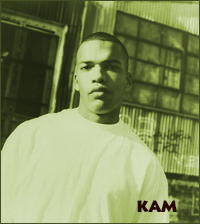
Kamrapper-225I caught up with LA rapper Kam not to long ago who spoke on the seriousness of this situation. He noted that he spends a lot of time working to heal any rifts which he says starts from the racial segregation and ‘divide and conquer’ techniques used in the California prisons. He noted that this tactic has now spilled out onto the streets and is starting to impact everyday folks buy into these rumors of conflict.

For those who don’t know, in the Cali penal system, inmates are separated by race, ethnicity and gang affiliation. Because the Latino population is so large (almost a third of the state is Latino), prison officials separate Northern and Southern Cali Mexicans. Within the prisons gangs have formed and alliances made with Northern Mexicans known as Nortenos hooking up with Black inmates and the Southern Mexicans known as Surenos aligning themselves with the White Arayan Brotherhood. The initial split with Northern and Southern Mexicans is something that many feel was a well orchestrated ‘divide and conquer’ plan politicos that went into effect years ago to stem any sort of large Brown block holding and yielding social and political power.

Kam concluded as he did in his landmark record ‘Keep the Peace’ which addresses this issue that Black and Brown are kin to each other and that all of us are going to have to be aware of the outside forces that continuously work to keep large groups of people divided and separated. Black and Brown unity becomes threatening to some who wish to maintain power and see the large numbers that both groups have as a threat to everything from job security to political outcomes on key issues.

During our conversation we spoke about how the police seemed to work overtime to try and stir up beef after the Rodney King uprisings where many of the Crip and Blood sets formed a truce. Those undermining efforts were also directed at the Latino gangs who also formed truces after the riots. When these efforts by the police failed to eradicate the truces you suddenly started to find an increase in tensions between Black and Brown. This latest scenario involving the letter warning Black kids to not wear white t-shirts on Cinco de Mayo was a deliberate attempt to create drama where there wasn’t any.

Long time rapper Poetess who does a lot of community work here in LA on KKBT the Beat100.3 explained that while older folks may not have immediately bought into any of this, it’s young cats and BGs (baby gang members) who may caught up and feel a need to show and prove. Although Cinco de Mayo has passed with weekend celebrations set to kick off, many are still concerned.

We should also note that recent tension has been exacerbated by a hostile political climate here in Cali. Part of it centers around the recent remarks and subsequent endorsement voiced by Governor Arnold Schwarzenegger of the controversial Minute Men vigilantes patrolling the borders separating the US from Mexico. The ‘Governator’ who is an immigrant himself says he wants the Minute Men to come to California.

His remarks have been compounded by the objections voiced by other political leaders in LA who felt that a number of recently erected billboards advertising a Spanish language radio station we re offensive. The Billboard says Welcome to Los Angles, Mexico with the words US crossed out. The overt reaction harks back to the type of anti-immigrant (translation-Anti-Mexican) climate that has been in effect over the past few years that lead to Prop 187 (anti-immigration bill) and Prop 225 (English only initiative) being voted into law.

Many forget that a lot of folks of Mexican descent are keenly aware that the California is one of the seven western states that was once a part of what was called Atzlan. In other words, there’s a strong sense that Latinos in Cali did not cross the border, the border crossed them and that at the end of the day this is indigenous land. Sadly there have been a number of right-wing zealots who have tried to denounce this notion by calling it fiction. Some have gone so far as to try and shut down and silence professors and other public educators who have spoken about Atzlan.

Sadly because of perceived racial tensions in the past, much of which has started out prison we had a number of Southern Cali Black folks voted along with some of the oppressive measures I mentioned.

antoniovillaroagas-225The other thing that is being looked at and causing more than a few to speculate, is that this latest rise in tension between Black and Brown may actually be connected to the highly contentious mayoral campaign that is in full swing here in LA. What’s happened is that in the last election Latino mayoral candidate Antonio Villaraigosa saw his chances to become LA’s first Latino mayor in more than a hundred years, derailed when prominent Black leaders including Congresswoman Maxine Waters and former LA Laker/businessman Magic Johnson threw their weight and influence behind James Hahn.

Hahn was given the nod because of the strong allegiance his dad Kenneth Hahn a former LA supervisor had formed with Black leaders over his long political career. There was a sense from politicians like Waters to back James Hahn because of the strong support his father had shown LA’s Black community.

To make a long story short, the Black vote that Hahn secured gave him victory in a close race. The new Mayor returned the favor by stabbing LA’s Black leadership in the back. He promptly recommended and backed the firing the popular Black police Chief Bernard Parks, replacing him with former NY and Boston police Chief Bill Bratton. This was a not only a major embarrassment for those Black leaders who backed his campaign, but it also set deep wedge in all sorts of political circles. First Black-Latino relations became even more strained because of what many saw as a sell out move. It caused irreparable damage between Han and LA’s Black community who were determined to pay him back during this current election.

Hanh’s mistreatment and betrayal of Black folks in LA led to a rare political alliance between the two communities. Both Black and Brown had come together to support Villaraigosa and early on he had a substantial lead in this Mayoral race. This is supported by a recent article in an article that appeared in Hispanic Business

Now with the May 17th election just 10 days away, we suddenly have race riots and threats of Blacks being killed by Latinos being front page news. The timing and political implications of this have not gone unnoticed. Nothing happens in a vacuum. And as a result a lot of questions are being asked.

Is this latest round of tension between Black and Brown in LA the result of shady police divide and conquer tactics when you consider that the current LAPD administration may owe Hanh a favor? Is the widely circulated letter in anyway shape or form connected to his campaign which stands to benefit the most in a highly contested race? Will the Black community that seemed perched to vote for Villaraigosa pull back and not go to the polls at all because of this racial tension? Stranger and more insidious things have happened in high stakes political races. Considering that Hahn had no problems stooping so low during the last election to backstab the people who backed him the most, how can one not look at the possibility that his campaign his behind this erroneous letter?

Something to ponder
Davey D
Return to Davey D’s Hip Hop Corner

The Knox Family: Natural Born Thrillers from Seattle

daveydbanner

That’s a question MCs Jerm and Julie C started asking themselves a year ago when they formed the Knox Family along with local producer/label head DJ B-Girl. Although all three are involved in various other projects—Jerm also fronts Helladope, while Julie C works with Hip-Hop Congress/206 Zulu and DJ B-Girl heads an indie-media company—they found time to record songs together with the intent of challenging the expectations of Seattle‘s hip-hop audience.

The Knox Family: Natural Born Thrillers from Seattle

This hip-hop trio’s out to crush the box you put them in….

By Jonathan Cunningham

http://www.seattleweekly.com/2009-05-20/music/the-knox-family-natural-born-thrillers/

Share/Save/Bookmark

KnoxFamilysitMusicians can sometimes be too quick to box themselves into categories. Sometimes that’s a record label’s doing, other times it’s just mental laziness. But if you’re not trying to conform to industry standards and are lucky enough to be on a local label that understands you, why not have fun and smash all the boxes you can?

That’s a question MCs Jerm and Julie C started asking themselves a year ago when they formed the Knox Family along with local producer/label head DJ B-Girl. Although all three are involved in various other projects—Jerm also fronts Helladope, while Julie C works with Hip-Hop Congress/206 Zulu and DJ B-Girl heads an indie-media company—they found time to record songs together with the intent of challenging the expectations of Seattle‘s hip-hop audience.

“We want to change the boxes that have been created around the genres within hip-hop,” says Julie C. “We’re trying to break down certain paradigms, but also not be too preachy about it either.”

She and her crew spent the last year slow-cooking a new album entitled Knox Family EP, which hits local stores this week. The disc contains seven songs and three skits that touch on the fun side of hip-hop through witty rhyming patterns and laid-back, almost hyphy-like West Coast production. But it also delves into the darker side of having to hustle to pay the rent in Seattle. “Boots Laced” bluntly sidesteps bling and bravado, speaking honestly from the perspective of two broke rappers trying to make it, while”These Streets” talks about local policies affecting communities of color.

“Some of our tracks aren’t exactly ‘Kumbaya’ or peaceful,” Julie C says. “They’re more about ‘This is what’s going on in the streets, from the Central District to the South End or wherever, and this is why.'”

The trio takes the name Knox Family from Mickey and Mallory Knox of the film Natural Born Killers. “We feel like we’re naturally born to kill the game,” Julie C adds. “We’re trying to actively shape the next phases of hip-hop through our music, and this EP is a big part of it.”

jcunningham@seattleweekly.com

Return to Davey D’s Hip Hop Corner

Knox Flyer mo

Long Beach Rapper from Tha Mexakinz on Trial

daveydbanner

Share/Save/Bookmark

Rudyachuleta-225LONG BEACH – A tentative trial date was scheduled Thursday for a Long Beach rapper charged with sexually assaulting and holding a woman against her will.

Rudy Archuleta, of the Long Beach-based rap/hip-hop group “Tha Mexakinz,” is charged with felony sexual assault including two counts of forced digital penetration, two counts of false imprisonment and one count of making threats.

The victim, who was not identified by authorities because the case involves an alleged sex crime, had a relationship with Archuleta at one time and they have three children together, said Deputy District Attorney Bob Hight.

Attorneys in the case initially set the May 21 court appearance as a possible trial date, but pushed it back to a pre-trial conference to discuss a plea deal.

Hight told the court Thursday the deal offered by his office to Archuleta and his court-appointed defense attorney, Lisa Chorness Hovden, was rejected, pushing the case closer to trial.

It is at least the second time the trial date has been delayed, and Hovden is at least the second defense attorney to be assigned by the court to represent Archuleta.

Archuleta will return to court on June 1 when the trial date is scheduled to be set. Jury selection could begin that day, although it is not likely, Hight said.

In the meantime, the 35-year-old defendant remains out of custody after posting $200,000 bail in April.

If convicted on all counts, he could  face at least three years in state prison.

tracy.manzer@presstelegram.com, 562-499-1261.

http://www.presstelegram.com/news/ci_12420982?source=email

Return to Davey D’s Hip Hop Corner

Hip Hop Caucus Engages Capitol Hill

daveydbanner

The group, the Hip Hop Caucus, has a nine-member Washington office — but its real reach comes from its ability to harness the power of hip-hop artists to put a famous face on issues and draw in their young, multicultural fans. In the next few weeks, the caucus will see a bill it fashioned with Rep. Elijah Cummings (D-Md.) be introduced — calling for funding for a one-day voter registration drive and lessons on the Constitution in high schools across the country.

Share/Save/Bookmark

Hip Hop Caucus engages Capitol Hill

By

RevYearwoodpanel-225Buoyed by Barack Obama’s election as president, a group of hip-hop artists and other activists is taking to Capitol Hill — trying to harness the wave of support for Obama among young voters into an ongoing political force.

The group, the Hip Hop Caucus, has a nine-member Washington office — but its real reach comes from its ability to harness the power of hip-hop artists to put a famous face on issues and draw in their young, multicultural fans.

In the next few weeks, the caucus will see a bill it fashioned with Rep. Elijah Cummings (D-Md.) be introduced — calling for funding for a one-day voter registration drive and lessons on the Constitution in high schools across the country.

Organizers are working with Rep. Ed Markey (D-Mass.) to gather support for legislation fighting climate change — and singers Solange Knowles and Keyshia Cole have both signed on to help, through the Green the Block campaign.

And the group also reached out to Sen. Barbara Boxer (D-Calif.) to get support for prisoner re-entry legislation that would help former inmates transition back into society.

To the group’s executive director, Lennox Yearwood Jr., the link between politics and hip-hop is a natural one — as a way to make politics more accessible to young voters, more like sports than study hall.

“If you have a flier that says something about the economic stimulus package, versus one that has ‘Hip-Hop Town Hall, find out how you get yours’ on it, what’s going to get a bigger draw?” Yearwood said. “That’s the power of hip-hop.”

And the power of Obama.

Rappers have campaigned for candidates before, but the hip-hop community hasn’t been able to sustain the interest or the momentum when the election was over. Obama’s election has led some in the industry to say it’s time for the political side of hip-hop to get more serious.

And already there are signs that hip-hop artists seem to be sticking around this time. The HHC harnessed that creative interest into a get-out-the-vote campaign and used artists like Young Jeezy, T.I., Rick Ross, Busta Rhymes, Fantasia, Brandy and Big Boi to get voters to the polls.

Obama got 68 percent of the youth vote, to Sen. John McCain’s 30 percent — with 2.2 million more voters between 18 and 29 turning up at the polls this election cycle compared with 2004.

Some artists — including Jay-Z and Nas — also appeared on the stump for Obama, and there was a hip-hop inaugural ball, a first. The message that January night was clear: Hip-hop has to grow up or be marginalized again.

davidbannerscowl-225“I wanted to use my voice to make sure people were engaged,” said rapper David Banner, who testified in 2007 House hearings on media representation of African-Americans. Banner, a BET hip-hop award winner, pitched in with the Hip Hop Caucus’ Respect My Vote campaign and will continue to be engaged, he said.

“The decisions that we make now politically will affect the next generation and the generation after that. So we have to be involved. By speaking out, I end up speaking for poor people and a larger group all over the country,” Banner said.

First formed in 2004 as an offshoot of P. Diddy’s New York-based “Vote or Die” campaign and Russell SimmonsHip Hop Summit Action Network, the HHC sprung out of the disappointment from that election cycle.

“We voted, and we got die,” Yearwood said, referencing the “Vote or Die” campaign slogan.

Yet politics and hip-hop haven’t always been an easy mix. While the roots of the music and the culture have political undertones — Grand Master Flash’s 1982 hit “The Message” was a searing indictment of the decades-long neglect of urban areas — hip-hop has often been on the outside of politics, looking in.

“The decisions that we make now politically will affect the next generation and the generation after that. So we have to be involved. By speaking out, I end up speaking for poor people and a larger group all over the country,” Banner said.

First formed in 2004 as an offshoot of P. Diddy’s New York-based “Vote or Die” campaign and Russell Simmons’ Hip Hop Summit Action Network, the HHC sprung out of the disappointment from that election cycle.

“We voted, and we got die,” Yearwood said, referencing the “Vote or Die” campaign slogan.

Yet politics and hip-hop haven’t always been an easy mix. While the roots of the music and the culture have political undertones — Grand Master Flash’s 1982 hit “The Message” was a searing indictment of the decades-long neglect of urban areas — hip-hop has often been on the outside of politics, looking in.

Bill Clinton criticized rapper Sistah Souljah in 1992 in order to appear more centrist. Vice President Al Gore’s wife, Tipper, worked to get advisory stickers put on some rap records to warn parents of violent and misogynistic lyrics.

Enter Obama. Young Jeezy’s “My President’s Black” was in heavy rotation last summer, and many in the hip-hop generation take credit for Obama’s victory and count him as one of their own. One popular T-shirt has Obama sporting a Kangol cap, Gazelle glasses and a fat gold chain with the tag “Run DC.”

“You couldn’t go anywhere without seeing Obama. His face was the universal picture for change,” said Jeff Chang, author of “Can’t Stop Won’t Stop: A History of the Hip-Hop Generation.” “But the thing about hip-hop is that it’s been a cultural force and great at mobilizing and messaging — but the political end isn’t unitary or stable, and it’s recent.”

These days, Yearwood, 39, who often sports a Green the Block baseball cap, Hip Hop Caucus pin and clergy collar, is up on the Hill three to four times a week, meeting with elected officials and sitting in on hearings.

Their agenda is a progressive one, centered on health care, education, climate change and livable cities. Yearwood submitted a memo to Obama’s transition team, has reached out to the EPA and the public liaison’s office and is looking to work with the White House Office of Urban Affairs to push its agenda.

“We are giving voice to those who are outside of institutions, folks who are not in college, who didn’t graduate high school; we are able to tap people at the barber shop, on the block and in the beauty salon,” Yearwood said. “We allow their perspective so that voice doesn’t get lost in the discourse.”

Members of the Congressional Black Caucus served as early mentors for the organization, back when the Hip Hop Caucus was still being confused with a rap group.

Now, 21 members of the CBC are on the advisory panel to the Caucus, which has field teams in 48 cities.

BarbaraLeeofficial-225“The Hip Hop Caucus does an incredible job of connecting young people in urban communities with the political and legislative process,” said Rep. Barbara Lee (D-Calif.), who chairs both the CBC and the HHC’s advisory panel.

Rep. Andre Carson, who sits on the advisory board and is himself a former emcee, said hip-hop doesn’t get enough credit for creating the climate that allowed for Obama’s ascendance.

Hip-hop “opened doors to build friendships between African-Americans and Latinos and whites,” he said. “America became comfortable with the idea of a black executive because of all the hip-hop moguls.”

But the skepticism about political projects under the hip-hop label remains.

“The music harbors and celebrates a way of behaving that works against a progressive agenda. That’s the contradiction that nobody wants to talk about,” said Tricia Rose, author of “The Hip Hop Wars.”

Yet some counter that members of Hollywood’s elite rarely get the same critique when they take up political issues, although the movies they peddle are often violent and misogynistic.

Counters Rep. Gregory Meeks (D-N.Y.), who is a member of HHC’s advisory board:

“Hip Hop does have a ways to go in terms of its image, but the fact is that the artists and the music that they put out is born and bred from the districts we represent.”

Yearwood also is working with CBC members to bring hip-hop artists to the group’s annual legislative conference in the fall. “We need Andre 3000 and Andre Carson connecting,” Yearwood said, referring to the lead singer of OutKast. “We have to be able to move politics from the hood to the Hill and from the suites to the streets.”

Read more:

http://www.politico.com/news/stories/0509/22684_Page2.html#ixzz0G9a8BlPn&B

Return to Davey D’s Hip Hop Corner

Ending Wackness in the name of Blackness-HR 848

daveydbanner

Share/Save/Bookmark

From Today’s Eclectic Economist…
cedricmuhammed2The recent debate over the condition of Black talk radio reveals several factors. Among them, the niche format is suffering a crisis of talent, content, business model, demographics, and political sagacity.
The crisis is one of the reasons I decided to launch my own program, “The Cedric Muhammad And Black Coffee Program.”

In a sense the crisis of talent is one whereby an entire army and cadre of strong young, diverse and dynamic voices simply cannot break through an old guard network of well-connected opinion leaders from previous generations.
The crisis of content is marked by the extreme choice listeners have to make between superficial entertainment, gossip and part-time activists/hedonists (I see you Michael Baisden!) on one hand or rigid political ideology more loyal to political parties than local and global realities. Could it be that the titles and teams known as ‘Left,’ ‘Right,’ and ‘Center’ are more top-down controlling modalities and marketing niches (designed to herd the masses and direct their consuming power) than real genuine bottom-up political forces? Here, the ebb and flow is determined by elections and the flavor of the month cause celebre’ rather than the critically important subject of how economics, entrepreneurship and technology are the global change agents – with independent-thinking Blacks an endangered species.

To read more click:

http://www.cedricmuhammad.com/hr-848-and-black-talk-radio-ending-wackness-in-the-name-of-blackness/

 
Discuss This Topic and More On “The Cedric Muhammad and Black Coffee Program” Every Wednesday From 12 to 5 PM EST (USA)

Live Show: http://www.blackelectorate.com/

Show Archives: http://www.cedricmuhammad.com/showarchives/


Return to Davey D’s Hip Hop Corner

Oscar Grant trial pt 2 Oakland Rappers Trinidad and Franchize

daveydbanner

Share/Save/Bookmark

Oscargrantgreen-225We caught up with Oakland rappers Trinidad and Franchize from Silence the Violence to get their take on whats going on at the Oscar Grant Trial.. many artists have been showing up at the oakland courthouse to let their presence be felt and their opinions heard. As Trinidad pointed out-artists are the soundtrack of the movement


A Detailed Report Back from the Oscar Grant Trial (video included)

daveydbanner

Share/Save/Bookmark

Oscargrantgreen-225

We speak with community organizer Tony Coleman and get an update on day 3 of the Oscar Grant pre-trial. Here we find out that in spite of the widespread videos of BART officer Johannes Mehserle shooting an unarmed Oscar Grant in the back while he laid restrained face down on the ground, they are still trying to decide if this officer should even stand trial..That in itself is outrageous.

In this video tape Colemna reflects on how he was headed to trial on false accusation on the word of one witness. He was later acquitted but heldx for 100 thousand dollars bail. meanwhile Mehserle who is shown clearly shooting an restrained unarmed man has his situation being debated. What kind of justice is this?  

We also hear how there was new clear video shot of the incident that hasn’t been released and how the police are now trying to use the fact that people who shot the video used the N word are discredited for using the word. They are claiming that the brother who used the N word is racist and a debate has taken place in court over the spelling of the word..


Below is a play by play Report of what took place inside the courtroom..


Justice for Oscar Grant III:amendment rights by having officers question him after his arrest in Nevada on January 12 told only to present new information. Rains also at one point referenced the public pressure around the case and asked the judge to “not succumb to the mobs outside.” 


The People vs. Johannes Mehserle Preliminary Hearing

Notes from Day 1 Inside the Courtroom


http://onefam.org/JusticeforOscarGranttrial1

johannesmehersele-225Monday at 8:30 AM the trial of former BART police officer Johannes Mehserle for the murder of Oscar Grant III on January 1 hearings.


The people of Alameda County and the Grant family were represented in court as the prosecution was led by Assistant Attorney General David Stein. On the other side of the courtroom were Mehserle and his defense team led by Michael Rains, an attorney frequently used by police officers standing trial in the Bay Area.

Family members of Oscar Grant and his supporters were allowed only twenty-seven seats in the courtroom and press who had drawn names in a lottery in order to attend occupied several of those seats.

There was no closed-circuit viewing room available for those waiting in the hallways that were turned away due to the lack of space. Many folks had lined up as early as 6:30 AM in order to get a spot in the courtroom. Those in attendance to support Oscar and his family wore shirts emblazoned with his picture and the words “Gone but not forgotten” on the back.

Upon entering the courtroom we were told we could not leave at any time and we had to be silent. Michael Rains presented his first motion to Judge C. Don Clay asking that the district attorney be removed from the case for allegedly violating Mehserle’s 6st of this year began with preliminaryth

oscargrantposterJudge Clay tried to keep Rains in line by stating that his courtroom would be a “forum of law” and the motion was quickly dismissed. The prosecution was then allowed to begin calling witnesses to present their case for why Mehserle should be charged with murder. The prosecution called four witnesses: two eyewitnesses from the BART platform who had taken video footage of the murder and the events surrounding it and also the forensic pathologist who examined Oscar’s body and the video expert from the county DA’s office. The first eyewitness to take the stand was Karina Vargas who was on the BART train on January 1 recounting that BART Officer Tony Pirone forced his way onto the train car in front of her and yelled “You get the f**k off the car” to several young men who were doing nothing that warranted them being removed from the train. Her testimony went on to emphasize that the young men who were with Oscar that night as well as Oscar himself were completely cooperative with the officers and that the reason she had begun filming was that it appeared that the officers were being violent towards the young men for no reason.

Karina Vargas’ footage did not show the actual murder but the loud gunshot was caught on tape and she also captured the stunned reactions of the crowd of witnesses who were clearly horrified by what had happened. On the defense’s cross-examination Rains tried to get Vargas to say Mehserle was not acting aggressively prior to when Oscar was pinned to the ground and that he seemed “dumbstruck” after the shooting.

Clearly the defense will try to make out Mehserle’s actions as somehow accidental and that Officer Pirone was the real instigator of the violence that night. The video footage demonstrates completely that Oscar Grant III was totally non-violent and cooperative through the entire incident and that he was murdered for no reason. This begs the question, though, of why has Tony Pirone not been charged in this crime since the video evidence shows he was in the middle of the whole thing and at one point even has his knee on Oscar’s neck.

The second prosecution witness was the forensic pathologist, Dr. Thomas Rogers, who established that after examining Oscar’s body he died of a gunshot wound to the torso. He pointed out the angles at which the bullet entered and traveled through Oscar’s body and the defense on cross-examination tried to get him to testify about where the gun was held and the position of Oscar’s body using the angles he had outlined. Dr. Rogers said he was unable to determine that and basically exposed the defense strategy for what it was: a desperate measure to try to implicate Oscar and say he was leaning back and trying to rise up at the time he was shot. The defense also pushed on the issue of blunt force trauma and whether or not there was visible evidence that Oscar was hit before he was shot.

Dr. Rogers said he found no visible evidence of trauma but that did not mean that it did not happen. Rains also tried to insinuate that the only thing that would haves saved Oscar would have been to get him into a trauma emergency room immediately after being shot so therefore the lack of lifesaving measures done by the officers after the shooting was somehow justified. The problem with this analysis is it assumes that Mehserle and Pirone and the other officers were as knowledgeable as doctors and knewexactly what kind of trauma Oscar was experiencing which is obviously false.

This was just another straw the defense tried to grasp at to attempt to overcome the overwhelming video evidence that shows the guilt of their client and the other officers on the platform that night.

OscarGrant-140Vicky Long was called to testify third and she has been a video technician for the Alameda County DA’s office dealing with video evidence in cases for over 28 years. She validated the way the video evidence was preserved and viewed and authenticated it as not having been tampered with or altered in any way by her office. She also showed the court how she was able to view footage frame by frame to allow for close examination of what was happening in the form of still images.

Long set the stage for the final prosecution witness of the day, Margerita Carazo, another eyewitness from the BART train who also took video footage of the incident. Carazo was extremely well spoken and gave her testimony in such a way it was clear she was relaying factual information. She also stated that she began filming when she realized that the police were behaving in an inappropriate way and she wanted to get it documented. At one point in the video she can heard saying “I’m getting this on video motherf**kers” to the police who were trying to confiscate her camera and intimidate the other passengers as part of their initial cover-up after the shooting. Carazo and Vargas were both very clear that they had voluntarily given up their video evidence after learning Oscar had died and were not initially contacted by John L. Burris, the Grant’s attorney in their civil suit, and did so on behalf of justice and not for any material reward.

Both Carazo and her testimony showed that Oscar had been doing nothing to warrant getting dragged off the train, slammed into the concrete wall of the station and then forced onto his stomach with his hands behind his back which was the position he was in when he was shot. The background noise on her video captures the outrage and disbelief of the train passengers as they witness the harassment of the young men by the police and then the unjustified murder of Oscar Grant III before being pushed back onto the train and having the doors closed in their faces. Carazo can be heard at the end of her tape asking someone to hold the door open so she could continue filming as the train pulls away from the Fruitvale station moments later.

Overall the prosecution took the day in court on the sheer magnitude of their video evidence and eyewitness testimony. The defense, though, under the devious leadership of Rains has already to begun to insinuate that Mehserle was not the real aggressor on the platform, even though he is the one who murdered Oscar, and that perhaps Oscar was trying to resist and that is why he was shot. Both of these insinuations are utterly false and cannot be proven by any of the hard, video evidence of the crime but we cannot be naïve and must understand that this looks to be a long and painful trial with a rabid defense team that will try anything they can to cover up the truth and get the charges reduced to manslaughter. It is critical that we continue to be a public presence both in the courtroom and outside and that we realize it will only be through the vigilance of the people in the community and the family members that we will be able to get justice in this case. The evidence is on our side: it is time for us to make history and convict anon-duty officer of murder in the first degree.

Submitted by: Dana Blanchard


Return to Davey D’s Hip Hop Corner