Archives for 2009

Houston We have a Problem-Racism & Sexism Allegations Singe Fire Department

Share/Save/Bookmark//

Houston City Council Woman Jolanda Jones has been holding people's feet to the fire over incidents of sexism and racism inside HFD

Houston City Council Woman Jolanda Jones has been holding people's feet to the fire over incidents of sexism and racism inside HFD

(Houston TX) we have a problem. Sadly its the age old problem of racism and sexism which was supposed to be disappearing in this new Era of Obama within a city that is now the third largest in the country. For those who haven’t been following the drama, what’s been going on is an ugly series of racial incidents including 2 or 3 noose hanging incidents, racial epithets being spewed over the departments tactical radio system and disturbing remarks targeting two women sprawled on the walls of  Houston’s fire station #54.

At the center of the most recent controversy are two women Paula Keyes and Jane Draycott who reported that for months they’ve had to endure a series of incidents including the recent defacing of a picture of Draycott’s  daughter who was killed in a car accident. Someone wrote ‘dead’ across the photo while referring to her as a ‘nigger lover’ and a writing the words ‘die’ on her picture. Here’s a link to a local news report on this incident

http://abclocal.go.com/ktrk/story?section=news/local&id=6905444

Other incidents include having someone turn off the cold water while taking a shower so the women would get scalded  and tossing firecrackers while using the bathroom stalls. The incidents were appalling to say the least.

This recent drama comes at the heels of two high profile noose hanging incidents including one involving a fire fighter cadet who during a training tied a noose and made some racial remarks. He was allowed to resign but then later reapplied and has successfully completed his courses. He is soon to join HFD.

Captain Keith Smith a 28 year veteran said he kept a noose in his locker to remind him of his early training days

Captain Keith Smith a 28 year veteran said he kept a noose in his locker to remind him of his early training days

The other incident involves a white HFD captain named Keith Smith who was discovered to have a noose hanging in his locker earlier this year. Smith was reprimanded by the Chief for the incident while the City Council coughed up a bunch of money-60 thousand dollars for sensitivity training.  Smith a 28 year veteran who has held the rank of captain for 15 years recently issued a public apology where explained that he kept the noose as some sort of memento for his training days. He said he had no idea the noose meant something racial. 

One has to wonder what sort of training Smith had received. Maybe things were more racial charged 28-30 years ago. I find it hard to believe that Smith was that oblivious when you consider the national brouhaha that occurred because of the noose hanging incidents in Jena, La (Jena 6) which is about 6 hours away from Houston. Was Smith not following the news when all this went down back in Fall of 2007?  

What’s even crazier is that Rev D.Z. Cofield vice president of the Houston NAACP defended Smith saying he was unfairly being put on blast and they recommended that the letter of reprimand be removed from the captain’s record.

I’m not sure how they came to this conclusion, but these series of incidents have not sat well with Houston City Council member Jolanda Jones who has been on the case. She’s been pushing hard demanding that the city implement a zero tolerance policy for  sexism and racism. She also rebuffed the assertions that the racial incidents were isolated by getting a letter signed by 68 retired, current and former emploeyees who noted that there has long been a pattern of racism and sexism. Jones has even gotten involved in a war of words with HFD Union chief  Jeff Canyon who accused her of calling him a House Negroe.

http://abclocal.go.com/ktrk/story?section=news/local&id=6930503

In our interview w/ Jones she expressed the litany of incidents and the gravity behind them

Since our interview a group of women firefighters have met with Houston Mayor Bill White to say that they are proud of of the fire department and that although there are some problems things aren’t all that bad.

http://abclocal.go.com/ktrk/story?section=news/local&id=6948558

Written by Davey D for www.theSouthernShift.com

Return to Davey D’s Hip Hop Corner

Too Many Funerals, Too Many Early Deaths-No Time to Grieve

daveydbanner

Share/Save/Bookmark//

The passing of Baatin is sadly one of many high profile deaths we had to deal with this year.

The passing of Baatin is sadly one of many high profile deaths we had to deal with this year.

With the recent passing of Baatin of Slum Village, many of us have found this to be a bit too much. For fans of the group and Hip Hop in general, one is left wondering how in the world two mainstays from a group could be gone before 40?  It’s been two years and I am still going to parties where DJs are doing tribute sets for producer and Slum Village co-founder Jay Dee aka J-Dilla. Some people say these tribute sets are done because dude was so dope and he was.. but I think deep inside we play Dilla’s music to reconnect. It’s a way for us to consciously and unconsciously mourn and heal although we don’t all openly admit it.  With Baatin passing there is no doubt tribute sets will intensify.I can only imagine what Baatin’s passing means to a city like Detroit which is still mourning the deaths of J-Dilla and Proofwho was the unofficial mayor of the Motorcity. How has it effected people’s psyche?

I know in the Bay Area where there was a rash of high profile deaths within including the passing of 2Pac, Mac Dre, Cougnut, Mike Dream, Hitman and Mr. Cee to name a few, people are still trying to make sense of things. Same thing in Los Angles where folks within a 2 month period were faced with the loss of three icons DJ Dusk, Michael Mixxin’ Moore and Skeeter Rabbit of the Electric Boogaloos.  In Houston people saw the quick passings of DJ Screw, Big Hawk, Big Moe and of course Pimp C. You can’t say this doesn’t have an effect on people’s outlooks considering so many of us live vicariously through these iconic figures. They become soundtracks and important backdrops to our world.

The sudden passing of Pimp C left many in his native Texas as well as throughout the Hip Hop world mourning

The sudden passing of Pimp C left many in his native Texas as well as throughout the Hip Hop world mourning

The death of Baatin is troubling because it was unexpected and it comes on the heals of the death of Michael Jackson. There’s been little time to even began processing. We had to deal with the shock of his death and then reconcile ourselves with the media onslaught that followed where one too many pundits  were gleeful in taking an adversarial point of view. In short we could not grieve in peace. Many of us were reeling from Michael while simultaneously still struggling to put our heads around the deaths of  other high profile figures  ranging from comedian Bernie Mac to singer Isaac Hayes and James Brown to entertainer Eartha Kitt to Civil Rights icon Coretta ScottKing all of these folks and many more have left us within the past two years.

Adding to our angst are what sometimes appears to be the routine passings that occur everyday in our communities.  I was just in Omaha, Nebraska for their big event and came to find out that a whooping 15 people had been killed within a 10 day period.  Sadly this is not all that unsual when you state this to people. We’ve gotten used to early deaths to the point that we have concluded that death is part of life and we keep it moving. We’ve become hardened to it. For some they say there is no time to grieve. But if we adapt that sort of attitude- then we best be prepared for the unintended consequences which is ‘No time to grieve-No time to live and No time to care’.  I’ll let that sink in for a minute.

The hostile treatment levied on public figures and icons we hold dear has made it difficult for us to fully grieve and heal

The hostile treatment levied on public figures and icons we hold dear has made it difficult for us to fully grieve and heal

When death becomes such a matter of fact occurance in our lives, then we behave callously in other areas. We stop looking for ways to uplift ourselves and our communities. Life offers little or no hope and our full participation in things ranging from community  activities to even parenting  is next to impossible. It simply doesn’t happen. We’re so busy trying to escape the pain that sudden and early losses bring that we create a cycle that eventually brings more death.  To not properly mourn and to constantly seek escape  means we behave recklessly.

From this day foward lets promise ourselves to take time to reflect on those who have gone before us. Cherish their good parts. Learn from their mistakes and lets take some crucial first steps to love one anotther and live fully. The video we put together is dedicated to those who left too early. Its taken from the song ‘Too Many’  from spoken Word artist D-Knowledge. Its off his album ‘All that and a Bag of Words’.  Check for it and  lets stop that trend of early deaths.

Something to Ponder

-Davey D-

Return to Davey D’s Hip Hop Corner

MacDre-500

John McCain Says No To Sonia Sotomayor-What is the GOP Thinking?

daveydbanner

Share/Save/Bookmark//

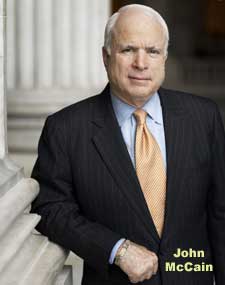
When I read about guys like John Mccain from Arizona or the two Texas Senators Kay Bailey Hutchinson and John Coryn saying they aren’t gonna vote for Sonia Sotomayor, it makes me wonder what sort of plans does the GOP have for courting a growing Latino vote?

As the country grows Blacker and Browner and both communities find they are facing similar economic, social and political oppression the potential for a game changing Black-Brown coalition to form is in place.  I can only wonder how the GOP will reconcile this, especially in places like Texas and Arizona where you have large Latino populations.

Granted an entire community’s vote is not hinged on a Yea or Nay nomination for a seat even one on the Supreme Court, however, the rejection of Sotomayor has been laced with some unavoidable racial undertones. This is coupled by over-the-top hate speech from Right-wing talk show hosts  who pull no punches.  Is the GOP really trying to shoot itself in the foot?

I keep thinking the GOP is soon going to be doing some divide and conquer type things to split the potential strong hold a solid Black-Brown political coalition one can have. It won’t be the first time they’ve done this.

-Davey D-

FLOOR STATEMENT BY SENATOR JOHN McCAIN
ON THE NOMINATION OF JUDGE SONIA SOTOMAYOR
TO SERVE AS A JUSTICE ON THE UNITED STATED SUPREME COURT

August 3, 2009
 
Washington, D.C. ¬- U.S. Senator John McCain (R-AZ) today made the following statement on the floor of the U.S. Senate:  
 

John McCain says he ain't gonna be supporting Sonia Sotomayor. Here's a guy who can suypport an idiotic racist like Sarah Palin, but he can't get behind a strong intelligent sister like Sonia Sotomayor-Go figure.

John McCain says he ain't gonna be supporting Sonia Sotomayor. Here's a guy who can suypport an idiotic racist like Sarah Palin, but he can't get behind a strong intelligent sister like Sonia Sotomayor-Go figure.

“Mr. President, it is with great respect for Judge Sotomayor’s qualifications that I come to the floor today to discuss her nomination to the Supreme Court. 
 
“There is no doubt that Judge Sotomayor has the professional background and qualifications that one hopes for in a Supreme Court nominee.  She is a former prosecutor, served as an attorney in private practice and spent twelve years as an appellate court judge.  She is an immensely qualified candidate.
 
“And obviously, Judge Sotomayor’s life story is inspiring and compelling.  As the child of Puerto Rican parents who did not speak English upon their arrival to New York, Judge Sotomayor took it upon herself to learn English and become an outstanding student.  She graduated cum laude from Princeton University and later from Yale Law School.  Judge Sotomayor herself stated that she is ‘an ordinary person who has been blessed with extraordinary opportunities and experiences.’ 
 
“However, an excellent resume and an inspiring life story are not enough to qualify one for a lifetime of service on the Supreme Court.  Those who suggest otherwise need to be reminded of Miguel Estrada.  Mr. Estrada also was a supremely qualified candidate.  And he too has an incredible life story.  Miguel Estrada actually immigrated to the United States from Honduras as a teenager, understanding very little English.  Yet, he managed to graduate from Columbia University and Harvard Law School magna cum laude before serving his country as a prosecutor and a lawyer at the Department of Justice.  Later, he found success as a lawyer in private practice.  However, Miguel Estrada, in spite of his qualifications and remarkable background – in spite of the fact that millions of Latinos would have taken great pride in his confirmation – was filibustered by the Democrats seven times, most recently in 2003 because many Democrats disagreed with Mr. Estrada’s judicial philosophy.  This was the first filibuster ever to be successfully used against a court of appeals nominee. 

Texas Senator and Gubenatoral candidate Kay Bailey Hutchinson says she will not vote for Sonia Sotomayor

Texas Senator and Gubenatoral candidate Kay Bailey Hutchinson says she will not vote for Sonia Sotomayor

 “I supported Mr. Estrada’s nomination to the D.C. Circuit Court of Appeals, not because of his inspiring life story or impeccable qualifications, but because his judicial philosophy was one of restraint.  He was explicit in his writings and responses to the Senate Judiciary Committee that he would not seek to legislate from the bench.
 
“In 1987, I had my first opportunity to provide ‘advice and consent’ on a Supreme Court nominee.  At that time, I stated that the qualifications I believed were essential for evaluating a nominee for the bench included ‘integrity, character, legal competence and ability, experience, and philosophy and judicial temperament.’ 
 
 “When I spoke of ‘philosophy and judicial temperament’ is it specifically how one seeks to interpret the law while serving on the bench.  I believe that a judge should seek to uphold all acts of Congress and state legislatures unless they clearly violate a specific section of the Constitution and refrain from interpreting the law in a manner that creates law.  While I believe Judge Sotomayor has many of these qualifications I outlined in 1987, I do not believe that she shares my belief in judicial restraint. 
 
 “When the Senate was considering Judge Sotomayor’s nomination to the Second Circuit in 1998, I reviewed her decisions and her academic writings.  Her writings demonstrated that she does not subscribe to the philosophy that federal judges should respect the limited nature of the judicial power under our Constitution.  Judges who stray beyond their constitutional role believe that judges somehow have a greater insight into the meaning of the broad principles of our Constitution than representatives who are elected by the people.  These activist judges assume that the judiciary is a super-legislature of moral philosophers. 
 
“I know of no more profoundly anti-democratic attitude than that expressed by those who want judges to discover and enforce the ever-changing boundaries of a so-called ‘living Constitution.’  It demonstrates a lack of respect for the popular will that is at fundamental odds with our republican system of government.  And regardless of one’s success in academics and government service, an individual who does not appreciate the common sense limitations on judicial power in our democratic system of government ultimately lacks a key qualification for a lifetime appointment to the bench.
 
 “Though she attempted to walk back from her long public record of judicial activism during her confirmation hearings, Judge Sotomayor cannot change her record.  In a 1996 article in the Suffolk University Law Review, she stated that ‘a given judge (or judges) may develop a novel approach to a specific set of facts or legal framework that pushes the law in a new direction.’  Mr. President, it is exactly this view that I disagree with.
 
“As a district court judge, her decisions too often strayed beyond settled legal norms.  Several times, this resulted in her decisions being overturned by the Second Circuit.  She was reversed due to her reliance on foreign law rather than U.S. law.  She was reversed because the Second Circuit found she exceeded her jurisdiction in deciding a case involving a state law claim.  She was reversed for trying to impose a settlement in a dispute between businesses.  And she was reversed for unnecessarily limiting the intellectual property rights of freelance authors.  These are but a few examples that led me to vote against her nomination to the Second Circuit in 1992 because of her troubling record of being an activist judge who strayed beyond the rule of law. 
 
“For this reason, I closely followed her confirmation hearing last month.  During the hearing, she clearly stated that ‘as a judge, I don’t make law.’  While I applaud this statement, it does not reflect her record as an appellate court judge.  As an appellate court judge, Judge Sotomayor has been overturned by the Supreme Court six times.  In the several of the reversals of Judge Sotomayor’s Second Circuit opinions, the Supreme Court strongly criticized her decision and reasoning.  In a seventh case, the Supreme Court vacated the ruling noting that in her written opinion for the majority of Second Circuit, Judge Sotomayor had ignored two prior Supreme Court decisions. 
 
 “While I do not believe that reversal by the Supreme Court is a disqualifying factor for being considered for the federal bench, I do believe that such cases must be studied in reviewing a nominee’s record. 
 
 “Most recently, in 2008, the Supreme Court noted in an opinion overturning Judge Sotomayor that her decision ‘flies in the face of the statutory language’ and chided the Second Circuit for extending a remedy that the Court had ‘consistently and repeatedly recognized for three decades forecloses such an extension here.’  Unfortunately, it appears from this case, Malesko v. Correctional Services Corp., that Judge Sotomayor does not seek ‘fidelity to the law’ as she pledged at her confirmation hearing.  As legislators, we enact laws.  The courts must apply the law faithfully.  The job of a judge is not to make law or ignore the law. 
 
“Further, in Lopez Torres v. N.Y. State Board of Elections, the Supreme Court overturned Judge Sotomayor’s decision that a state law allowing for the political parties to nominate state judges through a judicial district convention was unconstitutional because it did not give people, in her view, a ‘fair shot.’  In overturning her decision, the Supreme Court took aim at her views on providing a ‘fair shot,’ to all interested persons stating, ‘it is hardly a manageable constitutional question for judges – especially for judges in our legal system, where traditional electoral practice gives no hint of even the existence, much less the content, of a constitutional requirement for a ‘fair shot’ at party nomination.’
 
 “In her most recent and well-known reversal by the Supreme Court, the Court unanimously rejected Judge Sotomayor’s reasoning and held that white firefighters who had passed a race neutral exam were eligible for promotion.  Ricci v. DeStefano raised the bar considerably on overt discrimination against one racial group simply to undo the unintentionally racially skewed results of otherwise fair and objective employment procedures.  Again, this case proves that Judge Sotomayor does not faithfully apply the law we legislators enact. 
 
“Again and again, Judge Sotomayor seeks to amend the law to fit the circumstances of the case, thereby substituting herself in the role of a legislator.  Our Constitution is very clear in its delineation and disbursement of power.  It solely tasks the Congress with creating law.  It also clearly defines the appropriate role of the courts to ‘extend to all Cases in Law and Equity, arising under this Constitution, the Laws of the United States, and Treaties.’  To protect the equal, but separate roles of all three branches of government, I cannot support activist judges that seek to legislate from the bench.  I have not supported such nominees in the past, and I cannot support such a nominee to the highest court in the land. 
 
 “When the people of Arizona sent me to Washington, I took an oath.  I swore to uphold the Constitution.  For millions of Americans, it is clear what the Constitution means.  The Constitution protects an individual’s right to keep and bear arms to protect himself, his home, and his family.  The Constitution protects our right to protest our government, speak freely and practice our religious beliefs.
 
“The American people will be watching this week when the Senate votes on Judge Sotomayor’s nomination.  She is a judge who has foresworn judicial activism in her confirmation hearings, but who has a long record of it prior to 2009.  And should she engage in activist decisions that overturn the considered constitutional judgments of millions of Americans, if she uses her lifetime appointment on the bench as a perch to remake law in her own image of justice, I expect that Americans will hold us Senators accountable.
 
 “Judicial activism demonstrates a lack of respect for the popular will that is at fundamental odds with our republican system of government.  And, as I stated earlier, regardless of one’s success in academics and in government service, an individual who does not appreciate the common sense limitations on judicial power in our democratic system of government ultimately lacks a key qualification for a lifetime appointment to the bench.  For this reason, and no other, I am unable to support Judge Sotomayor’s nomination.”

Return to Davey D’s Hip Hop Corner

Baatin of Slum Village Passes-Memorial Held in Detroit

daveydbannerShare/Save/Bookmark//

Memorial tribute organized quickly for rapper Baatin 

BY B.J. HAMMERSTEIN • FREE PRESS STAFF WRITER • August 3, 2009

http://www.freep.com/article/20090803/NEWS05/908030313/Memorial-tribute-organized-quickly-for-rapper-Baatin

Baatin

Baatin

As the sun set Sunday, members of the tight-knit Detroit hip-hop community gathered to pay tribute to one of Motor City rap’s brightest stars.

Titus (Baatin) Glover, the Detroit rapper who cofounded the acclaimed trio Slum Village, was found dead at the age of 35 Saturday morning.

“He taught me so much, not just musically but about life,” Miz Korona, the evening’s host, said Sunday. “The way he was on his songs was the way he was in life.”

Held at 5 Elements Gallery in Detroit, “Gone Too Soon: A Benefit for the Family of Titus ‘Baatin’ Glover” had drawn about 70 people by 9:30 p.m. and was expected to feature performances and DJ sets by Jessica Care Moore, DJ K-Fresh and DJ Sicari, who owns the gallery.

Ty Townsend, road manager for Slum Village the last 7 years, said he organized the benefit to help Glover’s family. Townsend added that a second memorial is planned for the African World Festival on Aug. 14, which is to feature Detroit musician Amp Fiddler.

“When people talk about Detroit in hip-hop circles it was because of people like Baatin,” said Kelly Frazier, DJ K-Fresh. “He brought so much energy. He was different. He was Detroit soul.”

The Wayne County Medical Examiner’s Office said Sunday it found no evidence of trauma on Glover’s body and that toxicology tests results are pending.

The Detroit Police Department said it isn’t treating the death as a homicide, unless the medical examiner provides information to the contrary.

Glover left Slum Village in 2002, later telling the Free Press he had been diagnosed with schizophrenia. He continued to record and play occasional solo dates before returning to the Slum fold for the group’s upcoming album, “Villa Manifesto,” due Sept. 22.

————————————————————————————————


Baatin dies at 35; rapper co-founded progressive hip-hop group Slum Village

Born Titus Glover in Detroit, he formed the group with Jay Dee and T3 while in high school.
By Valerie J. Nelson
August 2, 2009


Baatin, a rapper who co-founded the progressive hip-hop group Slum Village, was found dead Saturday morning in Detroit. He was 35.

Ty Townson, a family friend, confirmed Baatin’s death to the Detroit Free Press. Details were not released.

Baatin, who left Slum Village around 2003, had said in interviews over the years that he had been diagnosed with schizophrenia and struggled with emotional problems. He embarked on a solo career but reportedly had recently rejoined the group.

Born Titus Glover in 1974, the Detroit native adopted the name Baatin in the 1990s to reflect a newfound spirituality. “Baatin” was “Islamic for ‘hidden,’ ” he once said.

While in high school on Detroit’s east side, he started rapping and formed what would eventually be called Slum Village with Jay Dee — who died in 2006 of complications from lupus — and T3.

At a nondescript Detroit storefront called the Hip-Hop Shop, the group honed its skills at open-mike nights along with a young Eminem.

Slum Village was “among the best” of the hip-hop groups to come out of Detroit, Soren Baker said in The Times in 2000.

“Where Eminem relies on lyrics full of violence and confrontation, the trio . . . takes a more universal approach,” delivering “a balanced, soulful sound and attitude that separates Slum Village from rap’s two dominant trends: the glossy glamorization of excess and the hard-core gangster sound,” Baker said.

Slum Village’s lauded major-label debut, 2000’s “Fantastic, Vol. 2,” was “widely decreed the torchbearer of progressive hip-hop,” and the 2002 follow-up album, “Trinity,” reaffirmed that position, reviewer Kris Ex wrote in The Times in 2002.

“Trinity” contained the group’s first bona fide radio hit, “Tainted.” By then, innovative DJ-producer Jay Dee had largely been replaced by lyricist Elzhi.

Slum Village shunned trends and injected spiritual and social commentary into its work.

“If people could open their minds,” Baatin told The Times in 2000, “they could see a broader perspective of hip-hop instead of categorizing it as 95-beats-per-minute, loud snares and muffled samples. . . . It could be anything.”

Baatin is survived by a son, Michael Majesty Ellis, 9; a daughter, Aura Grace Glover, 1; his parents, Howard and Grace Glover; and a sister, Tina, all of Detroit, according to the Free Press.

valerie.nelson


The group’s 2000 national debut, “Fantastic Vol. 2,” landed on critics’ best-of lists and set the stage for Slum’s highest-profile commercial release, “Trinity,” two years later.

Free Press staff writers Brian McCollum and David Ashenfelter contributed to this report.

Return to Davey D’s Hip Hop Corner

Lil Wayne: Whippin’ it like a Slave in Black August

daveydbanner 

Share/Save/Bookmark//

Lil Wayne: Whippin’ it like a Slave in Black August

by Minister Paul Scott

“Young boys without substance or content.
You better slow your speed stop the nonsense.”

                                    -The Power Chill Rob G-

PaulScott-225A flick came out in the mid 90’s called “Tales from the Hood,” it was kinda like a ghetto version of “Scared Straight;” only with zombies. Perhaps the best part of the movie dealt with a gangsta named Krazy K who was undergoing some heavy sci fi rehabilitation by being forced to relive scenes of the many murders of black folks that he had committed against a backdrop of lynchings and cross burnings. After listening to the latest youtube hit “Whip it “(Like a Slave), I wonder if such a rehab session would work on Lil Wayne? Naw, he’d probably just sit there with that spaced out permanent grin on his face sippin’ Sizzurp through a styrofoam cup and mumbling auto tune lyrics as visions of black death flash before his eyes.
This month is known as Black August, a time when activists recognize the August 21, 1971 state execution of revolutionary George Jackson via an alleged prison escape attempt. Not to mention it is a month rich in black history, including the births of Marcus Garvey and Fred Hampton. Unfortunately, it is also a month when Lil Wayne and the America’s Most Wanted Tour will be hitting cities across the country.

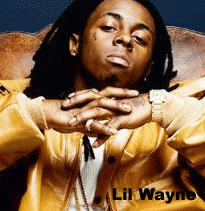
LilWayne-225Unlike other rappers, Lil Wayne aka Weezy has never prided himself as being the “Malcolm X of the Hip Hop generation” and when he has his frequent run ins with the law he isn’t all over the TV yellin’ that he is “a black man being persecuted in America just for being black”  a la Dr. Henry “Skip” Gates.

He is what he is, a thug; a thug with a college education but never the less, a thug. So there is very little that would come out of his gold toothed grill that would surprise me.

However, his new collaboration with Dem Franchize Boyz got my attention on several different levels.

The song, which is the latest  Internet sensation, has been generating thousands of hits on social networking sites. While some will argue that Lil Wayne and the Boyz are not talking about literally tying someone to an old oak and pulling out a bullwhip but are metaphorically referring to cooking up crack, that makes the song even that much sicker as it embraces the genocide of black people, past and present.

While some may quickly point to the ignorance of the rappers to blame for “Whip it,”  the finger should really be pointed at the ignorance of a black community that would allow such a song without protest.

When I say ignorance, I am not talking about the negative connotation of lacking intelligence but the functional definition of lacking proper information in regards to the history of African people in this country.

The major problem when discussing the matter of slavery and race overall, in this country is a lack of a proper point of reference in order to put the discussion in the proper context.

For the last century, the issue of slavery has been glossed over by a Hollywood that was more than happy to give us the happy -go- lucky Uncle Remus type or the mammy who was happy to birth massa’s babies. Matter of fact, for most Americans, the image of slavery does not get any more graphic than “Kunta Kinte” getting 40 lashes for not accepting the slave name, “Toby.”

Also, the educational system of this country has relegated any discussion of black history to a 28 day period in February and the content of that discussion does not, in any way, seek to explore the depths of the brutality visited upon the victims of the Trans Atlantic Slave Trade confining it to a rosey picture painted of a post Emancipation America that merely substituted one form of slavery (chattel) for another (economic).

It must also be noted that while physical slavery was horrific it was the mental enslavement that has been the most destructive. For long after the physical chains are gone, the mental chains remain.

While many may say that this mentality is exclusive to the ‘ hood, it has historically been the black middle class that discouraged any identification with Africa, therefore pre-1865 history was a taboo subject for the upwardly mobile black bourgeoisie.

As Dr. Carter G. Woodson wrote in 1933, “the mis-educated Negro joins the opposition with the objection that the study of the Negro keeps alive questions which should be forgotten.”

So the severity of the slave trade was lost on future generations.

This is also exhibited among members of a Hip Hop generation who will constantly debate the lyrical prowess of rappers who celebrate the abuse of black women and glorify black fratricide but will shy away from any mention of the heinous crimes committed against black people by Europeans.

So we are left with an overly simplistic understanding of the thought process that allows songs like “Whip It” to be embraced in 2009.

This lack of historical depth is exacerbated by the fact that many perceive that we are living in a “post racial” America where the outrage over thousands of examples of police brutality against black men can can be squashed over beer and pretzels.

As Bruce Bridges writes in his book “Reclaiming the African Mind, “the intent of the system of slavery was to rob the African man of his responsibilities of manhood and emotionally castrate him.”

While rappers like Jay Z have dedicated themselves to DOA (the death of the auto tune) we must dedicate ourselves to DOI (the death of ignorance) by raising our voices against ‘Whip It Like a Slave.”

We must do this in honor of those whose lives we celebrate in August and whose deaths we mourn.

As Soledad brother George Jackson once wrote:

“When I revolt, slavery dies with me. I refuse to pass it down gain. The terms of my existence are founded on that.”

Paul Scott writes for No Warning Shots Fired.com  http://www.nowarningshotsfired.com
He can be reached at (919) 451-8283 info@nowarningshotsfired.com
Return to Davey D’s Hip Hop Corner

How the Healthcare Debate Got Hijacked

daveydbanner

Share/Save/Bookmark//

If we let these powerful interests get their way, we’ll see more outlandish increases in premiums, and millions more people being denied care.

How Corporate Media, Sellouts in Congress and Industry Bigs Have Hijacked the Health Care Debate

By Joshua Holland, AlterNet. Posted July 29, 2009.

If you can frame the terms of a debate, you’ve gone a long way towards winning it before you’ve begun. Tragically, Republicans, the health care industry and business-friendly Blue Dog Democrats have largely been able to do exactly that, with a substantial assist from the corporate-owned media.

They’ve successfully focused the health care debate on the short-term costs to the federal government’s bottom line, obscuring the potential impact that a meaningful realignment of the health care system would have on the economy as a whole. In so doing, opponents of reform have hoodwinked much of the public into believing that investments in America’s national health care system will wind up costing individuals more than they’d gain from the effort.

In fact, they’ve done such a good job that much of the discourse has revolved around what is arguably one of the least relevant aspects of the proposals being debated in Congress: whether they “cost too much” or are “deficit neutral” in terms of their impact on the federal budget over the next 10 years.

Much of that discussion has been fueled by a series of estimates issued by the Congressional Budget Office (CBO) — estimates based on incomplete drafts of the legislation now moving through Congress. Yet by and large the mainstream media have dutifully repeated the spin without mentioning that the critics are touting the CBO’s preliminary projections as definitive and final.

Even worse, a study of cable news reporting by the media watchdog group Media Matters found that when the CBO issued a follow-up to an earlier, more pessimistic projection of the bill passed by the Senate Health, Education, Labor and Pension (HELP) Committee, it went all but unreported by the cable news networks. CBO projected it would cost $611 billion, while an earlier estimate — which was dissected eight ways to Sunday by the same cable networks — suggested it would run an even trillion.

There are also benefits contained within the proposals that are impossible to score in limited budgetary terms. For example, if the House bill were passed as it stands today, it would all but eliminate health-care related bankruptcies by capping the amount of out-of-pocket expenses with which a family or individual can be burdened. A group of researchers from Harvard studied over 2,300 bankruptcies filed in 2007 and concluded that more than 6 in 10 were due to medical causes. What is it “worth” to our society to ease that kind of pain? It’s not in the purview of the CBO to say.

That’s just one of several reasons why the budgetary impact over 10 years of a program of long-term reforms is such a poor metric for judging its value. First, the very same preliminary CBO estimates that are being used to gin up fear of a budget-busting boondoggle that will saddle our grandkids with debt for generations to come also suggest that the proposals would extend health coverage to tens of millions of uninsured Americans. Why such a significant improvement in the health and economic security of so many real people should be expected to come at no cost to the government’s balance sheet is a mystery.

Second, it fundamentally obscures the actual terms of the debate in Congress. Leaders in both the House and Senate have promised that the final legislation will be fully-funded — “deficit neutral” — and the battle lines have in fact been drawn not only around what form the final bill will take, but also how to pay for it. 

Moreover, the narrative is based only on the impact of the proposals on the federal budget in isolation, all but ignoring the larger effect that fixing the system (if done right) might have on the economy as a whole. Under consideration are various proposals designed to rein in the spiraling cost of health care across the entire system.

So these are not sunk costs, but investments that analysts expect will have a significant pay-off. A study by David Cutler of Harvard and the Rand Corporation’s Melinda Beeuwkes Buntin estimated that just three elements within the larger proposals offered by Democrats so far — all of which come with start-up costs in the beginning — would result in $550 billion in savings to the larger health care system over the next 10 years (PDF).

Those kinds of savings are desperately needed over the longer term — the status quo, if allowed to continue on track, threatens to undermine the competitiveness of American business and leave more and more people without coverage (researchers have found that fast-rising premiums, more than any other factor, has driven the decades-long growth in the number of uninsured Americans).  And skyrocketing premiums force employers to squeeze wages, which impacts communities’ tax revenues and deprives the economy of consumer dollars.

So the more salient question is: how can we possibly afford not to fix the current system? In 1960, we spent less than 5 percent of GDP on health care and all but a small number of working-age Americans had access to care. Today, health care spending represents around 17 percent of our economic output, and about one in six lack coverage. And, according to virtually every projection out there, it’s only going to get worse unless we make substantial reforms soon.

In 2007, the U.S. spent an average of $7,290 per person on health in total (both public and private care). The average costs in other wealthy countries — generally with better outcomes — was $2,964. Here’s a graphic representation of where we’re likely to go in terms of costs if we leave things as they stand

healthcare1-blogimage_cbohealth

 (click for larger version)

As economist Josh Bivens of the Economic Policy Institute wrote, the non-budgetary effects of fixing the system “will pay off big for American families in the form of lower premiums, co-pays, and space for wage growth.”

Bivens adds, “The reason is simple: health care is an area where the more costs are loaded up on the federal government, the more efficiently care tends to be delivered overall.” Bivens points out that although the U.S. spends far more than other advanced countries on health care, far fewer of those dollars are in the public sector, and suggests that the difference is a major reason why we get far worse results (in terms of access, life expectancy at birth, our chances of living until age 60 and most other meaningful metrics).

To illustrate the savings built into public-sector health spending, he goes on to cite an analysis by the Lewin Group of competing approaches to reform that measures the impact on both federal spending and overall health spending. The results are summarized in this graphic:

healthchart2lg-storyimage_lewin

(click for larger version)

On the left, is Pete Stark’s, D-Calif., proposal for a single-payer system (one that closely mirrors John Conyers’, D-MICH., HR 676, which has 85 co-sponsors in the House). As you can see, while it extends coverage to everyone — which obviously costs money — it is the only approach studied that would also result in a reduction of health care spending overall.

In the middle is a hybrid along the lines of the House bill (the Lewin Group used a similar proposal promoted by the Commonwealth Fund). According to Bivens’ analysis, although “federal health spending [would] rise” as the system was first implemented, the “increases in federal spending … are accompanied by large reductions in spending by households and businesses. Net total health spending would rise by less than $18 billion, an amount that is more than explained” by new funding to cover the previously uninsured.

The right column, appropriately, shows the impact of Mike Enzi’s, R-WYOM., plan, a boilerplate conservative proposal based on offering tax cuts to those who purchase private insurance and slightly expanding eligibility for Medicaid. It does increase federal spending by slightly less than the other approaches analyzed, but in the process it also increases total health care costs more than the amount of tax dollars sunk into the plan, while insuring only the relatively small number of people who make just a bit more than the current cut-off for Medicaid.

But even that standard doesn’t tell the whole story. Looking only at how the current proposals impact health spending over a 10-year window ignores the longer-term impact they might have. For example, contained within both the Senate and House bills are provisions that would create more incentives for preventive care. Most analysts agree that prevention costs a lot less than waiting for people to develop serious illnesses and then treating them, as we now do, but those savings can only be fully realized over the long term. If a young obese person visits a doctor whom he or she might not have seen because of a lack of insurance, and as a result of that visit makes changes that prevent him or her from developing diabetes — with all its attendant complications — it will save the health care system a small fortune, but probably not for several decades.

Finally, there’s a sad irony to this whole discussion — one that few commenters have bothered to note. It is true that the potential savings contained in the proposals currently on the table are limited, but it is also true that the reason for that shortcoming is that Congressional leaders have ushered through a series of bills that are far less expansive than progressive reformers have long advocated, and that’s only been done to mollify the very same Dems and Republicans — those ideologically opposed to the effort and/or especially cozy with the “disease-care” industry — who are now complaining about the limited potential for savings (It’s enough to make your head spin).

Just consider the “public insurance option.” While progressives were promised a “robust” public insurance program that would be open to all comers, what emerged from the Senate HELP Committee and from the leaders of three House committees was a pale shadow of what had been touted during last fall’s campaign season. Instead of insuring as many as 130 million Americans as candidate Obama suggested his public option would, lawmakers restricted eligibility for the program in such a way that the CBO’s preliminary estimate suggested that just 10 million Americans would be enrolled in the public insurance plan by 2019. (That’s out of about 30 million who could buy insurance — either public or private — through the publicly-run insurance exchanges.) This was a nod to the power of the insurance industry — nothing more, nothing less.

In designing a (pretty good) system, but then tightly controlling who could gain access to it, the potential for cost-containment — through greater economies of scale, more bargaining power with providers and a decrease in the shuffling of paperwork that’s estimated to account for about 30 percent of our health spending — has been greatly diminished.

So, next time you see some congressional meat-puppet on TV discussing how much a plan will cost, or lamenting its limited potential for cost-containment, keep in mind that it’s his or her ideology that is directly to blame for those shortcomings.

 It’s only because of pressure from industry groups, Republicans and Blue Dog Dems that congressional leaders took single-payer off the table (and threw advocates out of the room) and gave us a limited public insurance option — a pale shadow of what reformers had been promised. Now, those same forces are bent on killing an already watered-down proposal. If they succeed, we can expect more human suffering, more outlandish increases in premiums, more people being denied care, an increase in the numbers of uninsured and a continued drag on the American economy.

National hip-hop conference in Seattle this week

daveydbanner

Share/Save/Bookmark//

 Hip Hop National Congress 8th national conference comes to Seattle’s Central District, July 29 to August 2.

Hip-hop is making a stand this week in Seattle.

Starting today, for a week, the Hip Hop Congress 8th National Conference comes to Seattle, at various venues across the Central District. Through workshops and concerts, the conference focuses on developing hip-hop business and educating the next generation.

“Seattle is a hotbed of talent, intelligence and leadership,” said Hip Hop National Congress founder and executive director Shamako Noble. “It only made sense to connect with that energy for our annual conference.”

Hip Hop National Congress is a grass-roots cultural organization with 70 chapters across the world. The nonprofit aims to preserve and move hip-hop forward through concerts, festivals and teach-ins.

Aptly themed “This is our time,” the weeklong Seattle conference moves away from analyzing hip-hop to doing it and being it. In addition to training on management and distribution, there will be screenings of the films “New Muslim Cool;” 2003 Sundance film “The Beat”; and hip-hop and education in South Africa documentary “Masizakhe.”

The Knox Fam will be performing at the National Hip Hop Conference this weekend in Seattle

The Knox Fam will be performing at the National Hip Hop Conference this weekend in Seattle

Independent artists from all over the country will perform throughout the week, including AKIL THE MC of Jurassic 5, The Jacka, DLabrie, Knox Fam, Black Stax, Mic Crenshaw, Quanstar, Toki Wright, Raashan Ahmad of Crown City Rockers, Rahman Jamaal and Congress founder Noble.

“This year we’re just bringing that love and energy to the 206, and we’re gonna take that same love and energy back across the world,” said Oakland rapper DLabrie, who has performed for the past four years at the annual conference.

The conference also offers free studio time with registration. Coordinators plan to compile all the rhymes recorded during the conference into an album.

There’s also going to be an exhibit of photos taken from Dope Emporium, hip-hop arts expos that took place in the Bay Area, Los Angeles and Kentucky.

Dovetailing with the conference is the UmojaFest, which includes an African-American heritage festival and Parade. There will also be a youth rally.

“I just want to show people that there’s more than just living with violence … that you can be peaceful,” said youth rally coordinator Darrin Ravenel, 15.

The location of the conference reflects that message as well.

“The conference is in an area where there was a lot of youth violence last year,” said Noble of the Central District conference. “I hope we can contribute to the healing process.”

Marian Liu: 206-464-3825 or mliu@seattletimes.com

source:http://seattletimes.nwsource.com/html/musicnightlife/2009554475_hiphopcongress29.html

Return to Davey D’s Hip Hop Corner

More Racial Drama in Texas-Hispanics Keep Out

daveydbanner

Share/Save/Bookmark//

One week after a dust up between Neo Nazis, Ku Klux Klansmen and Black Panthers in Paris, Texas, we have another racial incident in a state that is on the verge of changing while some of its old guard and ignorant desperately try to hold on. This one is small compared to the dust up in Paris, but represents an attitude that sadly gets spouted or implied on TV news shows hosted by the likes of Lou Dobbs and Glen Beck. In Azel, Texas not too far out of Dallas, we have a couple who have posted a sign that says ‘Hispanics Keep Out’

When confronted by concerned neighbors the 72 year old woman of the house who declined to give her name stated that she was within her ‘American’ rights to put whatever sign she wants to on her property.   For those who are outside of the Lone Star state bear in mind that Texas is very strong when it comes to property rights. You can get shot and the owner not be in trouble if you decide to come tresspassing on people’s property.

The woman’s stupidity and pure ignorance is borne out by the fact that she says she doesn’t want anyone who is here in this country illegally coming to her house.  However, she doesn’t specifically state ‘illegal’ or ‘undocumented’ Hispanics keep out.  Of course one might point out to this Azel woman,  indigenous folks aren’t the ones here illegally- if anything its the woman in question but that’s for another column on another date.

As was stated earlier Texas, is going through some serious growing pains. As the sate becomes Blacker and Browner in many sectors there are those who simply will not go with the flow and adapt. Most of the people in Azel Texas are not in agreement with the sign and have publicly stated so.. but there is an ilk of people some who hold power and set policy and some who have been granted a platform in national and even local media who espouse such views. They need to die off  and then we can start to really build a multi-cultural nation free of their ignorance and racial bias. 

This incident comes in the middle of a firestorm where conversations about race are now center stage in public conversations. Much of it stems from the Paris, Texas dust up and the incident in Cambridge, Mass involving Harvard professor Henry Louis Gates being arrested for breaking into his own home and his friend  President Obama commenting by calling the place stupid.  Gates who accused the police of racially profiling him sparked off a big debate on the issue. Now with this ‘Hispanics Keep Out Sign in texas, this no doubt will keep us talking.

-Davey D-

Return to Davey D’s Hip Hop Corner

This sign represents a sentiment that far too many feel comfortable expressing in public discourse

This sign represents a sentiment that far too many feel comfortable expressing in public discourse

The Audacity of Post-Racism

daveydbanner

The Audacity of Post-Racism

Share/Save/Bookmark//

     By Adam Mansbach 

 adammansbach-225I watched Barack Obama’s “Toward A More Perfect Union” in my living room, on a laptop computer with tinny speakers.  Like millions of other Americans, I felt a surge of amazement, a sense of expanding possibility, at the sheer fact that a black man with a good chance of becoming president was speaking about race and racism on national television for half an hour.  Such an eloquent and thoughtful discourse on any topic far exceeds what we have come to accept of American politics; to hold forth on an issue so pernicious and so seldom approached with honesty is remarkable.

 My enthusiasm held until Obama let white people off the hook. Though I grasped the political necessity of the move, my expectations of this man were sufficiently high that it was disheartening to hear him fudge the difference between institutional racism and white bitterness.  Three weeks earlier, I’d felt a similar sense of letdown when, challenged at a debate in Ohio to further denounce Minister Louis Farrakhan, Obama responded by articulating the need to mend black-Jewish relations, then proceeded to reinscribe the very paradigm that has served to rend them. 

 I say this as a white person, a Jew, and an enthusiastic Obama supporter.  My reaction, it also bears mentioning, was colored by the fact that when the Ohio debate aired I had just published a novel entitled The End of the Jews, which chronicled three generations of a Jewish-American family and also took as its subject the evolving relations between black and Jewish artists throughout the 20th century. Toward A More Perfect Union marked the first time I’d sat on my couch in weeks; I had just returned from a book tour speckled with dates at Jewish Community Centers and synagogues, in addition to the standard bookstores and universities.

Satch Sanders

Satch Sanders

This level of interaction with Jewish communities was utterly new to me. No one had ever considered me a Jewish writer before, except the white supremacists who’d protested the speaking gigs for my previous novel, Angry Black White Boy, and accused me of “masquerading as white.”  I was raised by secular parents raised by secular parents, and at the age of twelve I was expelled from the Sunday School And Half-Price Car Wash For The Children Of Agnostic Cultural Jews after getting into a fight with my teacher about whether Satch Sanders of the 1940s Boston Celtics was the only black person in history not to abandon his community after achieving success.  It was the culmination of a lesson devoted to the great Jewish Exodus – from Roxbury, Massachusetts in the 1950s, when the blacks moved in.


I won’t blame the encounter for souring me on Judaism; more accurate would be to say that as a kid growing up in a largely Jewish suburb, I simply conflated Jewish with white, and thus my frustration with the complacency and hypocrisy of white liberals (I didn’t know any conservatives) extended automatically to Jews.

The pervasiveness of injustice was something I had always intuited; obsessing over fairness on a personal level is a childhood instinct that can remain personal and fade, or broaden into an analysis of the world and grow stronger. But my absorption in the still-underground culture of hip-hop was what allowed me to confirm that things were not well, very close by and yet in another world altogether. 

Public Enemy

Public Enemy

I believe the music to which one is exposed at twelve is the most important one will ever hear; I was that age in 1988, when Public Enemy, Boogie Down Productions, Stetsasonic, The Jungle Brothers and N.W.A. were articulating the insidious realities of police brutality, a Eurocentric school system, American collusion in South African apartheid, and ghettos ravaged by crack and guns – all over unbelievably dope beats. Thanks to METCO, a busing program that constituted Boston’s uni-directional form of school integration, these tapes made their way to the suburbs and to me.


Hip-hop, at the time, was one of the only sites in American life to dislocate whiteness from its presumed position of centrality. By listening, I was listening in. And only by physically seeking out the parties, the shows, and the record stores that sold 12” singles – all located in the aforementioned Roxbury and other equally un-white neighborhoods – could I hope to participate. Doing so meant venturing outside of comfort zones, rendering myself visible as different. 

Soon, it also meant a chance step away – semantically, momentarily – from the nimbus of skin privilege and the complicity in injustice it afforded me.  This is to say that hip-hop became a different kind of comfort zone: contested, and all the more beloved for it.  Hip-hop demanded that I cast off romantic notions of colorblindness and investigate oppression.  Not just as a relic of the past, as it was presented in school.  Nor as something held at bay by regular donations to the NAACP or the Southern Poverty Law Center.  But as something monstrously alive, a fact of life even a fool could see  – so long as that fool knew where to look. 

By taking casual and institutional racism for granted, hip-hop created space for follow-up questions – quintessentially hip-hop questions like how do we flip this? Well, by exploiting exploitation: by using the black kid as a decoy in the art supply store, while the white kid steals the spraypaint.  By having the black kid buy the beer in the white neighborhood, since the old white store owner can’t tell fifteen from twenty-one so long as fifteen is darker than blue. 

Of course, nobody ever got carded at Giant Liquors in the ‘Bury; you could ride in on a tricycle and leave with a case of Olde English 800.  The realization was sobering, and it was not the only one.

Though it opened my eyes, hip-hop also let me bullshit myself.  It permitted me to believe that the opposite of white privilege was not working to dismantle that privilege, but embracing and being embraced by blackness. Thus, as long as my friends were black people who didn’t like white people, I figured I was doing my part. The experience of being a token whiteboy was one of being identified, tested, and ultimately accepted; it was about feeling exceptional, in the word’s truest sense. Had I pondered my status a bit harder, I might have concluded that it was not to be attributed to an uncanny understanding of the plight of black people and the true nature of racism, but rather to the fact that I was a little less oblivious and smug than the average white kid, a little more willing to put myself on the line.  Also, I could rap.

It would take me years to realize the flawed nature of some of the racial equations by which I lived, but one thing I did grasp immediately, given the company I kept, was the unspoken difference between the political and the personal.  Between Whiteness, as a concept that engendered fury and pointed jokes, and an individual white person, who would be judged on his merits – if he stuck around long enough to realize that a rant about The White Man didn’t mean he ought to leave before he got his ass kicked, but rather the opposite.

I delve into the race politics that marked my adolescence (and hip-hop’s) because the manner in which their sharpness has blurred is the backdrop for “Toward A More Perfect Union.”  Hip-hop is now America’s dominant youth culture.  It still dislocates whiteness, but in a way far less conducive to personal growth or rigorous assessment of injustice.  White hip-hoppers of my era constructed elaborate rhetorical structures intended to accommodate paradox, to acknowledge the devilishness of white supremacy without condemning ourselves.  Today, white youth are confounded by a different paradox: the divergence of cultural capital and hard capital in American life. 

Levi Johnston

Levi Johnston

Largely because of hip-hop, American coolness is coded and commodified more than ever as American blackness.  White kids all over the country believe, based on the signifiers flashing on their TV screens, that blackness equals flashy wealth, supreme masculinity, and ultra-sexualized femininity – interrupted occasionally by bursts of glamorous violence, and situated in a thrilling ghetto that is both dangerous and host to a constant party.  They feel locked out of the possibility of attaining that lifestyle, because of the color of their skin.  They don’t know where to find a workable identity, unless they embrace the “I’m a fucking redneck” ethos of Levi Johnston, Sarah Palin’s future son-in-law.  All this strikes them as oppressive, and their resentment is compounded by the fact that they possess no language with which to discuss it. 


Were any of this utterable, one could present them with reams of evidence demonstrating that in all the important ways, white people in America are anything but marginal.  Traditional markers of prosperity – the inheritance of wealth, the rates of home-ownership, the comparative levels of education and income and incarceration – reveal just how privileged whites remain relative to blacks.  A recent study conducted at Princeton University revealed that a white felon stands an equal chance of being granted a job interview as a black applicant with no criminal record, and there are dozens of other studies that each speak volumes.

Nonetheless, confusion persists even among the kind of coast-dwelling, liberally-raised, relatively well-educated white kid I once was about the basic facts of racism today – to say nothing of everyone to their ideological right.  They want to know if the playing field is level; they can’t tell, and they’ve got their fingers crossed that it is because if it’s not they’ve got to confront things no one has prepared them to face.  Many of them would rather believe, and in fact suspect, that it is slanted in black people’s favor.

At the very least, they’re eager for a kind of moral compromise, one with an air of the fairness so appealing to young minds: racism cuts in both directions.  Anyone can be its victim, just as anyone can refuse to perpetrate it.

This is what Barack Obama provided on March 20th in Philadelphia.  After a succinct but powerful summary of institutional racism’s history and its practical and psychic effects on black people, he added that 

      “a similar anger exists within segments of the white community. Most working- and middle-class white Americans don’t feel that they have been particularly privileged by their race… as far as they’re concerned, no one’s handed them anything…. So when they are told to bus their children to a school across town; when they hear that an African-American is getting an advantage in landing a good job or a spot in a good college because of an injustice that they themselves never committed; when they’re told that their fears about crime in urban neighborhoods are somehow prejudiced, resentment builds over time… to wish away the resentments of white Americans, to label them as misguided or even racist, without recognizing they are grounded in legitimate concerns – this too widens the racial divide, and blocks the path to understanding.” 

Obama’s insights about white anger are salient, but to characterize ire at affirmative action and at the thought that others might think them prejudiced as ‘similar’ to the frustration felt by the victims of entrenched structural racism is disingenuous, and even irresponsible.  I don’t dispute that white resentments should be addressed, if only because white people will refuse to grapple with race unless they are allowed to centralize themselves.  But to begin such a discussion – the mythic National Dialogue on Race – without acknowledging that structural racism is a cancer metastasizing through every aspect of American life is impossible.  Call it, to borrow a catchphrase from the foreign policy side of the election, a precondition. 

Implicit in the resentment Obama identified is whites’ belief that they should be significantly advantaged because of their race.  They are not angry because people think they’re advantaged when they aren’t, they’re angry because they don’t feel advantaged enough.  The essence of white privilege is not knowing you have it; white people in America are bicyclists riding with the wind at their backs, never realizing that they owe part of their speed – whatever speed that is – to forces beyond their control.  By no means does this guarantee success.  But few whites are conditioned to contemplate how much worse off they might be if they had to grapple with factors like police profiling and housing discrimination, in addition to the other travails of being an American in 2008.

To place the experiences of white and black Americans on an equal footing, Obama must abandon the empirical and speak the language of the emotional. Hence, the focus on how people ‘feel’ – privileged or not, racist or not – rather than on the objective realities of what they have and do and say. 

The soft-focus abstraction of racial realities goes beyond Obama’s speech.  It has been a hallmark of the entire presidential campaign, with its musings on whether Obama is too black, black enough, or ‘post-race.’ Naturally, one must be black to be ‘post-race,’ for the same reason that no one thought to ask whether Hillary Clinton or Mitt Romney was too white or not white enough.  The purpose of abstracting race is to obscure racism, to elide the fact that a black person is never so lacking in blackness – culturally, personally, politically, or by any other standard – to find himself exempt from discrimination.

The desire for personal post-race status is an impulse I encounter frequently.  Without fail, it comes from well-intentioned white people looking to be absolved of whiteness – not through their politics, but their biographies. They listen studiously to my take on race privilege, then raise their hands to identify themselves as white but gay, or white but Irish and thus part of an ethnicity that was once considered nonwhite, or white but from an all-Dominican neighborhood.

My response to such statements is always the same.  I have no desire to belittle any aspect of your identity, I say, but either you walk through this world with white skin privilege or you don’t.  There’s no such thing as being pulled over for Driving While Wanting To Be Black. Sometimes how you ‘self-identify’ is irrelevant.  You could be a gay Irish dude from the heart of Washington Heights, with a Senegalese lover and a degree from Morehouse to boot.  The cop and the judge and the loan officer and the potential employer are only going to check one mental box. And when they do, you’re going to benefit from the way they see you, like it or not.

‘Post-race’ suggests, not without an air of self-congratulation, that we are moving toward an acceptance of the multifaceted nature of identity – learning to assimilate, for instance, the idea that a human being can be both Kenyan and Kansan. This may be true.  The problem is that post-race inevitably implies post-racism. To conflate the two ignores the very nature of oppression.

I witnessed this perspective recently at a talk I gave in Minneapolis.  A woman in the audience stood up to explain that racism would soon be vanquished without any concerted effort on our part, and cited the infant on her hip as proof.  She was Korean, she said, and her husband black and Italian.  Their son was all three.  Any machine that attempted to categorize him would explode. 

 The sad truth that this child will someday be forced to color in a single bubble on a Scantron form like everyone else speaks to the particular insidiousness of race.  It is a construct, not a question of biology or self-image.  It will not vanish in the face of multi-ethnicity, because it exists for a purpose, and that purpose is hierarchy.

Had Obama not lent so much currency to the notion of a kind of equality of racial bitterness, enacted on a field that everyone thinks favors the other team, the case of Geraldine Ferraro might not have played out as it did: as a spectacular example of racist action forgiven because racist ‘feeling’ is not found, and an abject, to-the-political-death refusal to acknowledge the difference between structural racism and white resentment. 

 The former Congresswoman and vice-presidential nominee forfeited her place in the Clinton campaign when she told reporters that “If Obama was a white man, he would not be in this position,” just as she would not have been tapped for the vice presidency by Walter Mondale had she not been a woman.  The difference between being appointed to a ticket and winning a record number of primary votes across the entire nation seemingly escaped Ferraro, who elaborated on her remarks a few weeks later in a stunning Boston Globe op-ed: 

“Since March, when I was accused of being racist for a statement I made about the influence of blacks on Obama’s historic campaign, people have been stopping me to express a common sentiment: If you’re white you can’t open your mouth without being accused of being racist. They see Obama’s playing the race card throughout the campaign and no one calling him for it as frightening. They’re not upset with Obama because he’s black; they’re upset because they don’t expect to be treated fairly because they’re white.” 

Contrary to Ferraro’s recollection, the most striking aspect of the media’s response to her initial comments was the consistency with which pundits and commentators across the ideological spectrum fell all over themselves to avoid accusing her of racism.  Seldom, in political life, has the sinner been granted such immediate distance from her sin. 

But this has become the blueprint for public figures who make inflammatory remarks about race – as long as they’re white.  First comes the claim that their words do not reflect their hearts. This puts the ball in the commentariat‘s court. The commentariat duly concurs that the figure is not racist, despite all evidence to the contrary. Then, after a probationary period of a few months, the figure quietly resumes his or her role in public life.

 “I am not a racist.” So said Bill Clinton on ABC News shortly after the conclusion of his wife’s presidential bid, defending himself against accusations of race-baiting.

 “I’m not a racist, that’s what’s so insane about this.” So said Seinfeld’s Michael Richards in 2006, explaining himself on The David Letterman Show after a video surfaced of him dropping multiple n-bombs on a black heckler at a comedy club.  Mel Gibson, who disgraced himself with an anti-Semitic rant the same year, put forth the same argument: I’m not a racist, merely a guy who said something racist. It came out of nowhere, for no reason, and it doesn’t reflect who I am. Ditto Don Imus, after his 2007 “nappy-headed hoes” remark. And Senator Trent Lott, whose pro-segregation comments cost him his role as Majority Leader in 2002, though not his job.

It is a dramatic reversal of the standard criteria for judgment. Usually, we seek to be judged by our actions, not our thoughts, and we accept that the former is a manifestation of the latter.  The success of this strategy, it would seem, hinges on the fact that it has become more acceptable to spout racism in the public arena than to accuse someone else of spouting racism.

On to the thesis Ferraro put forth: that whites in America have been rendered voiceless, that to be black is to be ‘lucky’ (to paraphrase another of her comments about Obama), that whites are the new racial underclass, that “they’re attacking me because I’m white.”  They are notions that rhyme neatly with the identity frustrations of white youth. And Obama’s speech would seem to grant them legitimacy, if we accept the argument that whatever people feel about race must be treated with the same respect as the facts.

I have no problem believing that people have been stopping Ferraro – although I suspect ‘sidling up to’ would be more accurate – to voice this ‘common sentiment.’  One might well ask, though, how she has been so unaffected by the racial gag order against which she rails.  One might wonder why her silent majority of whites can so readily muster outrage at their own ‘unfair treatment,’ yet remain so blissfully unruffled by anyone else’s.  If one is feeling particularly optimistic, one might contemplate how to turn such complaints into what’s known as a “teaching moment.” Could white America’s cresting indignation at its own marginalization be the Rosetta stone that allows it to understand how other people in the country feel?

Eh.  Probably not.

On the other hand, the pressure on Obama to denounce Minister Farrakhan – which directly preceded the pressure to denounce Reverend Wright – offered the candidate a chance to speak a difficult truth to a valuable constituency and play a role in genuine healing. Certainly, Obama’s rhetoric spoke to such a desire: 

      “What I want to do is rebuild what I consider to be a historic relationship between the African-American community and the Jewish community. I would not be sitting here were it not for a whole host of Jewish Americans who supported the civil rights movement and helped to ensure that justice was served in the South. And that coalition has frayed over time around a whole host of issues, and part of my task… is making sure that those lines of communication and understanding are reopened. 

But rather than turning to that task, Obama proceeded to do precisely what the current, sorry state of black-Jewish relations demands. He iterated his rejection of Farrakhan’s endorsement, citing the Nation of Islam leader’s anti-Semitism, and left it at that.

For twenty-five years now, the specter of black anti-Semitism has been used as the rationale for tremendous Jewish disinvestment – practically, emotionally, financially – from the black community and the legacy of progressive work that blacks and Jews once shared. A handful of comments from civil rights-era black leaders provide most of the evidence. For many in the Jewish community, Jesse Jackson will always be the man who called New York City “Hymietown” in 1984.  Al Sharpton will always be the man who inflamed a tense situation in Crown Heights in 1991, and Farrakhan will always be the man who, in 1983, called Judaism a “gutter religion.” 

 The fact that all three have apologized, moved on, and made amends does not seem to matter – that Jackson was instrumental in restoring peace to Crown Heights, that Sharpton’s 2004 presidential run was an exemplar of inclusiveness, that Farrakhan has been meeting regularly with a group of rabbis for more than ten years now, in an effort to mend fences.

Nor does it seem to matter than none of these men speaks for the black community at large, or that Obama’s candidacy and the emergence of hip-hop generation leaders and grassroots political organizations prove that the civil rights generation is no longer in the driver’s seat. They remain central in the Jewish memory of my parents’ and grandparents’ generations. Their comments are frozen in amber, never to be forgotten or forgiven.  Thus, denunciations of Farrakhan – despite the declining influence of his organization and his own outreach to the Jewish community – remain red meat for many Jewish voters.

How can this be, when the Ferraros, Imuses and Lotts of the world tiptoe back into the mainstream after a few probationary months, their best intentions unimpugned?  Even Gibson, whose anti-Semitic rant was truly epic, had his incoherent, responsibility-dodging apology promptly accepted by the Anti-Defamation League, a Jewish watchdog group that has never stopped vilifying Farrakhan.

The story behind the story is complex, one of changing identity in a changing country. Perhaps no two groups in America share such an intimate history as Jews and blacks; by turns it has been beautiful and tense, unified and vituperative. Both groups have been shattered and scattered, displaced and enslaved, and both have made outsized contributions to the cultural life of America. Both communities, perhaps by the nature of diaspora, have wide margins, in addition to existing on the margins of American life.  By this I mean that the ratio of people who feel ambivalent, ambiguous, full of unresolved questions about their blackness or their Jewishness, is high in relation to the number of people nestled snugly in the bosoms of those communities. The pain and perspective engendered by this double marginality are important ingredients for art, and in the desire for social justice.

Jews and blacks have been united by this shared Otherness, and also pitted against one another because of it.  At the root of the Jewish retreat from the coalition of which Obama speaks is the way in which Jewish assimilation has relied on the immutability of black Otherness as a foil.  It has been an Other more Other than their own, and sometimes one to measure progress by their distance from. 

As the Jews have been accorded more and more of the privileges of whiteness, many have decided, consciously or otherwise, that it behooves them to change their bedfellows. Fifty years ago, it was far more difficult for Jews to be complacent or hypocritical about race: they didn’t have the option to pay mere lip service to the cause because they understood that they were implicated in it, both as potential victims and potential oppressors. The benefits of whiteness were fewer for Jews, and more readily contested.  Thus, the morality of allowing them to accrue was easier to address honestly, and find lacking.

There is, of course, much more to the story – more than I have the space to go into, and also more than I know.  I realize, too, that I have addressed the reasons for Jewish pullback from Obama’s “historic relationship,” and said nothing of black actions or motivations.  This is not because I wish to cast all the blame on one side, but simply out of a desire to stick to what I know, as someone who has discussed race with Jewish audiences quite a bit lately.

One question I was asked regularly at JCCs, as I proposed that more disturbing than the pickled comments of Farrakhan, Jackson, and Sharpton was the reasons Jews held so dearly to them, was “What about Jeremiah Wright?”

The query was always met by nods and murmurs of agreement from the audience – which, I should add for the sake of context, tended to be made up largely of people born well before the Truman administration.

“What about him?”

 “Well, he’s said some things… some anti-Semitic things…”

 “Like what?”

Silence.  Had my interlocutors responded that Wright’s church had honored Farrakhan as “exemplifying greatness,” that would have been something.  But it never happened.  Rather, the logic at work seemed to be that a black religious leader was in the news for inflammatory statements, and therefore he must be an anti-Semite.  Even if no evidence to that effect came to mind. 

What will it take, then, to reverse the “fraying?”  What more could Obama have said in Ohio about blacks and Jews, or in Pennsylvania about the larger conundrum of race?

 Any answer begins with radical honesty of the sort most politicians can ill afford to muster.  In Ohio, Obama could have risked declaring himself committed to moving beyond the old politics of suspicion and condemnation, detailed the reasons for the splintering of the black-Jewish alliance, and laid out a plan for reestablishing trust and a commonality of purpose. In Pennsylvania, he could have framed the road to racial reconciliation in the same terms he has been brave enough to apply to climate control: as a journey that will require real sacrifice, profound reevaluation of our lifestyles and the unsustainable practices on which they’re built.  He could have looked into the living rooms of white America and declared that institutional racism is alive and well – that it benefits all those considered white, and also exacts from them a high moral toll.

 But the political costs of such statements would have overwhelmed Obama’s campaign. And while the senator’s commitment to presiding over a sea change in America’s racial climate appears to be perfectly sincere, it is the level of commitment for which he is willing to call that matters.  Soft-peddling the reality of white privilege might help bring people to the table, but if they come under false pretenses, they won’t stay. 

All of this points up the fallacy of a national conversation on race led by a president, no matter how thoughtful or inspiring. Not just because political constraints prevent him from addressing the issue with the candor we need, but because a chief executive’s role in moving the country toward a state of post-racism should be to address structural discrimination on the level of policy. Dismantling the system of racist policing and biased judiciary that has lead to the epidemic incarceration of black men will do more to heal the nation’s racial wounds than even the most compassionate and sustained dialogue. So will revamping a dysfunctional educational system that reinforces racial and economic disparities.

If President Obama wants to attack the issue on all fronts – as he must – then he should use his healing hands to sign over funding for a national program of community forums, to take place in town halls and high school gyms, JCCs and YMCAs, mosques and movie theaters. The structure and facilitation of these events would be delegated to people like Vijay Prashad, Tim Wise, Tricia Rose, Robin Kelley,  bell hooks, Van Jones, Rosa Clemente, and hundreds of others who have made drawing people into compassionate dialogue on race their life’s work.

There would be incentives for attendance: whatever it took to get people in the door, from parking-ticket forgiveness to free-cable vouchers. The conversations would need not tackle race head-on; the issue’s pervasiveness is such that almost any topic of universal concern raised in a multi-ethnic setting will intersect with it, from law enforcement to primary school education to jobs.  The appetite for dialogue is there, as surely as the bitterness; what we lack is the language and the context to engage. And nothing can tap the veins of goodwill running through the body politic quite like genuine interaction, particularly in this age of technological mediation and shrinking public space. 

What’s fascinating is how quickly the imagination falters in anticipating the direction these conversations might take.  What happens, for instance, after a young black man in need of employment testifies about the difficulty of overcoming the perception that he’s a thug, and a white soccer mom raises her hand to asks “well then, why do you dress like that, with your pants so low and your T-shirt so big?” Who speaks next?  Does the black man’s grandfather concur with the soccer mom?  Does the woman’s fourteen-year-old son – attired just like the job-seeker – realize, at this moment, that black people don’t have it as easy as he thought? What do the local business owner, the high school guidance counselor, the policewoman have to say?

Our access to one another is so limited, so constrained, that the journey into uncharted territory is a swift one.  It is a journey on which Obama’s “Toward A More Perfect Union” is an important stop, but the road stretches well beyond it – toward racial critiques more daring, policies more radical, and healing more profound.  

Adam Mansbach is the author of several novels, including The End of he Jews, winner of the California Book Award for Fiction, and the bestselling Angry Black White Boy

Paris, Texas-The History of a Troubled City-Report Back from Paris pt2

daveydbanner

Share/Save/Bookmark//

We continue our conversation with Brother Jesse about the racial unrest that took place in Paris Texas earlier this week. He was there to witness the drama as it unfolded. Here Jesse gives us an historical overview of the town. He talks about the sordid history of Paris, which was one of the leading places in the South where Black men were routinely lynched.

He pointed out how harsh racial politics are still a reality by citing the case of 15 year old Shaquanda Cotton. In 2007 Shaquanda was sentenced to seven years in jail for pushing a hall monitor at school after they had a harsh exchange of words. At issue were several white students being allowed to go visit a nurse office while Cotton was denied.

She was already on the radar with school officials who did not like that her mother was an activist who constantly put the school in her crosshairs over racial bias. Cotton who had never been arrested was charged with a felony on a public servant and received 7 years. Her case drew national attention and was a stark reminder that Paris still had serious issues around race relations that needed to be resolved even in 2007.

Brother Jesse talked about this and noted the rash of racially charged incidents that have been occuring all over the United States since Barack Obama had been elected president..

you can check out Brother Jesse write up of his visit

http://jessemuhammad.blogs.finalcall.com/2009/07/racial-tension-flares-in-paris-texas.html

ParisJessieRallyPanthers

Paris-JessieFixProblem

-Davey D-

Return to Davey D’s Hip Hop Corner