Archives for April 2010

Mystic, Freestyle Fellowship, 2 Mex, LA Breakers Come Together for Earth day Celebration

SOUTH LOS ANGELES GRASSROOTS ORGANIZATIONS, SCHOOLS, AND COMMUNITY MEMBERS COME TOGETHER TO CELEBRATE EARTHDAY AND TO EXPLORE THE THEME OF WATER

The 2nd Annual EARTH DAY SOUTH LOS ANGELES EVENT, Saturday April 17th 2010 from 11am to 6pm will be at Normandie Avenue Elementary School, 4505 S. Raymond Ave, Los Angeles, CA 90045. A growing movement in South Los Angeles area has serious momentum and is being expressed through the arts, workshops, and food culture.

Over a hundred artists will participate in performances and ceremonies of Music and Dance, Community Mural, Graph Art Pieces, Recycled Art Exhibit and Fashion Ahow, and an Art Sale. Local food will be showcased with recipe demos, food vendors and produce for sale. Information tables will showcase the work of our partners and other community organizations.

Earth Day South LA (EDSLA) will include performances by Aceyalone of Freestyle Fellowship, Mystic, La Santa Cecilia, 2Mex, Rifleman, Dyane P, Buyepongo, the Caribbean Dynamics, LA Samba Kids and the Normandie Avenue Elementary School Student Orchestra. Dance features the World Famous LA Breakers, Just Wanna Step and Bharata Natyam.  The event will begin with a gathering call from the Freedom Sounds Korean Drumming and an opening ceremony by Azteca Dancers.  A featured project will be the Southern California Library’s Sounds of Justice presented by Jeremy Sole (KCRW) and Kaos Network Beat Cypher Collective.

Normandie Avenue Elementary will be beautified with live graffiti art by Cre8, Duce, EnkOne, and Jeyd curated in collaboration with I.C.U. Art and a Community Mural, Art Sale, Recycled Art Exhibit and Fashion Show by Liliflor Collective. A Hip Hop Poetry Room will feature an Open-Mic and workshops from BessKepp, NHS Poetry Club and the Get Lit Players. A mini EDSLA Film Festival will show films that reflect the work for a sustainable community, for example, A Drop of Life and The Power of Community. Workshops include Composting, Fruit Tree Pruning, Yoga, Capoiera, Healing With Herbs, Son Jarocho Dance, Recycled Art, How to Start a Food Not Bombs Chapter, Bike Safety and Maintenance and African Drumming. Also on offer will be activities for kids and a local fruit pick.

“Beyond organic” local produce will be featured in cooking demos by chef Gino Campagna (star of Kitchen Kids on AOL.com), Chef Jason Michaud of Local, a Chef from Chi Dynasty, Sirena Pellarolo from East Side Café and Lisa Nunez Hancock and youth of U R What U Eat. Produce will be available for purchase at the South Central Farmers booth. Pure fruit smoothies, iced herbal/fruit teas, tamales and salads will be on sale.

Our Partners include Councilmembers Jan Perry and Bernard Parks, Bike Oven, City Year, Caracol Marketplace, Community Build, Eastside Café, Food Not Bombs, Hunger Action Los Angeles, Garden School Foundation, Hip Hop Association, ICU Art, LA Conservation Corps, Kaos Network Beat Cypher Collective, Lilliflor Collective Studios, NAES Environmental Club, SOL Cooperative, South Central Farmers, The Tree People, USC Student Activists for a Beloved Community, Southern California Library, Women Organizing Resources Knowledge and Services.

Together we envision an annual Earth Day event where community residents in South Central come together in a safe environment to have fun, celebrate our foods and cultures, learn about and participate in sustainable practices, and connect with each other and organizations working to make positive change in our neighborhood.

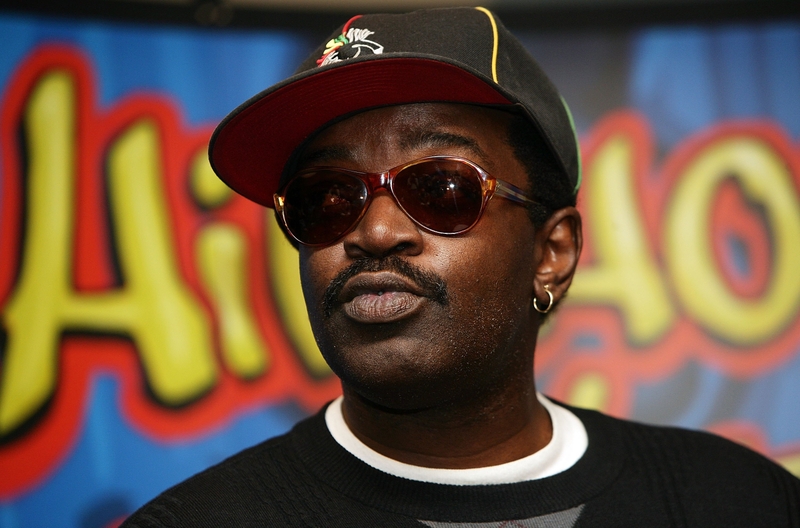
The Merger of Hip Hop & Punk..an Interview w/ Fab 5 Freddy

The meeting of Punk and Hip Hop cultures in the late 70s early 80s is an overlooked often downplayed facet of Hip Hop History. Most people think of Run DMC‘s Rock Box and later their collaboration with Aerosmith when they think of Hip Hop merging with Rock-N-Roll. The truth of the matter is that in a very organic way, artists from both cultures broke bread and came to respect each other not so much because of the music, but because of the ‘rebellious’ attitude and spirit that personified both groups.

With last weeks passing of punk icon turned Hip Hop icon Malcolm McLaren, the details of punk Hip Hop unions began to be revisited. We sat down with one of the key bridge builders to both worlds Brooklyn native Fab 5 Freddy to get his perspective.  Fab started out as a graffiti artist and later went on to rap and produce. His record Change the Beat is a classic. here Fab raps in French and at the end provides us with the classic line that every DJ worth his weight has used to scratch.. Ahhh This Stuff is Really Fresh. It was one of the earliest instances of a vocorder being used in Hip Hop. later on Fab5 became the face of Yo MTV Raps.

Fab 5 Freddy

He now heads up the VH1 Hip Hop Honors. He noted that this year they will be honoring the pioneers of the South. We spoke to him about those pioneering days and he noted that his love of art is what took him downtown to the thriving Village scene that hosted Punk, New Wave and artsy types..Fab 5 noted that his partner in crime (art crime) was the late Jean Michel Basquiat and together they attended a lot of the shows and parties and met folks like Deborah Harry and her man Chris Stein from the group Blondie.  The group would later immortalize Fab 5 in the song Rapture where they shouted him out. In our interview Fab 5 explains how that song came about.

Kool Lady Blue

We talked about Fab’s first encounter with Malcolm Mclaren. He noted that it was a promoter named Kool Lady Blue best known for her work at the Roxy and the Negril who introduced the pair and that Fab wasn’t really feeling McLaren. He explained that  his good friend Johnny Lydon aka Johnny Rotten of the Sex Pistols and later PIL had accused McLaren of ripping off the group. As a result when McLaren explained to Fab 5 that he wanted to go uptown to the Bronx and experience the emerging Hip Hop scene, he wasn’t gonna be ‘that guy’ to make it happen.

Fab went on to explain that he was impressed with the way Mclaren maneuvered. Not only did he make it up to the Bronx but he eventually teamed up with two guys Larry Price aka Se’Divine Price and Ronald Larkins Jr aka JazzyJust the Superstarwho were members of the 5% Nation who had started doing one of the earliest Hip Hop radio shows back in 1979 on WHBI. . The duo went by the name World Famous Supreme Team and they along with Mclaren made history by putting out some of Hip Hop’s ealiest hits including ‘Buffalo Gals’ and ‘Hey DJ’.. Fab explained what made Mclaren such a genius was his ability to capture not only the early feel of Hip Hop but also the groups popular radio show . He was ground breaking in his production and willingness to push the envelop.

Fab added that the Hip Hop -Punk fusion came about because there was a community of artists who were open minded and willing to collaborate.

The Clash

We talked about the groundbreaking role the Clash played. Fab noted that the London based group was influenced by reggae and saw similarities with that and early rap.  They did a weeks long stint at a club called Bond  where they decided to show support for Hip Hop by inviting a popular artist or deejay to open up for them each night. The line up included Grand Master Flash, Kurtis Blow, Afrika Bambaataa, Spoonie G and Funky 4 Plus One More.  he said rthe crowd was hostile. It would be like a rapper performing at a Tea Party. Things got so bad the Clash had to come out on one of the nights and let folks know they were in full support of Hip Hop. Later on Mick Jones would hook up with Futura 2000 to do a song called ‘Escapades of Futura’ http://www.youtube.com/watch?v=gR9K2ISCUqg

During our interview Fab talked about how the merger of Punk and Hip Hop helped paved the way for early Hip Hop journalism primarily with writers Barry Cooper and Greg Tate who were fixtures in the downtown art scene and started penning stories about Hip Hop.

Click HERE to Here Breakdown FM podcast featuring Fab 5 Freddy

Below is a link to the interview we did with Fab 5..

Breakdown FM Interview w/ Fab 5 Freddy How Hip Hop Met Punk

Here is a shortened video version of the podcast

http://www.youtube.com/watch?v=EyxNc-7cA7E

http://www.youtube.com/watch?v=3niRdoFgYoQ

Return to Davey D’s Hip Hop Corner

Inside Music Media: Conan on TBS — Smart?

As you read this story about Conan O’Brien for those who are in the music biz, keep a couple of things in mind 1-) Jerry Del Colliano the author of this piece’s expertise is the music industry. He’s a ‘G’ in that world and has been dead on with his assessments and analysis.. He’s  been preaching to folks in this crumbling industry to make some moves and think outside the box. What Conan is doing is something many of us need to be looking at in terms of identifying audience, owning them versus renting them and then being shrewd enough to set up shop and go in deep where they are at… It’s still baffling to me that in 2010 I still run into cats who are gung-ho trying to get signed or get their songs on commercial radio. Its 1996 game that has come in gone.. In the next few days we’re gonna be posting a series of interviews that focus on this aspect more. In the meantime,  wet your palettes with this article and we’ll build later

-Davey D-

Inside Music Media: Conan on TBS — Smart?

By Jerry Del Colliano

http://insidemusicmedia.blogspot.com/2010/04/conan-on-tbs-smart.html

For Conan O’Brien, getting pushed out of his Tonight Show digs at NBC has turned into quite a profitable business.

NBC paid him off — $45 million to O’Brien and staffers — when the network decided to reinstate Jay Leno to Conan’s spot after Leno’s ill-fated months in the 10 pm weeknight slot.

Everyone thought Conan was headed to Fox — including Fox — according to Deadline Hollywood’s reporting. More talks were said to be scheduled between Conan and Fox after the NAB Convention now underway in Las Vegas.

Then the shocker.

In about less than two weeks, according to news accounts, Conan O’Brien’s people decided to take an offer from TBS to bring his offbeat, youth-oriented comedy to cable.

Smart?

Obviously for O’Brien, it was.

He’s getting a reported $10-12 million a year in a five-year deal that also gives Conan’s production company ownership of his show with TBS taking a smaller stake in it. Not to mention the four-day workweek.

This is more than a story about a spurned TV comic who was pushed out of his Tonight Show chair and rose to get revenge.

It’s about the changing audience, the unusual appeal of paid cable in a free world and, well — the growth of the Internet.

How so?

Since leaving NBC with all that money, Conan has miraculously discovered the Internet.

He’s been attracting over a million people to his online antics and has embraced Twitter like never before. See, his youthful fans are watching more cable and obviously, they are also the Internet generation.

So far so good.

Conan pulled a friendlier coup when George Lopez’ current 11 pm TBS show was designated for midnight. Lopez, being the good solider (perhaps better than Conan when NBC decided to restore Leno to The Tonight Show) said he’d love to have Conan as a lead-in come this Fall.

O’Brien cannot be on live television until September under his NBC exit agreement, but he can tour and he’s using the Internet to drive his “Legally Prohibited from Being Funny on Television Tour.”

As shocking as the Conan announcement was to the traditional television community, you had to see it coming.

Conan’s audience grew up on cable — niche programs more so than the homogenized fare the major TV networks have been used to offering.

They reside on the Internet and as soon as O’Brien figured it out, they flocked to him.

Now it’s a win-win-win.

Conan gets rich again with approximately the same salary NBC would have paid him that they already had to pay him to leave.

One win.

The audience gets a cult-figure, quirky, cable-ready O’Brien.

Two wins.

TBS gets to sell advertising and stands to make a profit from the get-go with a former big network talent who is not aging. In fact, he was too old for NBC’s audience.

Three wins.

The Wall Street Journal reports:

“The defection of a big-name broadcast TV talent to cable TV comes amid a creep of programming and advertising dollars to pay TV. Cable networks have invested billions of dollars in original scripted shows, high-profile sports events, kids’ programming and late-night shows”.

O’Brien is quoted as saying, “In three months I’ve gone from network television to Twitter to performing live in theaters, and now I’m headed to basic cable,” Mr. O’Brien said in a TBS statement announcing the late-night show. “My plan is working perfectly.'”

Tongue planted firmly in his cheek but absolutely true.

Here’s the future:

1. Cable is a great interim step, but soon an Internet-only video shows like the kind Conan (and other genres) can do will reside only online and on mobile entertainment devices. But they can’t be like traditional television. Read on.

2. The content will resemble an assembly of YouTube clips that can be viewed in one session, or individually at the whim of fans exercising their right to get content on demand.

3. Social networking will be included and I’m not just talking Twitter and Facebook. More like a separate “nation” for, in this case, Conan fans to communicate with each other.

4. New forms of ad revenue such as performing in public venues with sponsorship tours. By going to cable, Conan gets to enter the new space while being funded by the traditional advertising model of spot TV. Believe me, advertisers are more than interested in finding their way to new media.

5. Mass communication over traditional media is waning. The future is programming delivered where people now live and will soon reside — online, on phones and iPads.

Conan saw the future and you see it, too.

Return to Davey D’s Hip Hop Corner

Fear of An Arab Planet: 5 Videos & Groups Speaking Truth to Power & Repping Hip Hop to the Fullest

Here’s some hype videos and groups from the Arab world people should be up on. I’m always amazed at how so many groups from around the world use rap as a crucial communications tool to speak truth to power and now in the digital age provide images that let us know how life is in their neck of the woods. Below you have cuts from some of my favorites including Lowkey out of Britian, Narcy out of Montreal / Iraq, Clotaire K out of Lebanan/ France, Salome out of Iran and Dam out of Israel/ Palestine.. There are lots more to peep but we’ll start folks off with this batch..

Lowkey ‘Obama nation’ (Britain)

http://www.youtube.com/watch#!v=z4OI0GUCI_A&feature=related

The Narcicyst P.H.A.T.W.A. (Montreal/Iraq)

http://www.youtube.com/watch#!v=TtoHCUMpNMY&feature=related

Clotaire KLubnan’ (Beruit)

http://www.youtube.com/watch?v=hT6AfnssdYk

Salome Scream To Let Your Voice Be Heard (Iran)

http://www.youtube.com/watch?v=7_FR23x7Nvk

Lowkey & Faith SFXAlphabet Assassin (Britain)

http://www.youtube.com/watch#!v=ToZUIdbgqjE&feature=related

Dam I was Born Here’ (Israel/Palestine)

http://www.youtube.com/watch?v=zIo6lyP9tTE

Return to Davey D’s Hip hop Corner

Rising Dissatisfaction Among Post Apartheid Blacks. Is South Africa On The Brink Of A Bloodbath?

Last week we ran a couple of stories that detailed some of the racial tensions brewing in South Africa. We also included a couple of videos. What was most disturbing and noteworthy was seeing the extreme anger being expressed by white Afrikaners who are claiming they want ‘their country back’. Does this sound familiar? Does it sound like the rhetoric being expressed by Tea Party types who seem to have been motivated by having a Black man in the White House  as opposed to the corporate heads (many of them white) who caused much of the economic upheavals they are railing about. Its hard not to hear about this anger among White South Africans and not compare that with what’s going on here. They want to celebrate and highlight what they claim is a unique culture and here in the US we have sitting governors publicaly harking back to the ‘the good ole days’ when the Confederate South was on the running things.

Sadly here in this country race trumps all logic and as we seen time and time again folks will vote against their own self interests rather than share power and resources with racial rivals. call it a warped sense of entitlement where some whites feel that they have a God-Given right to be economically, politically and socially better off then people of color. From what I’m reading about in South Africa, it seems like a resentment of no longer being in charge. In any case here’s a recent Africa Watch blog laying out some of what’s going on in South Africa…

-Davey D-

http://www.youtube.com/watch?v=RjDVnqEpHkY

Rising Dissatisfaction Among Post Apartheid Blacks. Is South Africa On The Brink Of A Bloodbath?

http://africawatch53.blogspot.com/2010/04/rising-dissatisfaction-among-post.html

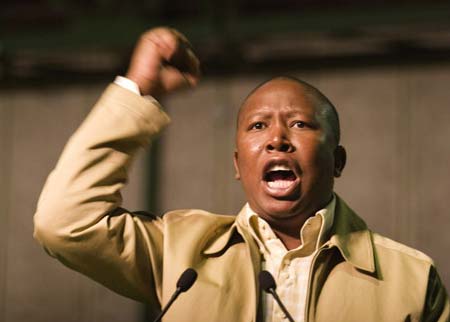
Julius Malema

Julius Malema, the African National Congress Youth League (ANCYL) leader, and the recent brutal murder of the African Resistance Movement (AWB) creator Eugen Terreblanche may be the spark that lights the fuse of dissatisfaction at the limited gains received by blacks in post apartheid South Africa.

First Terreblanche is a white racist Afrikaner whose viciousness and brutality toward the killing of unarmed black South Africans came to light under the Truth and Reconciliation Commission – he confessed his sins and walked away a free man.

Malema has received much scrutiny in the South African and British press lately, for, among other things, calling for the nationalization of South Africa’s mining industry, the singing and then banning by the courts of the song that includes the lyrics “shoot the boer,” and traveling to Zimbabwe and being met at the airport by 500 Zanu-PF youth members singing the above song, as well as being received on the tarmac by Zimbabwe’s president Robert Mugabe.

The AWB (at their height they claimed a membership of 70,000) or what is left of it vowed to avenge Terreblanche, as the group has since toned down their call for revenge. According to news reports, “fear of growing racial tensions and polarization grew as condolences streamed in,” and the General-Secretary of the AWB blamed Malema. During a phone interview, he said to expect “revenge.” We are going to finish with funeral arrangements and thereafter have a summit conference on May one in Pretoria, where all of our leaders and members of the AWB will come together and decide on what actions we will take to revenge Terreblanche’s death.” He then linked the song with the lyrics “shoot the boer” reported News24.com, sung until recently banned by Malema as directly responsible for the killing.

“There were mixed reactions from political parties,” reported News24.com. Those included the Azanian People’s Organization (Azapo) that said Terreblanche died in a similar manner in which he murdered blacks. We are sad that Mr. Terreblanche died in the manner in which he died, murdered in cold blood. Sadly, this is how he killed black defenseless farm workers in Venterdorp.”

The Afrikaner author and political commentator Dr. Dan Roodt accused the ANC youth wing of creating “a crime of hatred towards Afrikaners” which, reported News24.com, could lead to “anarchy (and) Zimbabwean-style land evasions.”

In addition, the country is at the crossroad, he said, and appealed to the international community, including the European Union, the United States, and the United Nations to intervene and stop the potential for a bloodbath in South Africa.

Eugene Terreblanche

But all of this talk of a blood bath fails to consider that in post apartheid South Africa, the economy including 87 percent of the productive farmland, continues to be in the hands of whites. So Terreblanche might be the spark that lights the fuse, but the powder keg representing the unmet needs of black South Africans has been simmering for some time.

Then there is the land question, and all of the ink being abused in order to discuss white fear of a black takeover of the economy.

This question prompted then President Mandela to say in 1997 that: “Their task is to spread messages about an impending economic collapse, escalating corruption in the public service, rampant and uncontrollable crime, a massive loss of skills through white emigration and mass demoralization among the people… because they are white and therefore threatened by the ANC and its policies which favor black people.”

http://www.youtube.com/watch?v=JPbExwBJiwY&feature=fvw

The current public discussion appears to be geared toward masking “racist narratives,” with a tendency to portray black wealth as something to be regarded with suspension, said Black Management Forman deputy president Tembakazi Mnyaka.

This is being couched in calls for “lifestyle audits,” which is a “smokescreen,” that Mnyaka claims, “the purveyors of this narrative seek to silence the emerging black economic elite and middle class, lest they are blackmailed by the now exposed banner that says: blacks cannot be wealthy.”

Mnyaka believes those that support calls for lifestyle audits “manipulate” and “de-historize the context.”

He also says, “We are made to question whether apartheid and its attendant policies that dehumanized blacks and created the most unequal society in the world really happened: and if the conclusion is that it did, we are made to feel guilty about correcting its wrongs.”

This narrative includes post apartheid blacks being made to feel guilty for desiring ownership of productive farmland 87 percent of which is in the hands of white South Africans.

President Zuma has promised to overhaul the governments’ land reform program, as a government minister said, “one of the most visible legacies of apartheid that has failed.”

This land distribution program to date, according to land reform minister Gugile Nkwinti, has not been “sustainable and has not provided the anticipated benefits to the recipients.” In addition, Nkwinti says, of the 15 million acres that has been distributed, most of which is non-productive land, and “has been transferred through restitution and redistribution… and has not created any economic benefit for many of the new owners.”

So this doomed from the beginning  – failure at the redistribution of land stolen by whites under the 1913 Natives Land Act called, “the original political sin” by many, has no chance of meeting its mark. And at market prices, repurchasing one-third of that land and resettling black farmers by 2014 at a rate of $9.6 billion, is all but out of the question.

So maybe, ANCYL leader Julius Malema, with all his flaws, “is in fact the most appropriate leader,” according to South Africa’s Politicsweb, “for the moment.” Since he is unlike “the passive (Bantustan leaders) to the apologetic (liberal reformists like Desmond Tutu and Memphela Ramphela), the time has come for an explosive and radical character who will advocated for social equality without compromise.”

So the Youth League leader hits a nerve for his willingness to speak his mind regardless of the consequences. His criticism of the Zuma administration for under-resourcing of the National Youth Development Agency when President Zuma said he would support the NYDA during his State of the Nation speech shows why he has mass appeal among blacks and why whites fear his brand of leadership.

And then there is last week’s trip to Zimbabwe and his most recent call for he nationalization of South Africa’s mines. “We hear you are going straight for the mines, he said during a rally in Harare organized by the youth component of the Zanu-PF, “That is what we are gong to do in South Africa.”

“They have exploited our minerals for a very long time. We want the mines, now it’s our turn,” he said. The Sunday Times reported, Zimbabwe last month put in operation a law that requires foreign companies valued at over 500,000 US dollars to divest 51 percent of shares to non-white locals within five years.”

Malema apparently is taking his show on he road. In a tour designed to look at “nationalization programs,” the ANC Youth League leader will also visit Brazil, China, Chile, Cuba and Venezuela.

But of all the things, Malema has been criticized in the South African press, it is the media coverage of the “shoot the boar” song, the subsequent connection of the song to Terreblance killing, that has received the most ink. Malema’s singing of the song last month, according to published reports, in front of college students sparked a legal battle in which the ruling ANC challenged “a high court that ruled the lyrics as unconstitutional.” Boar means farmer in Afrikaners, and has negative connotations referencing white Afrikaners.

The killing of Terrblance appears to be in response to his unwillingness to pay two of his black farm workers, not motivated by listening to a song.

Jehron Muhammad can be reached at:Africawatch53@gmail.com

Return to Davey D’s Hip Hop Corner

KRS-One Explains why Bambaataa & Zulu Nation-boycott Nat’l Museum of Hip Hop

KRS1 speaks on behalf of the Hip Hop Pioneers the reason why they are boycotting the National Museum of Hip Hop. It sure changed the direction of the night.

http://www.youtube.com/watch?v=-y_e7Z7coek&feature=player_embedded

 Return to Davey D’s Hip Hop Corner

Malcolm McLaren the Man Who brought Us Buffalo Gals and Fuzed Hip Hop and Punk is Dead

Malcolm McLaren was an important figure both in Hip Hop and early punk.. Many outside the US knew him for his work in the punk world. Most of us who were around in the early 80s  knew McLaren because of his work with the World Famous Supreme Team radio show and his hit records Buffalo Gals, Hey DJ and Hobo Scratch which for many outside of New York was the first time they heard scratching. A true pioneer on a number of levels..McLaren to me was one of those crucial bridges between punk and Hip Hop. That’s a history that is often overlooked and down played..

http://www.youtube.com/watch?v=-DeTR8n7eTU

http://www.independent.co.uk/news/people/news/malcolm-mclaren-dies-aged-64-1939621.html

Malcolm McLaren, the former manager of the Sex Pistols and impresario, has died. He was 64.

McLaren had had cancer for some time. His condition recently deteriorated rapidly and he died this morning in New York. His body is expected to be brought home to be buried in Highgate cemetery, north London.

Born in North London, McLaren was best known as the manager of the iconic punk band The Sex Pistols. After attending and dropping out of several art colleges in 1971 he opened a clothes shop on the King’s Road , Let It Rock, with Vivienne Westwood.

He achieved the notoriety that never left him when The Sex Pistols’ anti-establishment single God Save The Queen stole the number one spot during the Queen’s silver jubilee in 1977. His spokesman Les Molloy told The Independent: “He had been suffering from cancer for some time, but recently had been full of health, which then rapidly deteroriated. He died in New York this morning. We are expecting his body to be brought back to London and buried in Highgate Cemetery.”

http://www.youtube.com/watch?v=FHMVkqCKknc

http://www.youtube.com/watch?v=eIdaOI_BbLU

Return to Davey D’s Hip Hop Corner

League of Young Voters Teams Up w/ Hip Hop Artists to Encourage Folks to Fill Out Census

The League of Young Voters Latest Initiative Aims to Get Our Nation’s Youth Involved in the 2010 Census Through the Innovative Platform of 99Problems.org
 
Los Angeles, CA (April 6, 2010) – Nearly a year after Barack Obama was sworn in as the nation’s first African American president, today The League of Young Voters Education Fund (LYVEF) announces the launch of it’s latest effort, the Numbers Don’t Lie Campaign – a new online initiative and call to action for our nation’s youth to get involved in the 2010 Census.  Numbers Don’t Lie is a project of the League’s news portal 99problems.org and will attempt to reach urban youth in their neighborhoods across the nation using viral videos and hip-hop culture to teach them about the importance of the census.
 
The Numbers Don’t Lie project has been rolling out a series of viral video PSAs hosted by DJ Willie Shakes (Core DJs, Star Trak’s Chester French).  DJ Willie Shakes, has been touching down to talk with tastemakers, hip hop artists and celebrities at the local level in Pittsburgh, Philadelphia, Milwaukee, Cleveland, Cincinnati, Columbus, Tallahassee, Las Vegas, Los Angeles, Portland (ME), Houston, and the Bay Area to talk about the ways in which the Census is important to each individual community. The Numbers Don’t Lie viral video PSA series enables each featured interview to give their own spin on why the 2010 Census is important to them, as well as the neighborhoods they reside in and come from, in order to reach young voters in an organic and impactful way on such a meaningful issue. 

http://www.youtube.com/watch?v=h7weK5Go2lA

  “The Census is so important. It decides how trillions of dollars will be spent in our community,” said LYVEF’s Executive Director, Robert “Biko” Baker, who prior to taking his current position served as The Source Magazine’s Political Correspondent. “Every 10 years young people don’t get counted because they don’t understand how important this process is.  We are going make sure this doesn’t happen. We are going to meet young people where they are at, and make sure they understand how important this process is to their future.”
 
All content created from the Numbers Don’t Lie campaign is currently showcased on The League of Young Voters’ online platform 99Problems.org.  Launched January 20, 2009 99Problems.org is a site that combines new media, investigative journalism and pop culture to engage a young demographic on local inner city issues from a hip-hop perspective.  The site was influential in banding together awareness among urban youths and minorities for the 2009 election of President Barack Obama and aggressively courts the urban, hip-hop, and underground arts communities of America with thought provoking and investigative news stories about real people harnessing political power to make changes in their own lives.
 
Los Angeles based Cashmere Agency has signed on to be a part of this exciting campaign, spearheading the League of Young Voters marketing campaign surrounding this project.

http://www.youtube.com/watch?v=XQAgRp8vJvA&feature=related


About The League of Young Voters Education Fund
The League of Young Voters Education Fund (LYVEF) empowers young people nationwide to participate in the democratic process –with a focus on non-college youth from low-income communities and communities of color. LYVEF makes civic engagement relevant by meeting young people where they are, working on issues that affect their lives, and providing them with tools, training, and support to become viable players in the civic process. 

In 2008, LYVEF educated hundreds of thousands of new voters about the importance of voting. You can find out more about The League of Young Voters Education Fund by visiting
www.youngvoter.org .

Return to Davey D’s Hip Hop Corner

Chamillionaire: Hustling & Grinding in a Hi-Tech World…

We caught up w/ Houston rapper Chamillionaire who has been making a lot of noise as of late, not just for him reuniting with childhood friend and fellow Paul Wall after 7 years and going on tour, but also because he’s been making some behind the scenes moves into the tech world. In fact much of our conversation centered around us discussing ways in which rap stars can move away from simply setting up record companies and use their creative ingenuity to set up the next Google or Youtube.  

“It’s not always about making money with these companies, sometimes its about getting information so later down the road you can make money”, Chamillionaire noted. He explained that in the age of music going digital rappers need to be thinking outside the box and trying to figure out other ways to leverage their brand  and resources above and beyond simply selling records and merchandise.

http://www.youtube.com/watch?v=YOV0EvGpB1I

We talked to Chamillionaire about how he stays on his grind and asked if he saw any differences in the way the Bay Area makes it happen compared to our sister city of Houston which shares a strong independent rap scene. He noted that one can definitely tell when they are in the Bay Area. The music and overall swagger is unique on to itself. However, the people’s work ethics and drive to succeed on their own terms are pretty similar.  He noted how Paul Wall and Bay Area rapper Tha Jacka had just departed the tour bus as I arrived to go shoot their own videos. Chamillionaire marveled at the way folks collab with each other and

Along that vein we chopped up it up about the large yet often overlooked Latino/Brown Hip Hop scene in Texas. Chamillionaire noted that he was impressed how large it was and how some artists coming from Brown communities are killing it in terms of the people they can reached. he talked about Houston rapper SPM and how succesful he was while many withing ‘mainstream’ Hip Hop circles were clueless. Chamillionaire talked about how some of his songs are popular in brown communities and the influence is so strong that he’s started rapping some of the songs in Spanish which he puts on his mixtapes.

We also talked about mixtape game and whether or not they were still relevent in today’s climate. We also chopped it about whether he would continue doing his  ‘Mixtape Messiah‘ series. He noted that after 10 years he decided to retire that series and launch a new one called ‘Major Pain‘.

We concluded our interview by talking to Chamillionaire about his upcoming album called Venom where he explained that he wanted to move away from being ‘political correct’ topics and explore more edgy type of material . “I wanted to be a bit rebellious on the album”, He noted.

Chamillionaire also laid out who he feels are some of the most important rappers in Texas that we should be paying attention to as well as his favorite songs including ‘Turn It Up’ and ‘Hip Hop Police’.

Click HERE to Here Breakdown FM podcast featuring Chamillionaire

Below are the links to our two part Breakdown FM Podcast.

Chamillionaire Interview pt 1

Chamillionaire Interview pt 2

Below is another interview that  our friends from Check the Levels  out in Austin did with Chamillionaire during SXSW

http://www.youtube.com/watch?v=YsgdBEdNueQ

Return to Davey D’s Hip Hop Corner

Did a Racist Coup in a Northern Louisiana Town Overthrow its Black Mayor and Police Chief?

 Waterproof, Louisiana, and the region around it may be majority Black, but White Power is determined to prevail by any means necessary. White parish officials replaced the town’s African American mayor and arrested the Black police chief for kidnapping when he placed a lawbreaker under arrest. “They are determined to let you know you have a place and if you don’t jump when they say jump you are in trouble.”

As you read this story you can listen to the interview we did yesterday with investigative reporter Jordan Flaherty and Chief Miles Jenkins.. Its unbelieveable that such things are still going on in 2010 Here’s the link our Hard Knock Radio podcast   http://www.swift.fm/mrdaveyd/song/33537/

Shout out to Black Agenda Report who first ran this piece..

 
Did a Racist Coup in a Northern Louisiana Town Overthrow its Black Mayor and Police Chief?
by Jordan Flaherty
 
“We hope the justice department will look into this and bring some much-needed reform to this part of the world.”
 
In Waterproof, a small northern Louisiana town near Natchez, Mississippi, the African-American mayor and police chief assert that they have been forced from office and arrested as part of an illegal coup carried out by an alliance of white politicians and their followers. In a lawsuit filed last week, Police Chief Miles Jenkins asserts a wide-ranging conspiracy involving the area’s district attorney and parish sheriff, along with several other members of the region’s entrenched political power structure. These events come at a time when the validity of federal power is being questioned because of the race of the US president, and in a state where white political corruption and violence have been and continue to be used as tools to fight Black political power.
 
About 800 people live in Waterproof, a rural community in the south of Tensas Parish. Tensas has just over 6,000 residents, making it both the smallest parish in the state, and the parish with the state’s fastest declining population. The parish’s schools remain mostly segregated, with nearly all the Black students attending public schools, and nearly all the white students attending private schools. With a median household income of $10,250, Waterproof is also one of the poorest communities in the US. The only jobs for Black people in town are in work for white farmers, according to Chief Jenkins. “Unless you go out of town to work,” he says, “you’re going to ride the white man’s tractor. That’s it.”
 
“White political corruption and violence have been and continue to be used as tools to fight Black political power.”
 

Mayor Bobby Higginbotham (pict right)

Bobby Higginbotham was elected mayor of Waterproof in September of 2006. The next year, he appointed Miles Jenkins as chief of police. Jenkins, who served in the US military for 30 years and earned a master’s degree in public administration from Troy University in Alabama, immediately began the work of professionalizing a small town police department that had previously been mostly inactive. “You called the Waterproof police for help before,” says Chief Jenkins, “he would say, wait ‘til tomorrow, it’s too hot to come out today.” He also sought to reform the town’s financial practices, which Chief Jenkins says were in disorder and consumed by debt.

 
Chief Jenkins asserts that a white political infrastructure, led by the Parish Sheriff Ricky Jones and District Attorney James Paxton, were threatened by their actions. This group immediately sought to orchestrate a coup against the two Black men, including clandestine meetings, false arrests, harassment, and even physical violence. Court documents describe how Paxton, Jones, and their allies formed an alliance “designed to harass intimidate, arrest, imprison, prosecute, illegally remove plaintiff from his position of police chief, prevent plaintiff from performing his law duties as police chief and/or force plaintiff to leave the town of Waterproof.”
 
“If you’re educated and intelligent and know your rights and in this parish, you are in trouble.”
 
Ms. Annie Watson, a Black school board member in her 60s who was born and raised in Waterproof, worked as a volunteer for the mayor. She says that the mayor and chief, who had both lived in New Orleans, brought a new attitude that Parish officials didn’t like. “The Mayor and the Chief said you can’t treat people this way, and the Sheriff and DA said you got to know your place. If you’re educated and intelligent and know your rights and in this parish, you are in trouble,” she says. “They are determined to let you know you have a place and if you don’t jump when they say jump you are in trouble.”
 
Ms. Watson explains that Paxton and Jones were threatened by Chief Jenkins’ efforts to professionalize the town’s police force. Aside from representing a challenge to Sheriff Jones’ political power, this also took away a source of his funding. “Before Mayor Higginbotham, all traffic tickets went to St. Joseph,” she says, referring to the Parish seat, where Sheriff Jones is based. “So he cut their income by having a police department.”
 
Jack McMillan, an African American deputy sheriff in Tensas Parish, says he tried to warn Chief Jenkins to back down. “You’ve got to adapt to your environment,” he says. “You can’t come to a small town and do things the same way you might in a big city. Like the song says, you got to know when to hold ‘em, and know when to fold ‘em.”
 
Tensas Parish
 

District Attorney James Paxton

Tensas and the nearby parishes of Madison and East Carroll all share the sixth judicial district – currently represented by District Attorney James Paxton. Buddy Caldwell, DA for the sixth judicial district from 1979 to 2008, is now Attorney General for the state of Louisiana. The sixth district parishes all have majority Black populations and mostly white elected officials, which Chief Jenkins and Watson attribute to political corruption and disenfranchisement of Black voters. Prior to the registration of 15 voters in 1964, there was not a single Black voter registered in Tensas, despite having more than 7,000 African American residents (and about 4,000 white residents), making it the last Parish in Louisiana to allow African Americans to register.

 
Waterproof is “Reminiscent of the bygone days of southern politics,” with a white power structure maintaining political power over a Black majority, according to veteran civil rights attorney Ron Wilson, who is representing Jenkins in his civil rights lawsuit. “At any and all costs, even jeopardizing the life and freedom of my client, they will ruin him to maintain power. This case is ultimately about whether an African-American can be guaranteed the rights that are assured to him in the Constitution.” According to court papers, this Jim Crow alliance dominates elected power in the area, and “even on the local level, where the office holders tend to be African American, they are powerless to control their own destiny.” According to Chief Jenkins, the District Attorney once boasted that he controlled the votes of Waterproof’s Black Aldermen.
 
“Waterproof is ‘reminiscent of the bygone days of southern politics,” with a white power structure maintaining political power over a Black majority.’”
 

Chief Miles Jenkins

Chief Jenkins says he faced an immediate campaign of harassment from Sheriff Jones. “They just wanted this town to be white-controlled,” explained Chief Jenkins. The police chief described being arrested multiple times under the order of District Attorney Paxton and Sheriff Jones. The charges, says Jenkins, range from charges of theft for a pay raise he received from the town’s board of Aldermen to criminal trespass for going to the home of a citizen who had been stopped for speeding without a valid driver’s license, to disturbing the peace for an incident where individuals threatened the police chief with violence for issuing traffic citations. Ms. Watson says the charges were invented out of thin air. “It was a sad case of lies,” she says, adding that, “The majority of the town of Waterproof supports the chief and supports the mayor.”

 
Chief Jenkins says he was arrested and declared a flight risk by District Attorney Paxton, despite living and owning property in the Parish. “In all my years,” says attorney Ron Wilson, “I’ve never seen a police officer, and certainly not a police chief, charged for something like this.” Chief Jenkins alleges he was attacked and choked by a deputy sheriff, who he says shouted, “Shut up…We are in charge…We are the sheriff and the sheriff controls Tensas Parish. The sooner you all learn this the better off you will be,” an action that Ms. Watson says she also witnessed.
 
“The chief was even charged with kidnapping for one incident in which he arrested the former town clerk for illegal entry.”
 
Chief Jenkins says his police car was shoved in a ditch, and when he arrested the people who had committed the act, the DA refused to press charges. In fact, he says the DA refused almost all charges he presented and released anyone he arrested. The chief was even charged with kidnapping for one incident in which he arrested the former town clerk for illegal entry. “That’s the most ludicrous notion I’ve ever come across,” says Wilson. “That a police chief can be arrested for kidnapping, because he placed someone under arrest who was breaking the law.”
 
A grand jury has returned indictments of Chief Jenkins and Mayor Higginbotham, and Higginbotham’s trial is scheduled to begin this Monday. The mayor faces 44 charges, including multiple counts of malfeasance in office and felony theft. The charges appear to be based on the results of a state audit of Waterproof that found irregularities in the town’s record keeping going back to before the election of Higginbotham – irregularities that the mayor and police chief say they had repaired.
 
Patterns of Violence
 

Mayor Gerald Washington was killed shortly after being elected

Mayor Higginbotham was elected at the same time as two other Black mayors of small Louisiana towns, both of whom also received threats based on race. In December of 2006, shortly after Higginbotham was elected mayor of Waterproof, Gerald Washington was shot and killed three days before he was to become the first Black mayor of the small southwest Louisiana town of Westlake. An official investigation called his death a suicide, but family members call it an assassination. Less than two weeks after that, shots were fired into the house of Earnest Lampkins, the first Black mayor of the northwest Louisiana town of Greenwood. Lampkins reported that he continued to receive threats throughout his term, including a “for sale” sign that someone planted outside his house.

 
Waterproof was Klan country from the Reconstruction era until well into the 20th century, and violence frequently broke out in the area. Seven Black men in Madison Parish were lynched over a period of three days in 1894 for the charge of “insurrection,” apparently because one man refused to follow an order from a sheriff. “The Klan was very active here,” says Ms. Watson, recalling her childhood in the 50s and 60s. “We had crosses burned on people’s lawns. The school principal had a cross burned on his lawn. A man named Sun Turner was shot and killed on the streets by the Klan.” Waterproof is an hour south of Tallulah, the site of a notoriously abusive youth prison, and a little more than hour east of Jena, where accusations of systemic racism brought 40,000 people from around the country, including many civil rights leaders, to a 2007 march. Like Jena, Waterproof is also home to a prison that contracts to hold federal immigration prisoners.
 
“Gerald Washington was shot and killed three days before he was to become the first Black mayor of the small southwest Louisiana town of Westlake.”
 

Sheriff Rickey Jones

When asked for comment on Chief Jenkins’ lawsuit, Tensas Parish Sheriff Ricky Jones denied that race was a factor, claiming that Jenkins had abused his office and that many of the local citizens who filed complaints against him were Black. “I’m not going to support any type of corruption,” said Jones. “Certainly not from him.” District Attorney Paxton, also named as a defendant in the lawsuit, disputed all accusations from Jenkins, suggesting that he had tried to help Jenkins when he was first elected. “A lot of this will become clear when the case against Mayor Higginbotham goes to trial on Monday,” he added.

 
Flood Caldwell, one of the town’s aldermen, is currently serving as the town’s mayor. Jenkins points to Caldwell’s appointment as further evidence of a coup, saying that the town aldermen, under the direction of DA Paxton, illegally voted to remove Mayor Higginbotham. “No one recognizes Caldwell as mayor except the DA and his friends,” says Chief Jenkins. The office of the Louisiana Secretary of State confirms that they still have Higginbotham listed as mayor, adding that they cannot comment further because of pending litigation.
 
Wilson says this case is ultimately about the repression of Black political and civil rights. “I think this has been going on in Tensas for a while,” he says. “I think they’ve gone too far in this case, and someone finally has come along and says they won’t go along.” Wilson hopes this lawsuit will bring federal attention. “We hope the justice department will look into this and bring some much-needed reform to this part of the world,” he says.
 
Chief Jenkins says he took the Sheriff’s job to serve the community, “You’ve given this country the best years of your life and you get treated like an unwanted stepchild,” he says. “I didn’t realize there was so much politics to just doing your job.”
 
Ms. Watson believes that this is a struggle for self-determination and basic civil rights. “I was born in 1948,” she says. “Ever since I was born, Blacks never had a say in this parish, until Chief Jenkins and Mayor Higginbotham. They spoke up, and tried to change things. That’s why the parish is going after them.”
 
Jacques Morial of the Louisiana Justice Institute contributed to this story.
Jordan Flaherty is a journalist, an editor of Left Turn Magazine, and a staffer with the Louisiana Justice Institute. He was the first writer to bring the story of the Jena Six to a national audience and audiences around the world have seen the television reports he’s produced for Al-Jazeera, TeleSur, Press-TV, GritTV, and Democracy Now, as well as his appearances on Anderson Cooper 360, CNN Headline News, and several other programs. His post-Katrina reporting for ColorLines shared an award from New America Media for best Katrina-related reporting in ethnic press. Haymarket Press will release his new book, FLOODLINES: Community and Resistance from Katrina to the Jena Six, in 2010. He can be reached at neworleans@leftturn.org.